
Views: 0 Author: Site Editor Publish Time: 2026-09-03 Origin: Site


Buyers face conflicting information regarding airborne pathogen defense. Marketing materials claim absolute safety, while public health agencies warn that masks fail against unannounced biological attacks. We need to address the disconnect between cinematic depictions of respiratory protection and the physical realities on the ground. A Gas Mask is only a single component of a bio-defense strategy. Its efficacy relies entirely on strict variables: the specific filtration media used, the integrity of the face seal, exposure duration, and the exact timing of deployment. You cannot just buy a mask, throw it in a closet, and expect immunity. Field readiness requires understanding the exact limits of your equipment. We will break down the mechanics of filtration, evaluate different mask styles, and outline the strict protocols required to survive a biological event.
Filter Specificity is Mandatory: Standard activated carbon filters neutralize chemicals but do not stop biological agents; true biological aerosol protection requires a high-efficiency particulate filter respirator rating (e.g., P100 or P3).
The Deployment Paradox: A gas mask offers zero protection against an unannounced biological event if not worn at the exact moment of exposure.
Mucous Membrane Vulnerability: Biological agents can infect through the eyes, making a full face gas mask a functional requirement over half-face alternatives.
Source Control Limitations: Unlike community masks, most gas masks feature exhalation valves; they protect the wearer but vent unfiltered breath, offering no protection to others if the wearer is infected.
Fit Dictates Function: Even the highest-rated respiratory PPE fails if facial hair, improper sizing, or lack of fit-testing compromises the negative pressure seal.
To evaluate respiratory equipment, you must first define the physical size and behavior of the threat. Weaponized viruses, bacteria, and spores behave very differently from chemical gases. Chemical agents like sarin or chlorine exist as vaporized molecules, which are incredibly small. Biological threats, however, are physical particles. While an isolated virus might measure 0.02 to 0.3 microns, these pathogens rarely travel alone in field conditions. They are typically bound to respiratory droplets, dust, or weaponized carrier agents. This binding brings their effective aerodynamic diameter to a range of 0.3 to 5 microns. This size difference dictates the required filtration technology.
| Threat Type | Example Agent | Average Particle Size | State of Matter |
|---|---|---|---|
| Chemical Vapor | Sarin (GB) | < 0.001 microns | Gas |
| Virus (Isolated) | Variola Major | 0.2 - 0.3 microns | Solid Particulate |
| Bacteria | Bacillus anthracis | 1.0 - 5.0 microns | Solid Particulate |
| Weaponized Aerosol | Spore + Silica Carrier | 1.0 - 10.0 microns | Solid Particulate |
Filtration physics relies on two distinct mechanisms: mechanical filtration and chemical adsorption. Chemical adsorption uses activated carbon. The carbon is treated to create millions of microscopic pores. As chemical vapors pass through, the gas molecules become trapped within these micro-pores. However, activated carbon does nothing to stop physical particles. A biological spore will simply pass through the gaps between the carbon granules, rendering the chemical cartridge useless against a biological threat.
Mechanical filtration traps physical particles using interception, impaction, and diffusion. As air flows through a dense web of synthetic fibers, larger particles crash directly into the fibers (impaction) or graze them and stick (interception). Very small particles bounce erratically off air molecules—a phenomenon known as Brownian motion—which causes them to eventually collide with a fiber (diffusion). This is why a dedicated particulate filter respirator layer is the only mechanism capable of trapping biological pathogens. Relying on a carbon-only chemical cartridge in a biological environment guarantees exposure.
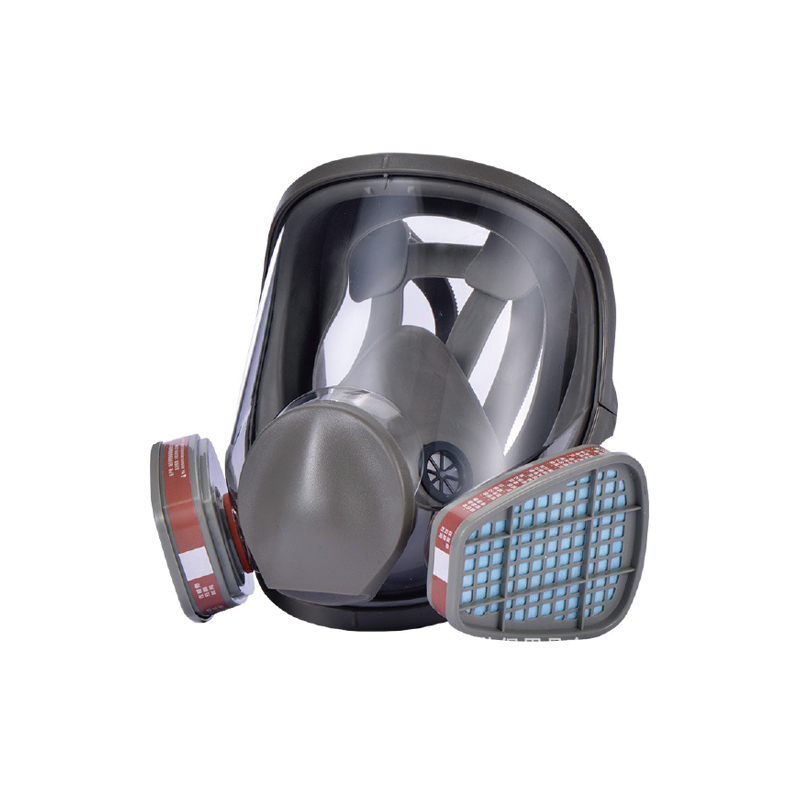
Selecting the correct hardware requires evaluating the specific entry vectors of biological agents. The primary success criterion for any biological defense respirator is the complete protection of all entry vectors, which include the nose, mouth, and ocular mucous membranes. Equipment that leaves any of these vectors exposed represents a critical failure in operational planning.
Half-mask respirators cover only the nose and mouth. While they can be equipped with high-efficiency particulate filters to protect the lungs, they leave the eyes completely exposed. Many weaponized biological agents, as well as naturally occurring pathogens, can enter the body and cause systemic infection through the conjunctiva of the eyes. Therefore, half-masks are disqualified for comprehensive biological defense. A full face gas mask is a functional requirement, as it provides a sealed barrier over the entire face, protecting the respiratory tract and the ocular mucous membranes simultaneously while offering a wide field of view for situational awareness.
When evaluating full-face options, buyers must choose between NIOSH CBRN (Chemical, Biological, Radiological, and Nuclear) certified masks and standard industrial occupational safety masks. CBRN masks are built for extreme environments. They utilize specialized materials like butyl rubber, which resists permeation by chemical blister agents for extended periods. They also undergo rigorous testing against chemical warfare agents.
| Feature | CBRN Certified Mask | Industrial Full-Face Mask |
|---|---|---|
| Facepiece Material | Butyl rubber (blister agent resistant) | Silicone or standard EPDM rubber |
| Threat Profile | Chemical warfare, biological, nuclear | Industrial chemicals, biological particulates |
| Weight & Rigidity | Heavy, rigid construction | Lighter, designed for long shifts |
| Field Application | Military, high-threat response | Pandemic response, occupational safety |
If the threat matrix is strictly limited to biological agents or radiological fallout particles, standard industrial full-face masks offer a highly effective alternative. Biological agents do not permeate silicone or standard rubber facepieces the way chemical solvents do. If fitted with the correct particulate filtration media, an industrial full-face mask blocks biological threats just as effectively as a CBRN mask, often with significantly less weight and lower breathing resistance.
A critical implementation risk involves the direction of protection. Most high-level respiratory PPE is designed exclusively for one-way protection—filtering the air the user inhales. To reduce breathing resistance and prevent carbon dioxide buildup, these masks feature a silicone flapper valve for exhalation. This valve opens when the user exhales, venting their unfiltered breath directly into the surrounding environment. In a pandemic scenario, this means the mask protects the wearer but offers zero source control. If the wearer is already infected, they will actively spread the pathogen to others. Addressing this requires specific exhalation valve filters or specialized negative-pressure medical respirators designed for two-way filtration.
Public health departments frequently highlight a severe limitation in personal biological defense: the timing paradox. Unlike a chemical attack, which often presents with immediate visual cues, odors, or rapid symptom onset, biological attacks are invisible. The release of a biological aerosol produces no smell, no smoke, and no immediate physical irritation. Symptoms may not appear for days or weeks.
Because biological threats are invisible, a mask cannot protect you retroactively. It only works if worn at the exact moment the aerosol cloud passes through your environment. If a user dons the mask after receiving an alert, but the exposure has already occurred, the equipment provides no benefit. This renders personal respiratory protection largely ineffective against unannounced, covert biological releases in public spaces.
Even in scenarios with early warning, operational readiness dictates survival. Deploying a mask from a storage carrier, securing the head harness, clearing the mask of contaminated air, and achieving a perfect negative pressure seal takes time. Under the psychological stress of an emergency, fine motor skills degrade. If a user cannot achieve a seal within seconds of a threat warning, exposure is guaranteed. Regular, timed drilling is a non-negotiable requirement.
A standard rapid deployment drill sequence includes:
Stop breathing and close your eyes immediately upon threat detection.
Retrieve the mask from the drop-leg carrier or chest pouch.
Grasp the facepiece and pull the head harness over your crown.
Tighten the bottom straps first, followed by the top straps, ensuring a flat seal against the skin.
Place your hand over the exhalation valve and blow out forcefully to clear contaminated air from the mask.
Perform a negative pressure check by covering the filter inlet and inhaling to verify the seal.
Staying inside a contaminated zone is physically taxing. As a filter traps particulates, the media becomes loaded, steadily increasing breathing resistance. Furthermore, wearing a tightly sealed rubber mask induces thermal stress and traps a small amount of exhaled carbon dioxide in the dead space of the mask. This leads to rapid fatigue, headaches, and degraded decision-making. Users cannot wear this equipment indefinitely; operational plans must account for strict exposure duration limits and safe extraction routes.
A mask is simply a rubber housing; the filtration media performs the actual work. Selecting the correct media requires navigating complex terminology and standardized ratings. A common point of failure is the misunderstanding of cartridges versus filters.
While often used interchangeably in casual conversation, "cartridge" and "filter" describe different technologies in occupational safety. A cartridge typically contains activated carbon and is designed to adsorb chemical vapors and gases. A filter consists of dense synthetic fibers designed to trap physical particulates, including biological aerosols. Using a chemical cartridge against a biological threat is a catastrophic failure in equipment selection.
To achieve biological aerosol protection, the media must carry a high-efficiency particulate rating. In the United States, the National Institute for Occupational Safety and Health (NIOSH) uses the P100 designation, which filters at least 99.97% of airborne particles. These are universally color-coded magenta. In Europe, the equivalent standard is P3, color-coded white. Any media lacking this specific particulate certification will allow biological agents to pass through.
| Rating Standard | Color Code | Filtration Efficiency | Target Threat |
|---|---|---|---|
| P100 (NIOSH) | Magenta | 99.97% | Biological aerosols, dust, radioactive particles |
| P3 (EN 143) | White | 99.95% | Biological aerosols, fine particulates |
| Organic Vapor | Black / Brown | N/A (Adsorption) | Solvents, chemical vapors |
| CBRN Combination | Olive Green | 99.97% + Gas Adsorption | Multi-threat environments |
Many users opt for combination filters, often labeled as CBRN cartridges. These units stack a pleated HEPA particulate layer on top of an activated carbon bed. This design handles both biological particulates and chemical vapors simultaneously. While versatile, they introduce significant trade-offs. Combination filters are heavy and bulky. The stacked layers drastically increase breathing resistance, leading to faster fatigue. If the threat matrix is strictly biological, a dedicated, lightweight particulate filter is far more efficient and comfortable for extended wear.
Filtration media does not last forever. A respirator filter relies heavily on electrostatic charges embedded in the synthetic fibers to attract and trap microscopic particles. Over time, even in sealed packaging, this electrostatic charge degrades. Exposure to high humidity or extreme temperature fluctuations accelerates this breakdown. Strict inventory management is required. Once a filter passes its manufacturer expiration date, its efficiency against sub-micron biological particles can no longer be guaranteed, regardless of its visual condition.
The highest-rated filtration media is useless if the air bypasses it. The physics of a negative pressure respirator dictate that air will always take the path of least resistance. When a user inhales, they create negative pressure inside the mask. If there is even a microscopic gap between the rubber seal and the user's skin, contaminated air will flow through that gap rather than pulling through the dense filtration media.
Facial hair is absolutely incompatible with tight-fitting negative pressure respirators. Stubble, beards, and even heavy sideburns lift the rubber seal off the skin, creating channels for biological aerosols to enter. To ensure a proper seal, users must be clean-shaven, and the mask must be rigorously fit-tested.
Qualitative fit testing relies on the user's subjective sense of taste or smell using irritant smoke or banana oil. While acceptable for basic industrial use, high-risk biological environments require quantitative fit testing. Devices like a TSI Portacount measure the exact number of microscopic particles inside the mask versus outside the mask, providing a definitive numerical pass/fail score. Without quantitative testing, users are guessing about their safety.
A successful deployment often fails after the user escapes the contaminated zone. If a mask has successfully trapped biological agents, the exterior surface of the mask and the filter housing are now heavily contaminated. Removing the mask without proper protocols creates a severe secondary exposure risk.
A standard doffing sequence includes:
Enter a designated warm zone or decontamination corridor.
Spray or wipe the exterior of the mask and filter housing with a 0.5% sodium hypochlorite solution or approved decontaminant.
Allow the required wet contact time as specified by the decontaminant manufacturer.
Wash your gloved hands thoroughly to remove transferred pathogens.
Loosen the bottom straps of the head harness without touching the front of the mask.
Lean forward and pull the mask away from your face, letting it drop into a biohazard containment bag.
Audit your current filter inventory and immediately discard any units past their manufacturer expiration date.
Schedule quantitative fit testing using a TSI Portacount for all primary users to verify exact sizing.
Enforce a strict clean-shaven policy for any personnel designated to wear negative pressure respirators.
Establish and drill documented protocols for rapid donning and safe decontamination sequences.
A: An N95 mask filters 95% of airborne particles, providing baseline lung protection. It does not protect the eyes, which are a primary infection vector for weaponized biological agents. It relies on a weaker seal than a full-face rubber respirator, making it insufficient for high-threat environments.
A: A chemical cartridge uses activated carbon to trap vaporized gas molecules in microscopic pores. A biological filter uses dense synthetic fibers to physically trap solid particulates, like viruses and spores, using mechanical interception and electrostatic attraction. Chemical cartridges do not stop biological particles.
A: Yes. Even in vacuum-sealed packaging, the electrostatic charge embedded in particulate filter fibers degrades over time. The activated carbon in combination filters can also degrade or absorb moisture. Always replace filters according to the manufacturer's stamped expiration date.
A: Relying on surplus equipment introduces severe risks. Rubber degrades, loses elasticity, and cracks over time, compromising the negative pressure seal. Surplus filters are often expired, and older models may contain dangerous materials. Always purchase new, certified equipment for life safety applications.
A: Standard prescription glasses cannot be worn under a full-face mask. The arms of the glasses break the rubber seal against the temples, allowing contaminated air to enter. Users must install specialized spectacle kits that mount the prescription lenses directly inside the mask's visor.
A: Duration depends on filter loading and physical exertion. As the filter traps particles, breathing resistance increases. Most users experience severe fatigue and thermal stress within a few hours. Masks are designed for escape or specific short-term tasks, not for indefinite continuous wear.


