
Views: 0 Author: Site Editor Publish Time: 2026-09-23 Origin: Site


Selecting the wrong respiratory protection in a hazardous environment is not just a compliance failure—it is a critical, potentially fatal, operational vulnerability. The terms "gas mask" and "respirator" are frequently used interchangeably in consumer and civilian tactical markets, masking distinct engineering differences, material tolerances, and certification standards (e.g., NIOSH, CBRN). Furthermore, misconceptions about whether these devices filter ambient air or supply fresh oxygen often lead to dangerous procurement errors.
This guide provides a technical breakdown of design differences, filtration capabilities, and use-case specific evaluation criteria to help safety officers, industrial workers, and tactical professionals procure the correct equipment for their specific threat profiles.
Threat Specificity: Gas masks are engineered for extreme, unpredictable, and multi-threat environments (including CBRN), whereas standard respirators target specific, quantified industrial or environmental hazards.
Material Integrity: Facepiece composition dictates chemical resistance; tactical gas masks utilize butyl rubber to withstand blistering agents, while a reusable respirator typically relies on silicone or elastomeric materials for long-term wearer comfort.
Filter Ecosystems: Standardization plays a major role in logistics. Gas masks often utilize standardized 40mm NATO threading for universal supply chain access, whereas industrial respirators frequently rely on proprietary bayonet connections.
Performance Metrics & Limitations: Both gas masks and standard respirators are Air-Purifying Respirators (APRs). Neither supplies oxygen, and their efficacy is strictly bound by Assigned Protection Factors (APF) and ambient oxygen levels.
Regulatory Alignment: Equipment selection must strictly align with organizational risk assessments, adhering to OSHA requirements, NIOSH ratings, and IDLH (Immediately Dangerous to Life or Health) protocols.
A true Gas Mask is built to survive environments where the atmosphere itself is weaponized. The core design philosophy prioritizes maximum permeation resistance and impact protection over extended wearer comfort. Manufacturers utilize robust materials like halo-butyl rubber or specialized bromobutyl blends for the facepiece. These materials possess a highly cross-linked molecular structure that prevents chemical warfare agents (CWAs) like sulfur mustard or VX nerve gas from permeating the mask over a 24-hour exposure period. You cannot get this level of chemical holdout from standard industrial plastics. Furthermore, the ocular protection relies on ballistic-rated polycarbonate visors. These lenses take high-velocity impacts, shrapnel, and extreme thermal loads without compromising the internal seal.
Typical deployment scenarios for these robust devices involve high-threat, unpredictable environments. Military operations, riot control, emergency hazmat response, and CBRN (Chemical, Biological, Radiological, and Nuclear) environments demand equipment that handles multiple overlapping threats simultaneously. When a hazmat team breaches a compromised chemical facility, they do not have the luxury of knowing the exact parts-per-million of every gas in the air. They need a broad-spectrum barrier. Civilian tactical preparedness also heavily relies on these platforms to mitigate unknown environmental hazards during severe emergencies.
Within this category, users choose between different filter configurations based on their operational mobility requirements. A dual cartridge gas mask splits the filtration media across two separate canisters mounted on either side of the facepiece. This configuration provides excellent ergonomic weight distribution, reducing neck fatigue during extended wear. It also significantly lowers breathing resistance by doubling the surface area through which air passes. In contrast, single-filter tactical systems typically mount a single canister on the left or right side. While this increases breathing resistance slightly, it clears one side of the face entirely, allowing military or law enforcement personnel to achieve a proper cheek-weld when aiming a rifle.
Industrial respiratory systems prioritize targeted hazard mitigation, worker comfort, and seamless integration with other personal protective equipment. The half face respirator represents the most common form of occupational protection on construction sites and manufacturing floors. By design, it covers only the nose and mouth, leaving the eyes exposed. This limits its Assigned Protection Factor (APF) to 10, meaning it reduces the concentration of inhaled contaminants by a factor of ten. While it offers zero ocular protection against irritating gases, it provides unmatched mobility and a significantly lower thermal burden. Workers easily wear safety goggles, welding shields, and hard hats without interference.
When workplace hazards include severe eye irritants or higher concentrations of toxic vapors, safety protocols dictate upgrading to a full-face chemical respirator. These industrial-grade models provide comprehensive splash protection and vapor mitigation, elevating the APF to 50. Unlike tactical masks built from stiff butyl rubber, these industrial models rely heavily on soft silicone or thermoplastic elastomer seals. Silicone conforms easily to varying facial structures, providing exceptional comfort during grueling eight-to-twelve-hour shifts. If you are grinding concrete or spraying automotive clear coat all day, you want a silicone seal that flexes with your jaw when you talk. However, these masks typically utilize proprietary bayonet filter ecosystems, requiring organizations to source replacement cartridges exclusively from the original manufacturer.
These devices dominate controlled industrial environments where hazards are known, quantified, and continuously monitored. Standard applications include automotive painting, where workers face isocyanate exposure; chemical manufacturing; and large-scale construction projects requiring strict silica dust mitigation. Healthcare professionals and advanced hobbyists also rely on these platforms for reliable, task-specific protection against airborne particulates and organic vapors.
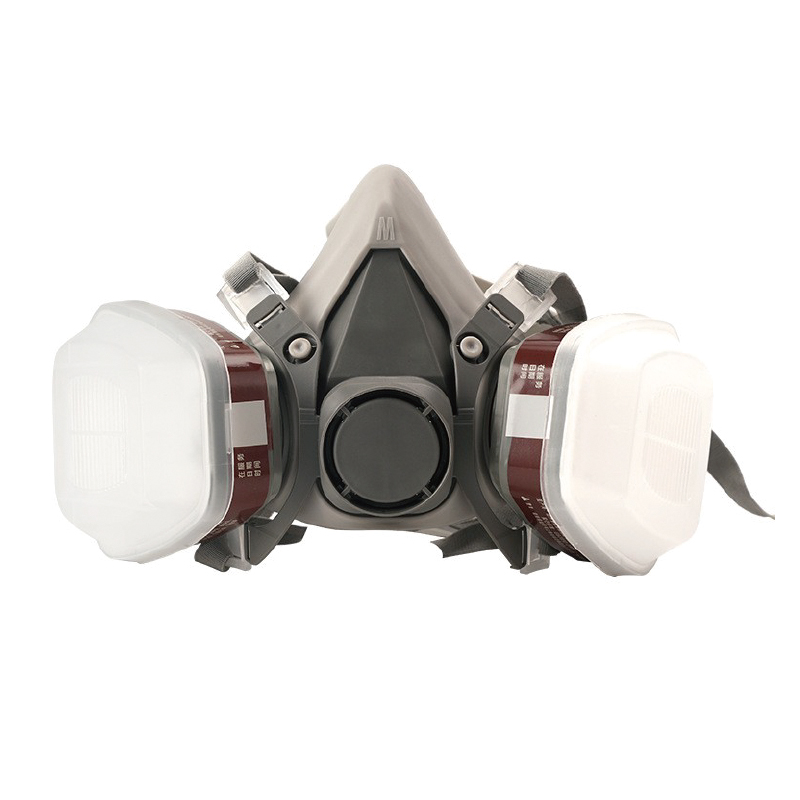
A pervasive misunderstanding in respiratory safety is the filter versus facepiece fallacy. Many users mistakenly believe that the mask itself purifies the air. In reality, the facepiece serves only to create an impenetrable seal against the skin and protect the eyes. The attached cartridge dictates the actual threat mitigation. A heavy-duty tactical mask cannot stop microscopic silica dust without a HEPA or P100 particulate layer, just as a standard industrial mask cannot neutralize chlorine gas without an activated carbon layer.
| Feature | Tactical Gas Mask | Industrial Respirator |
|---|---|---|
| Primary Material | Halo-butyl rubber / Bromobutyl | Silicone / Thermoplastic Elastomer |
| Filter Connection | Standardized 40mm NATO thread | Proprietary bayonet mount |
| Ocular Protection | Ballistic-rated polycarbonate | None (Half) / Standard impact (Full) |
| Assigned Protection Factor | 50 to 1000+ (depending on certs) | 10 (Half Face) / 50 (Full Face) |
| Target Hazards | CBRN, CWAs, unknown agents | Known industrial chemicals, particulates |
Filtration mechanisms vary drastically based on the threat profile. Particulate filters (rated N95, N99, or P100) use electrostatically charged microfibers to trap solid and liquid aerosols, including viruses, dust, and smoke. Gas and vapor cartridges utilize beds of activated carbon. The carbon is highly porous, trapping gas molecules through adsorption. Comprehensive CBRN canisters take this a step further by impregnating the activated carbon with specific metallic salts like copper, zinc, and silver. This chemical treatment allows the filter to neutralize a broad spectrum of toxic industrial chemicals (TICs) and chemical warfare agents through catalytic reactions.
Facepiece permeation rates further separate tactical equipment from industrial gear. When exposed to blistering agents or highly concentrated industrial solvents, material science becomes the deciding factor between safety and severe injury. Halo-butyl rubber offers exceptional resistance to chemical permeation. Standard silicone, while comfortable, acts somewhat like a sponge at a microscopic level when exposed to certain CWAs or heavy solvents over extended periods. The chemical eventually permeates the silicone matrix and reaches the user's skin.
Seal integrity determines the Assigned Protection Factor (APF). A mask is completely useless if contaminated air bypasses the filter and leaks through gaps between the rubber and the skin. Achieving a baseline APF of 10 with a half mask, or an APF of 50+ with full-face models, requires stringent fit testing. Qualitative fit testing uses a bitter or sweet aerosol to see if the wearer can taste the leak. Quantitative fit testing uses specialized machinery to measure the exact particle count inside and outside the mask. Facial hair, deep acne scars, and specific bone structures instantly compromise this seal, rendering the equipment ineffective.
The physical design of the visor directly impacts situational awareness and operational safety. Visor designs generally fall into two categories: panoramic and binocular. Panoramic visors use a single, large piece of curved polycarbonate. This provides an exceptional, unobstructed peripheral field of view, which is critical for situational awareness in chaotic environments. However, the extreme curvature causes slight optical distortion at the edges. Binocular designs use two separate, flat lenses. While this slightly reduces peripheral vision and creates a blind spot at the bridge of the nose, it eliminates optical distortion and allows the mask to fold flat for compact storage in tactical pouches.
Communication interfaces represent another critical divergence in design. High-end tactical masks feature mechanical voice emitter diaphragms that project the user's voice clearly through the rubber housing. Many also include electronic pass-throughs that connect directly to tactical radios, allowing for clear comms without breaking the seal. Standard industrial respirators often lack these advanced features, severely muffling vocal commands. This muffling creates a dangerous temptation for workers to pull the mask away from their face to speak, instantly exposing them to the hazardous atmosphere.
Sustained operations require physiological support, primarily hydration. Tactical platforms frequently feature integrated hydration tubes. These internal mouthpieces connect through the mask to external canteens or hydration bladders equipped with specialized valves. This allows operators to drink water in contaminated environments during deployments that may last upwards of twelve hours. Such features are virtually nonexistent in standard industrial models, as industrial workers typically leave the hazard zone, undergo decontamination, and hydrate safely in a clean environment.
Evaluating long-term logistics requires analyzing the initial procurement of the facepiece against the ongoing consumption of filters. The facepiece is a one-time acquisition, but filters are expendable consumables. Tactical masks generally utilize the 40mm NATO thread standard (STANAG 4155). This universal threading allows organizations to source filters from dozens of global manufacturers, ensuring supply chain resilience during emergencies. Conversely, a reusable respirator typically relies on proprietary bayonet mounts. While the initial facepiece might be less expensive, the organization is permanently locked into purchasing filters from that specific brand, which causes severe logistical bottlenecks during supply chain disruptions.
Shelf life and maintenance protocols dictate equipment readiness. Butyl rubber compounds possess an extraordinary shelf life, often exceeding 15 to 20 years when stored correctly in cool, dark environments. They resist ozone and UV degradation exceptionally well. Silicone elastomeric masks, while durable, tend to degrade, warp, or discolor faster when exposed to extreme heat, direct sunlight, or harsh decontamination chemicals. Organizations must implement strict maintenance schedules, replacing exhalation valves and head harnesses regularly to maintain NIOSH compliance.
User fatigue is a major physiological factor during extended shifts. Heavy respiratory equipment increases the thermal burden on the wearer, trapping heat and moisture against the face. Furthermore, pulling air through dense carbon beds and particulate filters requires significant lung power. This breathing resistance fatigues the diaphragm over an 8-to-12-hour shift. Industrial models prioritize lightweight construction and lower breathing resistance to mitigate this fatigue, whereas tactical masks accept higher weight and resistance as a necessary trade-off for maximum threat mitigation.
Navigating the complex web of global certifications is mandatory for legal compliance and worker safety. Industrial equipment in the United States must carry NIOSH approval for the specific hazard it mitigates. European equipment relies on CE marks and EN standards. Tactical equipment intended for extreme environments must pass rigorous CBRN certification processes, which test the mask against live chemical agents and extreme mechanical stress.
The most critical limitation of any Air-Purifying Respirator (APR) is the oxygen requirement. Neither tactical masks nor chemical respirators supply oxygen; they only filter the existing ambient air. Strict safety regulations mandate that the ambient environment must contain at least 19.5% oxygen. If oxygen levels drop below this threshold, or if the concentration of toxic gases displaces the oxygen, the environment becomes immediately lethal. In these scenarios, all APRs are useless, and personnel must escalate to a Self-Contained Breathing Apparatus (SCBA) or supplied-air systems.
The danger of misapplication is severe. Deploying a half mask in an IDLH (Immediately Dangerous to Life or Health) environment guarantees severe injury or death. Relying on basic particulate filters to stop organic vapors results in immediate chemical exposure. Similarly, using standard industrial silicone masks in environments containing blistering agents leads to material permeation and skin contact. Equipment must match the exact chemical profile and concentration levels identified in the hazard assessment.
Procuring the right equipment is only half the battle; training and adoption hurdles dictate actual field efficacy. Organizations must establish comprehensive respiratory protection programs. Field verification requires strict adherence to operational protocols:
Verify ambient oxygen levels exceed 19.5% using a calibrated multi-gas monitor before entering the hot zone.
Inspect the facepiece for micro-tears, exhalation valve degradation, or head strap elasticity loss.
Confirm the selected filter cartridge matches the specific chemical hazard profile and is within its expiration date.
Perform a negative pressure seal check by blocking the filter intake and inhaling sharply to ensure the mask collapses slightly against the face.
Execute a positive pressure check by covering the exhalation valve and exhaling gently to verify no air escapes around the facial seal.
Conduct a formal, documented workplace hazard assessment to quantify exact chemical concentrations, particulate threats, and ambient oxygen levels.
Schedule quantitative fit testing for all personnel using specialized particle-counting machinery to ensure their specific bone structure achieves a secure seal.
Audit your current filter inventory immediately to identify expired cartridges, ensure thread compatibility, and verify the filtration media matches your active threat profile.
Implement a strict maintenance and storage protocol to protect facepieces from UV degradation, extreme heat, and chemical exposure when not in active use.
A: A half-face respirator cannot provide adequate protection because it leaves the eyes exposed to severe irritation and incapacitation. You must use a full-face mask equipped with the correct combination filters, typically organic vapor, acid gas, and a P100 particulate layer, to effectively neutralize both the aerosolized particles and the irritating gases found in riot control agents.
A: A dual cartridge system splits the filtration media across two smaller canisters. This balances the weight on the user's neck and lowers breathing resistance by increasing the surface area. A single filter mask mounts one larger canister on the side or front. Side-mounted single filters are preferred by tactical users because they allow for a proper cheek-weld when aiming a rifle.
A: Generally, no. Most standard industrial respirators utilize proprietary bayonet mounts specific to their brand to ensure users stay within their filter ecosystem. 40mm NATO is a standardized threaded connection used primarily on tactical and CBRN masks. While aftermarket thread adapters exist for certain industrial models, using them often voids NIOSH certifications.
A: You must upgrade when the hazard assessment indicates the presence of eye-irritating chemicals, when the required Assigned Protection Factor (APF) exceeds 10, or when there is a risk of chemical splashing. Any entry into an unknown environment or a potential IDLH atmosphere requires transitioning to full-face protection or supplied air systems.
A: The mask itself does not filter anything; it only provides an airtight seal against your face. To filter smoke, silica dust, or biological particulates, you must attach a filter cartridge that includes a HEPA or P100 particulate filtration layer. Standard activated carbon filters designed solely for gases will not stop fine particulate matter.
A: Once unsealed, the activated carbon inside gas and vapor filters begins absorbing ambient humidity and trace chemicals from the air, degrading its capacity. Even if unused, an opened filter should typically be discarded within six months. During active use, filters must be replaced according to the manufacturer's specific end-of-service-life indicator or a calculated replacement schedule.
A: No. Both are strictly Air-Purifying Respirators (APRs). They pull ambient air through a filter medium to remove contaminants, but they do not generate or supply alternate oxygen. If you enter an environment with less than 19.5% oxygen, the mask will not prevent asphyxiation. You must use a Self-Contained Breathing Apparatus (SCBA) in oxygen-deficient atmospheres.


