
Views: 0 Author: Site Editor Publish Time: 2026-09-16 Origin: Site


A Safety Helmet is only effective if it remains securely on the head during an impact or fall. The fit mechanism dictates both energy absorption and retention. Safety managers and procurement teams constantly balance equipment selection with worker compliance. Selecting the wrong fit system leads to improper wear. It causes frequent manual adjustments. It reduces productivity and increases the risk of severe head injury. This technical evaluation breaks down the mechanical differences and operational trade-offs between ratchet and pin-lock suspension systems. We will guide your evidence-based PPE procurement by examining fit precision, pressure distribution, and daily usability on the job site.
Fit Precision Drives Compliance: Ratchet systems offer micro-adjustments that accommodate changing headwear (like winter liners) without requiring the user to remove the helmet, directly increasing wear compliance.
Pressure Distribution & Comfort: Advanced ratchet systems distribute suspension forces more evenly across the head, reducing pressure points and skin friction compared to static pin-lock bands.
Cost vs. Convenience: Pin-lock systems present a lower initial procurement cost and a lighter profile but require two hands and helmet removal to adjust, which can hinder productivity in dynamic environments.
Glove Compatibility: A ratchet suspension helmet is the industry standard for cold-weather or heavy-duty applications where workers cannot easily remove thick protective gloves to adjust their gear.
Standardization: Both systems, when properly maintained and fitted, meet strict ANSI Z89.1 and OSHA requirements for impact deflection
Modern head protection relies on a two-part system working in perfect synchronization. The rigid outer shell, typically molded from high-density polyethylene (HDPE), ABS plastic, or fiberglass, serves as the first line of defense. It deflects falling objects and resists penetration from sharp edges like exposed rebar or sheet metal. However, the hard shell alone cannot prevent traumatic brain injury or spinal compression. The helmet suspension system performs the actual energy absorption. It acts as an internal shock absorber for the human skull.
When a heavy object strikes the exterior shell, the kinetic energy transfers downward. The internal nylon or polyester straps stretch rapidly to absorb this sudden force. They dissipate the energy across the entire surface area of the skull rather than allowing it to concentrate at the point of impact. This mechanical stretching prevents concentrated blunt force trauma. It also protects the cervical spine from sudden, violent compression that could lead to paralysis.
The suspension rig maintains a mandatory clearance gap between the hard plastic shell and the user's head. ANSI standards require a minimum clearance distance, usually between 1 and 1.25 inches. If the suspension is too loose, the shell can bottom out and strike the head during an impact. If it is too tight, it causes severe discomfort and restricts blood flow. The fit mechanism directly controls this vital clearance gap.
Suspension systems typically feature four, six, or eight points of attachment to the outer shell. A four-point system forms a basic square of protection. A six-point or eight-point system creates a more circular, even distribution of force. More attachment points distribute impact forces more effectively across the webbing. Regardless of the point count, the circumferential headband secures the entire rig to the head. This headband utilizes either a pin-lock or a ratchet mechanism to adjust the sizing.
The pin-lock mechanism represents the traditional, time-tested approach to headgear sizing. It functions similarly to a standard adjustable apparel belt. The rear section of the plastic headband overlaps itself at the nape of the neck. One side of the band features a row of molded plastic pins or pegs. The opposite side features a corresponding row of punched holes.
To adjust the size, the user must physically remove the hat from their head. They pull the overlapping bands apart to unlock the plastic pins. They slide the bands closer together or further apart to reach the desired circumference. Finally, they press the pins firmly back into the holes. The interlocking plastic holds the band securely at that specific size through mechanical friction.
This design offers distinct mechanical advantages for specific work environments. It contains zero moving parts. There are no internal gears, metal springs, or plastic pawls to break under stress. This absolute simplicity makes it highly durable against blunt impacts and rough handling. It resists fouling from heavy environmental debris like drywall dust, mud, or wet concrete slurry. You can easily wash the entire band in a utility sink without worrying about trapping grit in small mechanical crevices.
The pin-lock design is incredibly lightweight. It adds virtually no mass to the overall rig, which reduces neck strain during extended twelve-hour shifts. The flat profile of the locking mechanism also prevents interference with other necessary PPE. It sits completely flush against the back of the head. It does not snag on heavy winter coats, fall protection harnesses, or welding hoods.
However, the simplicity creates rigid operational limitations. The adjustment increments are fixed by the manufacturer. The holes are usually spaced about one-eighth of an inch apart. A worker's ideal head size might fall exactly between two holes. They must choose between a fit that is slightly too tight or slightly too loose. Neither option promotes long-term comfort or optimal safety.
The adjustment process disrupts workflow on a busy job site. You cannot resize a pin-lock band while wearing it. You must take it off completely. You need two bare hands to pry the pins loose and snap them back together. You cannot perform this task while wearing heavy leather work gloves or insulated winter gear. In dynamic environments, this manual, two-handed process discourages workers from making necessary fit corrections throughout the day.
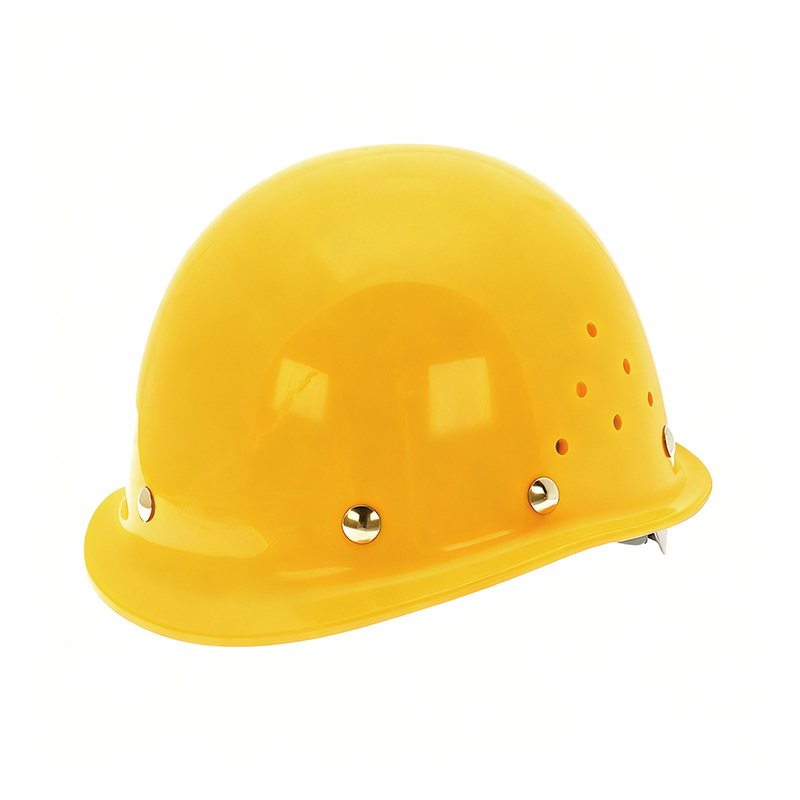
A ratchet suspension helmet utilizes a mechanical dial to control the headband circumference. The dial housing sits at the nape of the neck. Inside the hard plastic casing, a small gear interfaces with a toothed track molded into the headband. A spring-loaded pawl locks the gear in place to prevent backward slippage.
When you turn the dial clockwise, the internal gear pulls the overlapping tracks together. This tightens the band around the skull. When you turn it counterclockwise, it releases the tension. The pawl clicks audibly with each millimeter of movement. This provides clear tactile and auditory feedback during adjustment, letting the worker know exactly how much tension they are applying.
The primary advantage is absolute precision. The ratchet mechanism offers continuous micro-adjustments. Workers can dial in the exact tension required for their specific head shape and daily comfort level. They are not limited by pre-drilled holes. This precise tension eliminates localized pressure points and improves overall blood flow to the scalp, drastically reducing fatigue.
Operational efficiency drives the widespread popularity of the ratchet system. You can adjust the fit with one hand in less than a second. You do not need to remove the hat. You simply reach back and turn the dial. The oversized knobs are specifically designed with deep ridges for glove compatibility. Workers can tighten or loosen their gear without removing heavy leather riggers gloves or insulated winter hand protection.
The ratchet housing often incorporates an articulated nape strap. This strap pivots on a hinge to cup the occipital bone at the base of the skull. This cupping action anchors the hat firmly in place. It prevents the rig from shifting forward when the worker bends over to tie rebar or inspect a trench. It provides superior retention during high-angle work, scaffold building, or confined space entry.
The mechanical complexity introduces some minor drawbacks. The dial housing adds a small amount of weight to the rear of the hat. While minimal, some workers notice the difference in balance. The internal gears can trap fine particulate matter. Heavy drywall dust, sandblasting grit, or wet concrete can foul the mechanism over time. If the gear teeth strip from overtightening, the entire suspension requires immediate replacement.
Understanding the specific differences helps procurement teams make informed decisions for their crews. The following table outlines the functional contrasts between the two systems.
| Feature | Pin-Lock Suspension | Ratchet Suspension |
|---|---|---|
| Adjustment Mechanism | Interlocking plastic pins and holes | Mechanical gear and dial |
| Fit Precision | Fixed increments (approx. 1/8 inch) | Continuous micro-adjustments |
| Adjustment Method | Requires two hands and removal | One-handed, on-the-fly adjustment |
| Glove Compatibility | Poor (requires bare hands) | Excellent (oversized dials) |
| Retention Security | Standard headband grip | Enhanced (pivoting nape strap) |
| Weight Profile | Ultra-lightweight and flat | Slightly heavier due to dial housing |
| Debris Resistance | High (no moving parts to foul) | Moderate (gears can trap grit) |
Theoretical mechanics only matter when applied to real-world job sites. Different environments demand different performance characteristics from head protection. Procurement teams must analyze the specific daily tasks of their workforce to select the right gear.
Winter conditions drastically change PPE requirements. Workers wear insulated balaclavas, fleece liners, or heavy hoodies under their hard hats to prevent frostbite. As the day progresses and the sun comes out, temperatures fluctuate. A worker might start the morning with a thick liner and remove it by noon to prevent overheating.
A ratchet hard hat excels in this environment. The worker simply turns the dial counterclockwise to accommodate the extra bulk of the winter liner. When they remove the liner later, they turn the dial clockwise to secure the fit against their bare head. They perform these adjustments instantly, without removing their insulated work gloves. A pin-lock system requires the worker to stop working, remove their gloves, expose their hands to freezing temperatures, and manually pry the pins apart. This friction often leads workers to skip adjustments entirely, resulting in dangerously loose headgear that falls off at the slightest movement.
Summer conditions present a completely different challenge. Workers sweat profusely in direct sunlight. Sweatbands become saturated within hours. Saturated bands lose their friction against the skin. The hat begins to slide around the head, obstructing vision and creating a hazard.
Workers frequently wipe their brows or adjust sweatbands. A ratchet system allows them to instantly retighten the band after wiping away sweat. However, the mechanical dial can trap sweat and salt deposits. If not rinsed regularly, the salt can crystallize inside the gear housing, causing the dial to seize. Pin-lock systems resist this issue entirely. You can submerge a pin-lock band in a bucket of water to rinse out sweat without worrying about internal mechanisms rusting or seizing.
Ironworkers, scaffold builders, and tower climbers operate in high-angle environments. They constantly look up at crane loads, look down at connections, and bend over to secure rigging. Gravity constantly pulls at their headgear. A falling hard hat presents a lethal struck-by hazard to workers on the ground below.
An adjustable safety helmet with a ratchet dial is heavily favored here. The pivoting nape strap locks under the occipital bone. This mechanical anchor prevents the hat from falling off when the worker leans over an edge. Pin-lock systems rely solely on circumferential friction. They are much more likely to slip off during extreme physical movements, requiring the addition of a chin strap to maintain compliance.
Welders and pipefitters often wear welding hoods attached directly to their hard hats via specialized adapters. The added weight of the welding shield pulls the front of the hat downward. A pin-lock system struggles to counterbalance this frontal weight, often digging into the worker's forehead. A ratchet system allows the worker to crank the tension slightly higher to support the shield. However, the rear dial can sometimes interfere with tight confined spaces, such as crawling inside a steel pipe to make a weld. In these highly specific scenarios, the flat profile of a pin-lock might be preferred to avoid snagging.
Safety equipment only works if employees actually wear it correctly. Comfort is not a luxury on a construction site; it is a critical driver of safety compliance. Discomfort leads to dangerous behavioral modifications that compromise the integrity of the PPE.
If a headband pinches the temples, workers will loosen it. A loose hat will not maintain the required clearance gap during an impact. It will also fall off easily. If the band traps heat, workers will push the hat back on their heads, exposing the forehead to impact hazards. They might even remove the hat entirely when the safety manager walks away.
Pin-lock systems can create uneven pressure distribution. Because the sizing relies on fixed increments, the band often forms an imperfect oval. This oval might press hard against the forehead while leaving gaps at the temples. This localized pressure restricts surface blood flow. It causes severe tension headaches over a long shift, leading to distraction and fatigue.
Ratchet systems distribute tension much more evenly. The micro-adjustments allow the band to conform closer to the natural, asymmetrical shape of the human skull. The tension spreads across the entire circumference. This eliminates localized pinch points. When workers do not experience headaches, they leave their PPE on, ensuring they remain protected from unexpected hazards.
Regulatory bodies do not mandate a specific suspension type. Both ratchet and pin-lock systems are fully compliant with industry standards when manufactured, tested, and worn correctly.
In the United States, the Occupational Safety and Health Administration (OSHA) enforces head protection under 29 CFR 1910.135 for General Industry and 29 CFR 1926.100 for Construction. These federal regulations require head protection to meet the American National Standards Institute (ANSI) Z89.1 standard.
ANSI Z89.1 dictates rigorous performance criteria. It tests impact energy attenuation, apex penetration, and electrical insulation. During testing, the hat is mounted on a standardized magnesium head form. An 8-pound steel weight is dropped onto the shell from a specific height. Sensors measure the exact force transmitted through the suspension to the neck.
Both suspension types must pass this exact same drop test. The standard requires the suspension to maintain a specific clearance gap under load. Neither the pin-lock nor the ratchet provides inherently better impact deflection. The mechanical strength of the nylon or polyester crown straps handles the kinetic energy, not the sizing band.
The compliance difference lies entirely in human behavior. A construction safety helmet with a pin-lock is perfectly safe if adjusted correctly. However, if a worker leaves it loose because it is too hard to adjust with gloves on, it becomes non-compliant in practice. Procurement teams must evaluate which system their specific workforce will actually adjust and wear properly throughout the day.
Suspension systems degrade over time. They face constant exposure to ultraviolet light, extreme temperature fluctuations, human sweat, and industrial chemicals. The plastic clips become brittle. The nylon straps lose their elasticity and tensile strength. Regular inspection is mandatory for both types to ensure they will perform during an impact.
Examine the crown straps for fraying, cuts, or chemical burns. Any damaged webbing requires immediate replacement.
Check the plastic attachment clips where the suspension connects to the shell. Look for stress cracks or white discoloration indicating plastic fatigue.
Inspect the sweatband. Ensure it is clean and securely attached. A degraded sweatband allows sweat to enter the eyes, creating a secondary hazard while operating machinery.
Verify the clearance gap. Press down firmly on the top of the shell. You should feel a distinct gap before the shell touches the crown straps.
For pin-lock systems, inspect the plastic pins for wear. Constant adjustment can round off the edges of the pegs. Check the sizing holes for tearing. If the holes stretch out, the pins will not hold securely.
For ratchet systems, test the dial mechanism daily. Turn it fully clockwise and counterclockwise. It should move smoothly without binding. Listen for the crisp clicking sound of the pawl. If the dial spins freely without clicking, the internal gear is stripped.
Even with the correct suspension system, workers may experience fit issues. Use this troubleshooting guide to resolve common complaints on the job site.
| Symptom | Probable Cause | Corrective Action |
|---|---|---|
| Helmet falls forward when bending | Loose nape strap or incorrect sizing | Tighten ratchet dial; ensure nape strap sits below the occipital bone. |
| Tension headaches at the temples | Overtightened band or imperfect oval shape | Loosen dial slightly; if using pin-lock, adjust one size larger and add a sweatband. |
| Ratchet dial spins freely | Stripped internal gears | Replace the entire suspension system immediately. Do not attempt to repair. |
| Helmet sits too high on the head | Crown straps adjusted too tightly | Adjust the vertical height settings on the suspension clips to lower the shell. |
| Pin-lock band pops open | Stretched sizing holes or worn pins | Replace the suspension system. The plastic has fatigued beyond safe use. |
The fit mechanism must complement the overall shell design. Traditional hard hats feature a front brim or a full brim. These hats sit relatively high on the head. A pin-lock system works adequately for these traditional designs in low-mobility roles like flaggers or heavy equipment operators.
Modern climbing-style helmets are changing the industry landscape. These helmets feature a low-profile, brimless design. They sit much closer to the skull. They often incorporate integrated chin straps and high-density foam liners alongside the webbing. These designs draw heavy inspiration from mountaineering gear. They are built for extreme mobility, confined spaces, and fall protection.
Climbing-style helmets almost exclusively utilize ratchet suspensions. The low-profile shell requires precise tensioning to maintain the correct clearance gap. The pivoting nape strap of a ratchet system works in tandem with the chin strap. Together, they lock the helmet onto the head from multiple angles. If you are transitioning your workforce to climbing-style helmets, you will be transitioning to ratchet systems by default.
Procuring the best equipment is useless if workers do not know how to wear it. Conduct mandatory training sessions on proper fit procedures during safety stand-downs or morning toolbox talks.
For pin-lock systems, teach workers to find their exact size before their shift starts. Instruct them to adjust the band so it sits squarely on the head. It should not tilt backward or forward. The band should be tight enough to stay on when they bend over, but loose enough to avoid pinching the skin.
For ratchet systems, teach the "bend test." Instruct the worker to put the hat on and turn the dial until it feels snug. Then, have them bend forward at the waist and look directly at the ground. The hat should not fall off. If it shifts, they need to tighten the dial one or two more clicks. Remind them not to overtighten the dial, as this damages the internal gears and causes severe headaches.
Choosing between a ratchet and a pin-lock suspension impacts daily operational efficiency and long-term safety compliance. While both meet regulatory standards, their mechanical differences dictate how workers interact with their protective gear. Follow these steps to optimize your head protection program:
Audit your current job sites to identify environmental factors like cold weather, high heat, or high-angle work that dictate specific fit requirements.
Survey your workforce directly regarding comfort issues, tension headaches, or frequent slippage with their current headgear.
Field-test both suspension types with a small crew before committing to a fleet-wide purchase to gauge actual usability.
Establish a strict, calendar-based replacement schedule for all internal suspension components to prevent mechanical failure.
Conduct hands-on training sessions demonstrating proper sizing, the "bend test," and daily inspection criteria.
A: Yes, if the manufacturer offers both types for your specific helmet model. You must use a replacement suspension designed exactly for that shell. Never mix brands or force an incompatible suspension into a shell, as this voids all safety certifications and compromises impact protection.
A: Most manufacturers recommend replacing the suspension every 12 months under normal conditions. In harsh environments with heavy chemical exposure, extreme temperatures, or excessive sweat, you should replace it every six months. Always replace it immediately if you spot visible damage or stripped gears.
A: No. While a ratchet mechanism is slightly heavier than a simple pin-lock band, the weight difference is negligible, usually less than an ounce. The improved weight distribution and secure fit often make the ratchet feel lighter and more balanced on the head during a long shift.
A: Yes. OSHA requires head protection to meet ANSI Z89.1 standards. Both pin-lock and ratchet suspensions pass these impact and penetration tests when manufactured properly. Compliance depends entirely on the worker adjusting and wearing the system correctly on the job site.
A: It falls off because the suspension is too loose or lacks a pivoting nape strap. Pin-lock systems often slip during high mobility tasks. Switching to a ratchet system with an articulated nape strap that cups the base of the skull will prevent this shifting.
A: Yes. You should wash the suspension regularly with mild soap and warm water to remove sweat, dirt, and skin oils. Rinse it thoroughly and let it air dry. Do not use harsh solvents or machine wash it, as this degrades the plastic and nylon webbing.
A: No. Wearing a baseball cap interferes with the suspension system. The metal button on top of the cap can drive into your skull during an impact. The cap also prevents the headband from gripping your head properly. Only use manufacturer-approved winter liners or cooling bandanas.


