
Views: 0 Author: Site Editor Publish Time: 2026-04-15 Origin: Site


Anti-fog Face Shield can improve workplace safety when clear vision is critical to the job. In industrial settings, workers often move between hot and cool areas, wear protective equipment for long shifts, or work in humid, dusty, or physically demanding environments. When a shield fogs up, visibility drops, reaction time can slow, and workers may be more likely to lift the visor, adjust it too often, or wear it incorrectly. A face shield that stays clearer during use can help reduce those problems.
That said, anti-fog performance should be viewed as one part of workplace safety, not the whole answer. A shield still needs the right impact resistance, material, structure, and fit for the actual hazard. For buyers and safety managers, the better question is not just whether anti-fog matters, but where it matters most and how it affects daily use in real work conditions.
In many industrial tasks, workers do not just need protection. They also need reliable vision to operate tools, judge distances, inspect surfaces, and react quickly to moving hazards.
Based on the supplied product information, face shields are used in environments such as:
grinding and cutting
welding and casting
construction and renovation
machinery repair and maintenance
garden work and wood-cutting
industrial processing and material handling
In all of these situations, poor visibility can create secondary safety risks. A worker using a face shield for grinding, for example, needs to see sparks, debris flow, and tool position clearly. A worker using a face shield welding setup or a clear face shield visor around hot work needs stable vision to avoid mistakes and maintain safe posture.
If fogging interferes with that visibility, the shield may still cover the face physically, but it may not support safe work as effectively as intended.
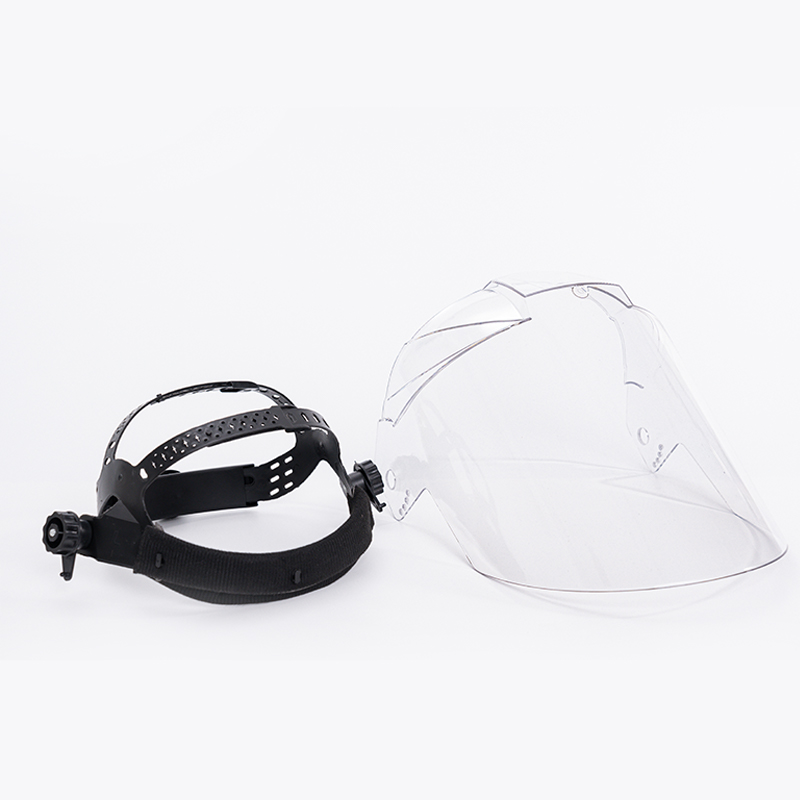
Anti-fog face shields can improve workplace safety in several practical ways.
The most direct safety benefit is better visibility. If a face shield remains clearer during use, workers can keep better visual control of tools, moving materials, and surrounding hazards.
This matters in jobs where the provided products are commonly used, including grinding, cutting, construction, and machinery work. Transparent PET and PC shields are specifically valued for clear vision in these environments, so reducing fog can make that clarity more dependable during real shifts.
When workers cannot see clearly, they often respond by flipping the visor up, shifting it forward, or removing it temporarily. The supplied product information emphasizes 180° rotating shield designs because users often need quick adjustment during work. That convenience is useful, but from a safety perspective, fewer unnecessary adjustments are better when hazards are active.
An anti-fog face shield mask may help workers keep the visor in the protective position for longer periods instead of lifting it simply to clear their view.
Fogging is more likely when workers sweat, breathe heavily, work outdoors in changing weather, or move between different temperatures. The product information you provided repeatedly highlights breathable sponge headgear, air holes, lightweight construction, and ergonomic support for long wear. Those details suggest that comfort and airflow already matter in these product categories.
Anti-fog performance fits into that same logic. Better comfort and better visibility often work together. A shield that is easier to wear for hours is more likely to be used correctly.
Some jobs require not only protection but also precise vision. The uploaded product information highlights high optical clarity for transparent shields used in cutting, maintenance, DIY work, and construction applications.
In those cases, anti-fog treatment may improve safety indirectly by helping workers:
align tools more accurately
inspect equipment more clearly
avoid positioning errors
maintain steadier workflow without repeated interruption
Anti-fog benefits are not equally important in every work environment. They matter most where clear face protection and stable visibility are both essential.
A face shield for grinding is used where particles, sparks, and dust are common. Because grinding work often requires constant visual attention, fogging can become a real usability problem. A clear impact-resistant visor with anti-fog performance can be especially helpful in these settings.
Construction workers often face dust, changing weather, physical exertion, and repeated movement between indoor and outdoor areas. The supplied product line includes several face shields for construction and renovation use, which makes anti-fog performance particularly relevant in these applications.
Maintenance work usually involves close viewing, inspection, and frequent position changes. Fogging can slow down these tasks and encourage workers to lift the shield too often. For transparent industrial visors used in repair and mechanical service, anti-fog performance can add practical safety value.
Outdoor jobs such as mowing, trimming, and wood-cutting can involve humidity, sweat, and changing temperatures. The uploaded product information already emphasizes weather resistance, breathable headgear, and outdoor usability for several face shield types.
In these jobs, anti-fog performance may be especially useful on clear plastic visors, while mesh shields may naturally avoid some fogging issues because of their open structure.
Anti-fog can improve usability, but it does not replace correct product selection. A shield must still match the hazard.
Based on the product information provided, buyers may need to choose among:
transparent PET shields
transparent PC shields
steel mesh face shields
one-piece clear shields
bracket face shield systems
helmet-compatible shield setups
Each type has different strengths.
These are the most relevant types when discussing anti-fog because clear visibility is part of their core value. The supplied material describes PET as lighter and more cost-effective for lower- to medium-risk tasks, while PC is positioned for stronger impact resistance in more demanding industrial environments.
Mesh designs are useful in mowing, branch cutting, landscaping, and other debris-heavy outdoor tasks. Because they are open rather than fully transparent, fogging may be less of an issue, but they serve a different protection role than a clear visor.
Bracket face shield systems provide flexibility across departments or job sites. If a buyer is selecting face protection for multiple work conditions, the ability to change visor types may matter more than anti-fog alone.
For a trustworthy industrial article, it is important not to overstate the benefit. Anti-fog can improve performance, but it does not solve every safety issue.
It does not replace:
impact resistance
heat resistance
corrosion resistance
proper coverage
secure headgear
helmet compatibility where required
correct PPE selection for the task
For example, a clear anti-fog visor may still be the wrong choice if the job really requires a steel mesh shield, a high-temperature model, or a more specialized welding protection setup. A face shield welding application should still be evaluated according to the actual heat, spark, and process requirements.
Risk reminder: Anti-fog should be treated as a performance-enhancing feature, not proof that one shield is suitable for every high-risk environment.
If you are sourcing face protection for industrial use, these are the most practical selection criteria.
Ask whether the worker faces:
high-speed impact
sparks or hot splash
dust and debris
moisture and humidity
outdoor weather exposure
chemical or corrosive contact
This determines whether a transparent visor, mesh shield, or specialized high-temperature model makes the most sense.
For a transparent face shield visor, material matters. The product information indicates PET and PC options for different risk levels, with PC being the stronger candidate for higher-impact environments.
The supplied products repeatedly emphasize breathable sponge, adjustable headwear, and long-wear comfort. These features matter because anti-fog performance works better in real use when the overall design also supports airflow and stable wear.
For long shifts, anti-fog can become more valuable because repeated clearing, lifting, or cleaning of the shield interrupts work and may reduce protection consistency.
If the worksite requires helmets or additional protective equipment, a bracket system or helmet-compatible design may be more important than a basic standalone visor.
When evaluating anti-fog face shield products, buyers often make a few avoidable mistakes.
It only addresses visibility. It does not automatically indicate stronger impact or heat performance.
A workshop, a construction site, and a landscaping team may all need face protection, but not the same visor type.
A clear anti-fog shield is useful only if it is also appropriate for the hazard level.
If the headgear is unstable or uncomfortable, workers may still lift or misuse the shield even if the lens resists fog.
Yes, anti-fog face shields can improve workplace safety because they help maintain clearer vision, reduce unnecessary visor lifting, and support more consistent protection during active work. Their value is especially clear in grinding, construction, maintenance, and other jobs where workers rely on transparent face protection for both safety and task accuracy.


