
Views: 0 Author: Site Editor Publish Time: 2026-07-12 Origin: Site


Misunderstanding personal protective equipment limits causes devastating consequences. Workplace eye injuries remain alarmingly common despite strict industrial regulations. Many safety managers confuse primary eye protection with secondary face protection. People often believe larger coverage automatically guarantees complete safety against all hazards. This assumption is dangerous. Selecting the wrong gear leads directly to compliance violations. Failing to layer proper equipment causes severe workplace injuries.
We must clarify these crucial distinctions to protect workers properly. This guide explores exactly how tight-fitting goggles differ from broader facial barriers. You will learn specific industrial safety standards governing both options. We will detail exactly when high-hazard environments require simultaneous use. You can then audit your current safety protocols effectively.
Safety Goggles provide a primary, 360-degree seal around the eyes to block fine dust, chemical splashes, and airborne particles.
A full face shield provides secondary protection for the broader face and neck against high-velocity impact, heat, and large debris.
They are not mutually exclusive. High-hazard applications (like metal grinding or chemical handling) strictly require wearing both simultaneously.
Compliance Reality: A face shield is almost never legally classified as standalone primary eye protection.
You cannot properly protect your team without understanding the structural anatomy of different safety gear. Safety goggles and facial barriers serve distinct purposes. They protect different anatomical zones. They operate on entirely different physical principles.
Safety goggles isolate your eyes from the immediate environment. They form a tight, form-fitting seal against your facial contours. This soft rubber or silicone seal leaves no gaps. Dangerous elements cannot bypass this physical barrier. The design targets a very specific zone: the eyes and the immediate surrounding orbital area.
Facial shields take a broader approach. They extend from the brow down to below the chin. They curve around the sides of your head. These devices deflect larger hazards away from your face. However, their design inherently leaves open gaps at the bottom and sides. Air flows freely under the visor. This airflow brings microscopic hazards along with it.
Safety standards define these items very specifically. OSHA and EHS guidelines classify goggles as primary eye protection. You can wear them alone for specific low-impact, high-particle tasks. Guidelines classify shields as secondary protection. You almost never wear secondary protection alone. You must pair secondary protection with primary eye protection.
The "bounce hazard" perfectly illustrates this classification rule. Imagine a worker grinding metal. A large spark hits the worker's chest. The spark bounces upward. It travels under the open rim of the protective visor. If the worker lacks primary eye protection, the spark strikes the eye directly. The tight seal of goggles neutralizes this dangerous bounce hazard completely.
| Feature | Safety Goggles (Primary) | Facial Shields (Secondary) |
|---|---|---|
| Seal Type | 360-degree tight skin contact | Open bottom and sides |
| Target Protection Area | Eyes and immediate orbital bone | Nose, mouth, cheeks, and neck |
| Airborne Particle Defense | Excellent (stops floating dust) | Poor (allows updrafts) |
| High-Velocity Impact | Moderate (protects eyes only) | Excellent (deflects heavy shrapnel) |
You must specify primary eye protection based on environmental risks. Certain hazard profiles require the absolute isolation provided by a tight seal. Deflection alone will not keep your workers safe in these specific scenarios.
Fine airborne particulate matter poses a massive risk to eyesight. Woodworking generates ultra-fine sawdust. Dry chemical handling releases caustic powders into the air. These microscopic particles float freely. They follow air currents around standard safety glasses. A tight silicone seal blocks these particles completely.
Liquid chemical splashes represent another crucial hazard profile. Caustic vapors and harsh solvents can cause permanent blindness in seconds. An accidental spill sends droplets flying in unpredictable directions. You must isolate the eyes from both the liquid droplets and the resulting chemical fumes.
Environments with multi-directional airborne hazards demand primary protection. Wind or ventilation systems blow debris from all angles. A simple frontal barrier fails to stop debris blowing in from the side or behind.
You cannot buy safety gear based on appearance. You must look for specific ANSI ratings. These markings prove the equipment survived rigorous laboratory testing. For splash hazards, verify the goggles carry an ANSI D3 rating. For fine dust environments, demand an ANSI D4 rating. These specific codes guarantee appropriate hazard resistance.
Ventilation style plays a massive role in performance. You must match the ventilation type to your specific workplace hazard:
Direct Vented: These feature small holes around the frame. They prevent fogging well. They protect against impact. However, they allow chemical splashes to penetrate.
Indirect Vented: These use covered vents. Air flows through a baffled path. Liquids cannot navigate this path. You should choose these for chemical splash zones.
Non-Vented: These seal completely. They block dangerous vapors and toxic gases. You will need aggressive anti-fog coatings when using non-vented options.
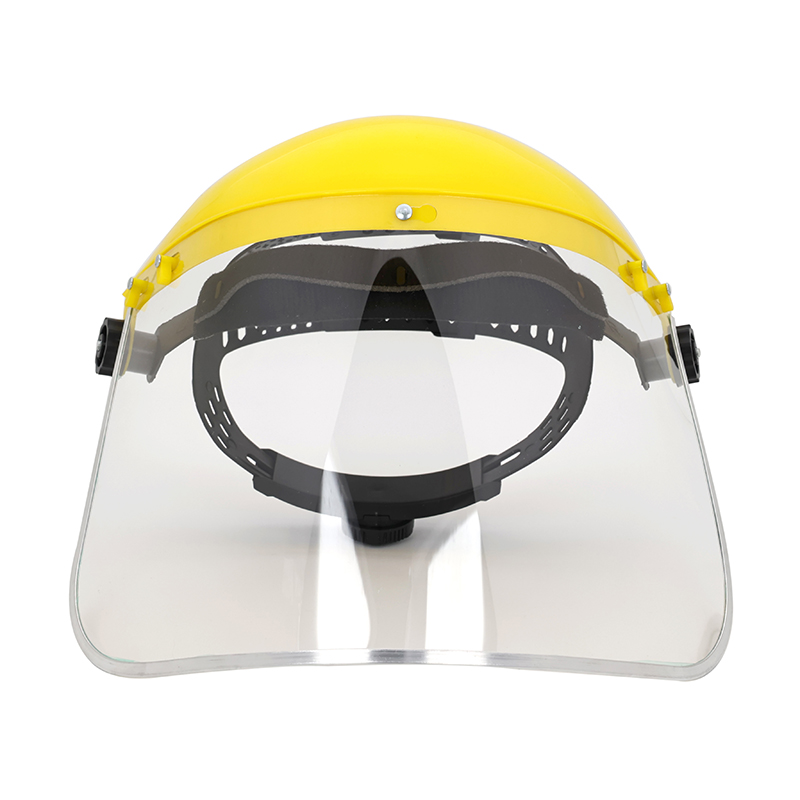
Certain jobs generate hazards too severe for eye protection alone. You must deploy secondary protection to shield the broader facial anatomy. A full face shield provides a crucial first line of defense against massive physical trauma.
Heavy metalworking generates severe threats. Grinding and cutting operations throw high-velocity flying debris. A shattered grinding wheel acts like shrapnel. Small goggles cannot protect your nose or cheeks from this extreme impact. A large, durable visor absorbs and deflects this kinetic energy.
Extreme heat environments require specialized secondary barriers. Furnace operations and smelting produce intense radiant heat. Arc flash scenarios generate blinding light and thermal blasts. You must specify specialized tinted and heat-rated visors for these environments. Standard clear plastic will melt or fail to block hazardous radiation.
Biological hazards and massive chemical splash zones demand expansive coverage. Healthcare workers face dangerous biological fluids. Industrial workers handle pressurized chemical pipes. A burst pipe creates a massive splash front. Your skin absorbs these dangerous chemicals rapidly. You must shield the entire face to prevent severe chemical burns or biological contamination.
Broader coverage prevents catastrophic facial injuries. Goggles leave the nose, mouth, cheeks, and neck totally exposed. Lacerations to these areas cause severe bleeding and permanent scarring. A comprehensive visor stops these injuries before they reach the skin.
These devices also offer operational flexibility. Workers can lift or flip the visor upward. This allows clear communication during non-hazardous moments. Workers can read instructions or inspect parts closely without removing their primary eye protection underneath.
| Hazard Type | Primary Threat | Required Action |
|---|---|---|
| Light Machining | Frontal impact | Safety Glasses |
| Chemical Mixing | Multi-directional splash | Indirect Vented Goggles |
| Heavy Grinding | Shrapnel + Fine Dust | Goggles + Shield |
| Furnace Work | Radiant Heat + IR | Tinted Shield over Glasses |
Many people incorrectly view safety gear as an either/or choice. High-risk scenarios eliminate this choice entirely. You must implement the "Double Up" rule. Workers must wear primary eye isolation underneath their secondary facial barriers.
Heavy grinding provides the clearest example of the double-up requirement. An operator spinning an abrasive wheel creates two distinct hazard types simultaneously. The wheel throws large, hot metal sparks directly at the operator's face. Simultaneously, the process creates a cloud of microscopic metal dust.
The secondary barrier stops the heavy shrapnel. The large visor deflects the sparks away from the soft tissue of the face. However, the microscopic metal dust floats in the air. This dust travels freely under the bottom edge of the visor. If the operator lacks sealed eye protection, this abrasive dust settles directly onto the corneas. You must enforce the use of a Face Shield over tightly sealed goggles to neutralize both threats.
Ignoring the double-up rule invites massive liability. Safety inspectors actively look for this specific violation. Allowing workers to perform high-impact tasks with only a visor violates core safety protocols. OSHA routinely issues severe citations for this exact oversight.
Your company bears full responsibility for resulting injuries. A worker blinded by ricocheting debris will rightly point to inadequate safety enforcement. You protect your workforce and your organization by mandating dual protection layers during hazardous operations.
Many workers wear prescription glasses. This reality complicates safety compliance. Standard prescription glasses offer zero industrial protection. They shatter upon impact. They lack side shields. They never form a proper seal against dust.
Workers cannot simply wear standard prescription glasses under a large visor. This configuration fails every safety standard. You have two acceptable solutions for these employees. First, you can provide dedicated prescription-rated safety goggles. These replace their everyday glasses entirely during shifts. Second, you can provide Over-The-Glass (OTG) goggles. These feature deep frames. They fit comfortably over standard glasses while maintaining a proper seal against the face.
You need a systematic approach to equipment selection. Guesswork leads to vulnerable workers and wasted budgets. Use this structured evaluation framework to choose appropriate gear.
You must specify lens materials based on primary hazard types. Not all clear plastics perform the same way. The wrong material will degrade rapidly or shatter catastrophically.
Polycarbonate: Choose this material for high-impact resistance. Polycarbonate flexes and absorbs kinetic energy. It withstands hits from shattered grinding wheels or flying rivets. It performs exceptionally well in manufacturing and cutting environments.
Acetate: Choose this material for superior chemical resistance. Acetate rejects caustic fluids and harsh solvents. Polycarbonate often clouds or cracks when exposed to certain chemicals. Acetate maintains optical clarity in laboratories and chemical processing plants.
Workers will abandon uncomfortable safety gear. You must address adoption hurdles proactively. Fogging represents the biggest complaint when doubling up. Wearing two layers of plastic traps body heat rapidly. You must recommend premium anti-fog coatings on both the primary goggles and the inner surface of the secondary visor.
Weight and ergonomics also drive adoption. A heavy visor strains the neck muscles over an eight-hour shift. Choose ratcheting headgear carefully. High-quality headgear features padded suspension systems. These systems distribute the weight evenly across the skull. This reduces neck fatigue and encourages consistent usage.
Follow these specific steps to finalize your equipment roster:
Conduct a site hazard assessment: Walk the floor. Document exactly what hazards exist. Separate these hazards into three categories: Impact, Splash, and Dust. Determine which zones require primary protection and which require the double-up approach.
Check ANSI Z87.1 markings: Audit your proposed equipment. Verify the physical stamps on the frames. Look for the "+" sign indicating high-velocity impact rating. Look for D3 or D4 markings if your site features chemical or dust hazards.
Test physical compatibility: Never buy gear in isolation. Order physical samples. Ensure the chosen primary eye seal physically fits beneath the chosen secondary visor. The visor must lower completely without striking the frames underneath. The outer gear must never break the tight seal of the inner gear.
Proper worker protection requires precise equipment deployment. You now understand the fundamental differences between primary and secondary defensive layers. Safety goggles rely on a tight facial seal to block airborne particles and unpredictable chemical splashes. A broader facial visor relies on deflection to protect your nose, cheeks, and neck from massive physical trauma. They perform different jobs entirely.
You must recognize that high-risk environments tolerate no compromises. Metalworking, caustic chemical handling, and heavy grinding demand both layers simultaneously. The secondary layer stops the major impact. The primary layer stops the microscopic elements floating underneath. Your next step involves immediate action. Audit your current site hazard assessments today. Update your procurement criteria immediately. Ensure your team maintains strict double-up compliance wherever hazards dictate.
A: No. It cannot replace primary eye protection. Facial visors feature an open-bottom design flaw. This open gap allows floating dust, chemical vapors, and ricocheting debris to travel freely upward. You must wear sealed eye protection underneath to stop these bypass hazards.
A: Yes. Standard industrial safety protocols mandate this practice. OSHA and ANSI classify broader visors as secondary protection only. You must always wear primary eye isolation underneath to guarantee comprehensive safety against multi-directional threats.
A: You need both combined for severe chemical risks. Indirect-vented goggles provide the crucial tight seal needed to stop chemicals from reaching your eyes. The secondary outer visor protects your nose, mouth, and neck skin from absorbing the caustic splash.
A: You must attack fogging systematically. Purchase equipment featuring factory-applied permanent anti-fog coatings. Manage your ventilation gaps by choosing indirect-vented primary frames rather than non-vented frames. Ensure the outer visor sits far enough away from your nose to allow adequate ambient airflow.


