
Views: 0 Author: Site Editor Publish Time: 2026-07-09 Origin: Site


Selecting the wrong facial protection increases injury risks significantly on the floor. It also exposes companies to severe regulatory compliance violations. Environmental Health and Safety managers face high stakes daily. You must protect workers from diverse hazards securely and consistently. Industrial face protection acts as more than a mere physical barrier. It serves as a critical component of a comprehensive personal protective equipment ecosystem. Failing to integrate it properly creates dangerous gaps in your safety protocols.
This guide clarifies when you strictly require a safety face shield. We will explore matching specific shield ratings to actual workplace hazards. You will also learn how to evaluate various rollout options for facility-wide adoption. Many procurement teams struggle to balance comfort and strict regulatory demands. A poor choice directly impacts daily operational efficiency. We aim to eliminate this guesswork completely. You will gain actionable insights for your next internal safety audit.
Primary vs. Secondary: A face shield is explicitly classified as secondary protection; it must almost always be worn over primary eye protection (like safety goggles or spectacles).
Hazard Specificity: Not all shields offer the same protection. Material selection (e.g., polycarbonate vs. acetate) must be dictated by the specific hazard (impact, chemical splash, or thermal).
Regulatory Baseline: Proper selection hinges on meeting ANSI Z87.1 standards and aligning with OSHA 1910.133 requirements for eye and face protection.
Procurement ROI: Total cost of ownership depends on modularity (replaceable visors) and user adoption (anti-fog performance and headgear comfort).
Many facilities fail compliance audits regularly due to improper gear usage. Workers often wear shields as their sole eye protection. They mistakenly believe the large visor offers complete coverage. This habit creates a highly dangerous false sense of security. Flying debris easily bypasses the open edges of the visor. Small metal shavings can bounce off the chest and travel upward rapidly. They enter the unprotected ocular area instantly.
OSHA mandates explicitly classify these devices as secondary protectors. You must pair them properly for full regulatory compliance. They act as a supplementary defense rather than a standalone barrier. Integrating them requires careful thought and physical testing. You have to pair a Face Shield directly over safety glasses or tight-fitting goggles. We need to evaluate how different headgear designs accommodate primary eyewear.
A poorly fitted suspension system causes severe pressure points around the temples. Thick safety glass frames can interfere heavily during daily use. This interference pushes the visor too far outward. It can also create severe visual distortion for the wearer. Properly matched gear eliminates these physical friction points. Comfort ensures workers actually keep the gear on their heads. Best practice dictates testing combinations directly on the floor. Common mistakes include ignoring temple arm thickness during evaluation. You must ensure seamless compatibility across your entire safety loadout.
You need a solid evaluation framework for facility safety. Categorizing solutions based on your physical environment guides the shortlisting process. We evaluate hazards thoroughly to assign the correct material type. High-velocity impact scenarios require incredibly tough visor materials. Polycarbonate dominates this specific space due to its structural durability. It absorbs heavy kinetic energy without shattering into dangerous shards. However, it still has specific application limits you must recognize.
Grinding, chipping, and heavy machining operations demand high impact ratings. Chemical splashes present entirely different challenges on the factory floor. You should evaluate acetate and PETG materials for corrosive environments. These materials resist chemical degradation far better than standard plastics. Polycarbonate often clouds or dissolves upon contact with harsh industrial solvents. A chemical-resistant seal becomes absolutely necessary here. Wrap-around designs prevent the capillary action of dangerous liquids. Liquids can creep under standard brims and drip downward into the eyes.
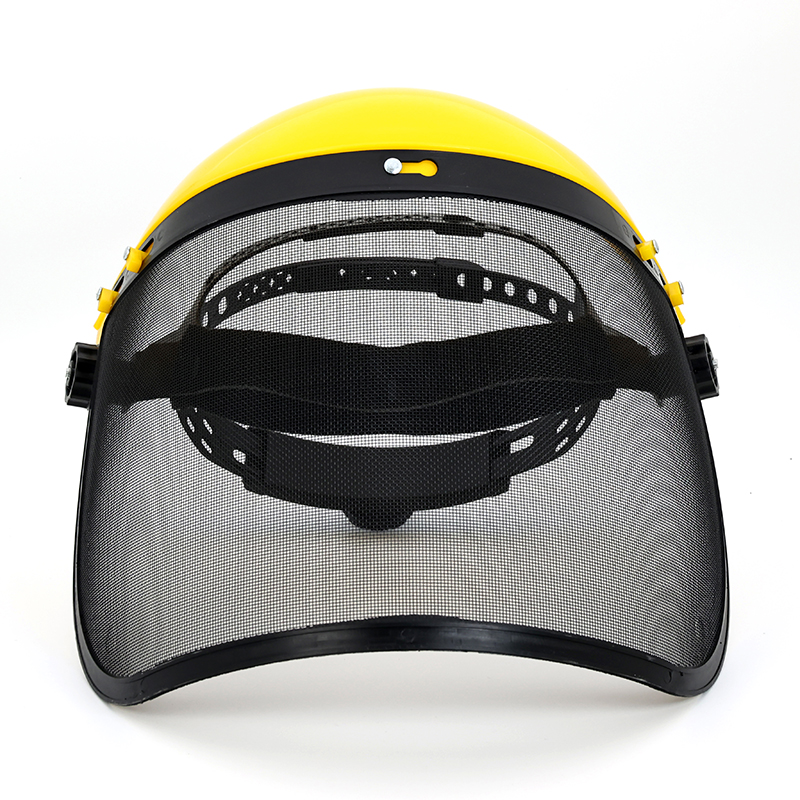
Thermal and arc flash environments require highly specialized focus. High-heat settings need advanced UV/IR filtering capabilities built directly into the visor. Wire-mesh visors provide excellent ventilation in extreme radiant heat. They protect against flying slag without trapping hot air. Electrical applications strictly require NFPA 70E compliance for dangerous arc flashes. Standard plastics melt instantly during a severe electrical arc event. Finally, consider biohazards and fluid splatters in medical contexts. Standard droplet protection has distinct limitations against aerosolized particles.
Doffing processes introduce severe cross-contamination risks for the user. We must establish clear protocols for removal and sanitation. Matching the exact material to the hazard prevents catastrophic failures.
Impact hazards need thick polycarbonate visors to deflect heavy projectiles.
Corrosive splashes require acetate or PETG materials to prevent surface melting.
High-heat areas benefit from reflective coatings or wire-mesh options.
Electrical arc risks demand specialized NFPA 70E rated visors exclusively.
Biohazard environments need full wrap-around droplet protection designs.
Safety teams often ask a highly common question regarding gear upgrades. When should you upgrade from goggles to full facial protection? Decision clarity prevents both dangerous under-protection and unnecessary over-engineering. Goggles specifically seal the immediate ocular area entirely. They block fine dust and direct liquid entry into the eyes. Shields protect the broader facial structure instead. They cover the nose, mouth, and delicate surrounding skin.
They prevent blunt trauma and block wide-area splashes effectively. Ventilation creates another major differentiator between these two options. Tight-sealing goggles create a challenging and humid micro-climate. They trap heat and sweat readily during heavy physical exertion. A safety face shield offers a beneficial bottom-vented reality. This natural airflow dramatically reduces fogging issues during long shifts.
Some operational scenarios make combined deployment absolutely non-negotiable. Handling highly caustic chemicals requires both robust layers of defense. Heavy metal grinding also demands this comprehensive dual coverage. Goggles stop the fine dust particles completely. The shield stops the heavy flying metal fragments. We must recognize exactly where one tool ends and another begins. Overlapping them correctly guarantees maximum physical defense.
| Protection Feature | Safety Goggles | Safety Face Shield | Combined Deployment |
|---|---|---|---|
| Coverage Area | Ocular region only | Full face (eyes, nose, mouth) | Complete ocular and facial defense |
| Seal Type | Tight skin contact | Open bottom and sides | Sealed eyes protected by outer shield |
| Ventilation | Restricted (micro-climate) | High natural airflow | Moderate (depends on goggle vents) |
| Primary Hazard | Fine dust, gas, direct splash | Flying debris, large splashes | Extreme multi-hazard environments |
Understanding authoritative standards protects both workers and employers simultaneously. The ANSI Z87.1 mark carries significant legal weight across industries. It defines exactly what physical extremes a product can withstand. A basic impact rating differs entirely from a high-impact rating. High-impact models feature a distinct "+" symbol directly on the visor. Buyers must learn how to read these visor stamps accurately.
The "D3" mark indicates proper splash and droplet protection. The "W" stamp identifies suitable and safe welding shades. Employer liability increases dramatically when utilizing non-compliant gear. Expired personal protective equipment carries similar severe legal risks. Sunlight degrades certain plastics over time, weakening their impact resistance. Employers hold a legal responsibility beyond merely providing the gear. You must ensure hazard assessments dictate the specific required rating.
A generic Face Shield will never satisfy a rigorous OSHA inspector. Documenting your selection process proves your active commitment to compliance. It shields the organization from negligence claims following an accident. We strongly recommend auditing your inventory every single quarter. Remove scratched or structurally compromised visors immediately. A common mistake involves keeping older visors in active circulation. Scratches scatter light and cause severe eye strain.
Locate the permanent certification stamp on the visor corner.
Check for the crucial Z87+ mark indicating high-impact testing.
Identify specific hazard codes like D3 for chemical droplets.
Verify specialized shade numbers for radiant light protection.
Inspect the suspension system for its own compliance markings.
Evaluating gear for scalability requires a highly strategic approach. You must contrast single-use disposable models with robust modular systems. Modular designs let you separate visors and headgear easily. This separation allows you to replace only the damaged components. It reduces material waste significantly across large operations. Optical clarity directly influences user adoption rates on the floor.
Evaluate the necessity of premium anti-fog and anti-scratch coatings carefully. Poor visibility remains the primary reason workers remove protective equipment. Clear vision keeps the shield securely on the worker's head. Advanced hydrophilic coatings prevent moisture buildup during intense labor. Ergonomics and adjustability matter just as much as optical clarity. Assess ratcheting systems, plush sweatbands, and overall weight distribution.
A shield causing neck fatigue leads directly to dangerous non-compliance. Discomfort ruins even the best-planned safety initiatives. Workers will sabotage gear causing physical pain. Smooth tension adjustments accommodate different head shapes easily. A dial-based ratchet allows simple one-handed adjustments. This proves crucial when wearing thick safety gloves.
Environmental health specialists must take proactive next steps. Recommend conducting a comprehensive facility hazard assessment immediately. Do this before finalizing bulk orders or long-term vendor contracts. Pilot testing a few units reveals hidden ergonomic flaws quickly. It guarantees the final selection meets actual frontline needs.
Protecting your workforce requires a strategic approach to facial barriers. They serve as a highly specific, secondary layer of defense. They never function as a generic catch-all solution for safety. Overlooking compatibility causes friction, frustration, and eventual non-compliance.
Audit your current protective pairings to identify critical compliance gaps.
Verify workers actively secure primary eyewear beneath their outer visors.
Match exact material properties to your documented physical workplace dangers.
Request sample units to run comprehensive live floor pilot programs.
Contact a dedicated safety specialist today to upgrade your protocols. Review your hazard assessment matrix thoroughly before your next official inspection. Proactive evaluation always prevents catastrophic operational failures.
A: Yes. OSHA regulations explicitly classify facial visors as secondary protection. They do not seal against the face. Flying debris, fine dust, and chemical splashes can easily bypass the edges of the visor. You must always wear primary eye protection, such as safety glasses or sealed goggles, beneath the shield to ensure complete compliance and optimal safety.
A: Polycarbonate excels at high-velocity impact resistance. It absorbs heavy kinetic energy perfectly, making it ideal for grinding and machining. However, it lacks strong chemical resistance. Acetate offers superior resistance to chemical splashes and corrosive solvents. It prevents clouding and melting upon chemical contact but does not provide the same level of heavy impact protection as polycarbonate.
A: You should replace the visor immediately upon noticing deep scratches, stress cracks, or severe pitting. These physical defects scatter light and cause dangerous eye strain. Additionally, replace it if UV degradation causes plastic yellowing or brittleness. Inspect the ratcheting headgear monthly. If the suspension loses tension or the sweatbands degrade, replace those specific modular components.
A: No. A standard polycarbonate or acetate visor cannot withstand the extreme thermal energy of an electrical arc flash. Standard plastics will melt or ignite instantly. You strictly require a specialized arc-rated shield. These units comply with specific NFPA 70E standards, featuring advanced thermal resistance and specialized light-filtering capabilities to prevent severe burns and blindness.


