
Views: 0 Author: Site Editor Publish Time: 2026-08-20 Origin: Site


In foundries, smelting plants, and heavy fabrication facilities, the margin for error regarding thermal hazards is zero. Selecting the correct Personal Protective Equipment (PPE) is a life-critical engineering decision. Safety managers frequently face a critical decision point: determining if standard heavy-duty leather is sufficient for their specific thermal hazards, or if the environment mandates specialized technical fabrics. Misclassifying a primary molten splash hazard as a secondary spatter hazard leads to catastrophic PPE failure and severe injury. This technical evaluation examines the exact capabilities and limitations of leather in high-heat environments, benchmarking traditional materials against ISO 9185 standards to determine precisely when and where leather can be safely deployed.
Material Limitations: While highly effective against welding spatter and sparks, standard cowhide exhibits severe shrinkage and thermal transfer when exposed to large masses of molten metal.
Standardized Testing: True molten metal splash protection is governed by ISO 9185, which categorizes protection levels based on the specific metal (e.g., D-ratings for aluminum, E-ratings for iron).
Primary vs. Secondary Protection: A standard cowhide welding jacket serves as secondary protection; primary protection against large molten pours requires specialized aluminized apparel to deflect mass and reflect radiant heat.
Risk Mitigation: Proper PPE selection requires in-house wear trials, site-specific splash testing, and a clear understanding of the specific metals being poured.
Leather is an organic material composed of dense collagen fibers. It naturally retains moisture trapped deep within its cellular structure. When a high-heat event occurs on the foundry floor, this material undergoes immediate and violent physical reactions. If exposed to temperatures exceeding 1,000°C, the trapped moisture flashes into steam in milliseconds. This rapid moisture evaporation forces the cellular structure to collapse inward. We observe this on the floor as severe material shrinkage. Prolonged exposure to these extreme temperatures leads to eventual charring and embrittlement. The hide loses all mechanical integrity, becoming stiff and prone to cracking. Once the fibers char, the garment fails to provide any further shielding against incoming thermal energy. Understanding these specific thermal dynamics helps safety engineers establish hard limits for workplace deployment.
Thermal hazards present themselves in two distinct forms during metalworking operations. Direct physical contact transfers conductive heat rapidly. When a molten mass hits a garment, it dumps massive amounts of thermal energy directly into the fabric structure. Radiant heat operates entirely differently. It is the ambient infrared energy emitted by furnaces, ladles, and freshly poured castings. Leather functions effectively as a heat sink in these environments. It absorbs radiant heat slowly over time, protecting the worker initially. However, this absorption capacity has strict physical limits. Once the hide becomes thermally saturated, it begins transferring heat inward. Internal temperature spikes occur directly against the wearer's base layers. Workers can suffer severe heat stress and burns without a single drop of liquid metal ever touching their garments. Proper hazard assessment must account for both sudden conductive impacts and continuous radiant exposure.
Different metals react uniquely upon contact with protective garments. Viscosity and surface tension dictate how a splash behaves when it strikes a worker. Molten aluminum presents a severe adhesion hazard due to its specific fluid dynamics. It possesses a high affinity for oxygen and flows easily into porous surfaces. Aluminum tends to stick aggressively to the rough nap of standard split leather. This adhesion transfers extreme, continuous conductive heat directly through the garment because the metal sits on the surface and burns inward until it solidifies. Molten iron behaves differently under similar conditions. It exhibits higher surface tension and density. Iron may roll off smooth surfaces more readily if the angle of impact allows it. However, leather's textured surface can still trap iron droplets in creases or seams. Metal-specific analysis remains a mandatory step in safety planning.
Metal Adhesion and Viscosity Characteristics on Porous Surfaces
| Metal Type | Pouring Temperature Range | Viscosity Behavior | Adhesion Risk on Leather |
|---|---|---|---|
| Aluminum | 660°C - 750°C | Low viscosity, flows like water | Extreme (Mechanically locks into fibers) |
| Iron | 1370°C - 1540°C | High density, moderate surface tension | Moderate (Can roll, but traps in creases) |
| Copper | 1085°C - 1200°C | High thermal conductivity | High (Rapid heat transfer upon contact) |
| Steel Alloys | 1425°C - 1540°C | High density, variable slag content | Moderate to High (Slag sticks readily) |
Leather poses a unique and dangerous risk in severe splash scenarios. Rapid shrinkage alters the garment's fit instantly. The material violently contracts when struck by a massive thermal load. This contraction compresses the heavy garment directly against the wearer's skin. The insulating air gap disappears completely. Cowhide Leather Protection relies heavily on that trapped air gap for its thermal resistance. Shrinkage accelerates severe thermal transfer. Workers sustain deep tissue burns even if the material does not immediately ignite. The garment essentially becomes a localized oven, trapping the heat against the body. This physical reaction makes untreated natural hides highly dangerous for primary high-mass splash zones where large volumes of liquid metal are present.
Global safety protocols rely on rigorous, repeatable testing methodologies. ISO 9185 serves as the definitive standard for evaluating molten metal splash resistance. The testing methodology simulates real-world catastrophic pours in a controlled laboratory environment. Technicians pour specific masses of molten metal over material samples mounted on a test rig. They execute these pours at precise angles to mimic industrial accidents where metal spills onto a worker's torso or legs. A PVC skin simulant sits directly behind the test fabric to represent human tissue. Sensors measure heat transfer and physical material degradation during the event. If the PVC simulant melts, deforms, or shows signs of thermal damage, the fabric fails the test. This binary pass-fail system ensures only capable materials reach the foundry floor.
The ISO 9185 standard utilizes a precise classification system to grade protective fabrics. It categorizes protection levels based on specific metals and pour masses. D-ratings specifically evaluate resistance to molten aluminum. E-ratings measure resistance to molten iron and steel. Higher numbers indicate protection against larger metal masses. A D1 rating signifies baseline protection for small aluminum splashes typically found in finishing areas. A D3 rating indicates survival against massive aluminum pours found on the primary melting deck. The same logic applies to E1, E2, and E3 ratings for ferrous metals. Safety managers must match these ratings precisely to their facility's specific output to ensure adequate protection.
ISO 9185 Molten Metal Splash Protection Ratings
| Rating Class | Metal Type | Test Mass Range (g) | Typical Industrial Application |
|---|---|---|---|
| D1 | Molten Aluminum | 100 - 200 | Light casting, finishing stations |
| D2 | Molten Aluminum | 200 - 350 | Secondary transfer operations |
| D3 | Molten Aluminum | > 350 | Primary melting decks, heavy pouring |
| E1 | Molten Iron/Steel | 60 - 120 | Grinding, minor slag exposure |
| E2 | Molten Iron/Steel | 120 - 200 | Ladle maintenance, secondary pouring |
| E3 | Molten Iron/Steel | > 200 | Blast furnace operations, primary tapping |
Testing natural materials requires specialized protocols to account for biological inconsistencies. ISO 9185 includes a specific testing caveat for leather products. Synthetic technical fabrics offer uniform consistency across every square inch of the roll. Leather exhibits natural biological variations. Hide thickness, fiber density, and moisture content vary significantly from the animal's belly to its back. Therefore, the standard requires seven distinct test samples for leather evaluation. Each sample must measure a minimum of 260 mm by 100 mm. This larger sample size accounts for the material's drastic and unpredictable shrinkage during a thermal event. It ensures statistical reliability across the entire garment. Single-sample testing for natural hides yields dangerously inaccurate safety data.
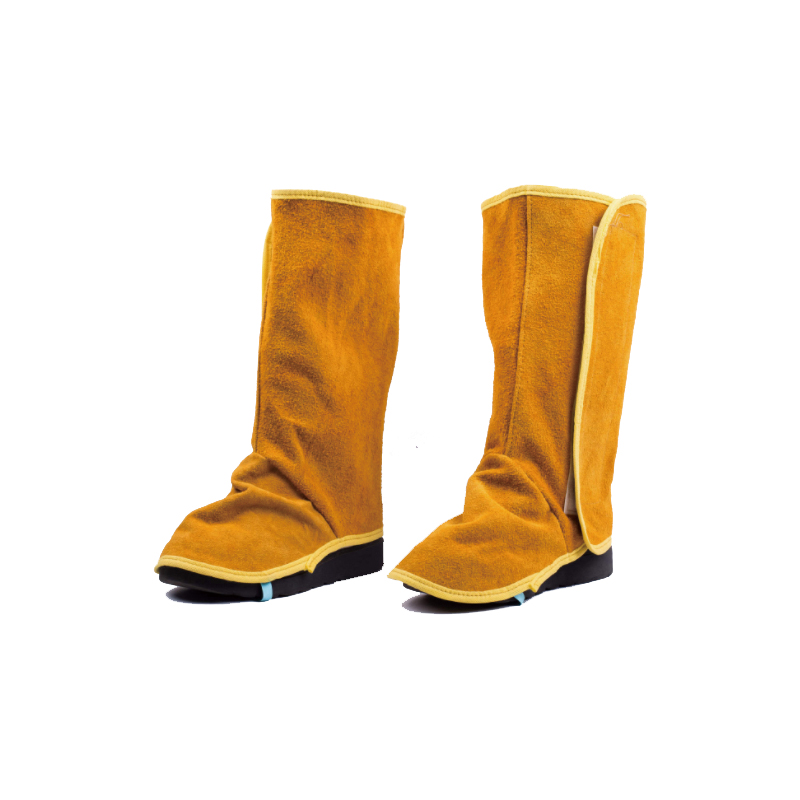
Heavy-duty leather remains a staple in industrial environments for good reason. We must define its appropriate use-cases accurately to maximize safety and operational efficiency. A standard Cowhide Welding Jacket excels in secondary protection scenarios. It effectively blocks light-to-medium welding sparks generated during MIG or stick welding. It easily deflects minor slag spatter generated during gouging operations. Leather handles brief, low-mass thermal exposures exceptionally well. The sparks bounce off the tough exterior or extinguish quickly before causing structural damage. In these specific applications, leather provides unmatched durability and mechanical abrasion resistance. It protects workers from sharp metal edges, rough castings, and abrasive surfaces simultaneously.
Facility zoning dictates proper equipment deployment across the plant. Safety managers must map the appropriate use of cowhide to specific foundry zones to prevent accidents. Leather is highly suitable for finishing departments. It performs perfectly at grinding stations, chipping areas, and dedicated welding booths. These zones produce high-velocity, low-mass thermal hazards that leather easily defeats. However, leather is fundamentally inadequate for the primary melting deck. It cannot survive active pouring lines safely. Deploying standard leather in primary pour zones violates basic thermal safety principles. Zone-based equipment protocols prevent fatal misapplications of otherwise excellent protective gear.
Identifying exact failure thresholds saves lives on the floor. Cowhide fails catastrophically under specific conditions that operators must recognize. Large mass pours overwhelm the material's thermal capacity instantly, causing the moisture flash-off and shrinkage detailed earlier. Continuous radiant heat exposure turns the heavy garment into a dangerous heat trap. High-temperature foci present another severe risk during operations. A high-temperature focus occurs when a large globule of metal lodges in a crease, fold, or pocket of the garment. The metal's thermal mass becomes a lethal liability. It burns through the hide steadily. The localized heat transfer causes third-degree burns rapidly because workers cannot remove the heavy garment fast enough to prevent severe tissue damage.
Operational lifespan depends heavily on strict maintenance protocols. Heavy industrial settings subject garments to extreme mechanical and chemical abuse. We must analyze the severe degradation of leather's protective qualities over time. Factory environments are filled with contaminants. Hydraulic oils, machine grease, and fine metallic dust coat everything on the floor. Leather is inherently porous and absorbs these fluids deeply into its fibers. Saturated leather poses an extreme danger to the wearer. The absorbed oils transform a flame-resistant garment into a highly combustible hazard. A single spark from a grinder can ignite a grease-soaked sleeve instantly.
To mitigate contamination risks, facilities must implement strict inspection routines:
Inspect all leather garments at the start of every shift for dark, oily stains.
Check high-flex areas like elbows and shoulders for severe cracking or thinning.
Ensure all snaps, buckles, and closures function correctly to prevent gaps in coverage.
Discard any garment that feels stiff or brittle, as the internal moisture has been depleted.
Remove garments with deep cuts or abrasions that compromise the hide's thickness.
Modern foundries demand advanced material science to protect workers in primary hazard zones. Aluminized fabrics serve as the undisputed industry standard for primary molten metal splash protection. These garments feature a highly reflective microscopic aluminum coating bonded to a base fabric. This specialized surface reflects up to 95% of ambient radiant heat. Workers can stand near active ladles or furnaces without absorbing dangerous thermal loads into their bodies. The smooth, metallic surface provides another critical advantage during an emergency. It allows massive molten metal splashes to shed off the garment instantly. The metal cannot stick or transfer conductive heat. It simply bounces off the suit and hits the floor. This deflection capability prevents catastrophic burn injuries during major pouring accidents.
Base layer construction determines overall garment survivability during a thermal event. Advanced protective suits integrate high-performance synthetic fibers beneath the aluminized shell. Para-aramid fibers provide incredible tensile strength and flame resistance. They prevent the garment from bursting open upon heavy physical impact from a metal splash. Carbon fiber integration represents the next evolution in thermal defense. Carbon fibers resist extreme temperatures without shrinking, melting, or off-gassing. Manufacturers combine these materials with aluminized outer shells to build multi-hazard suits. This layered approach creates a comprehensive thermal barrier. The outer layer reflects heat and sheds metal. The inner layers provide structural integrity and thermal insulation. This combination far exceeds the physical limitations of traditional organic hides.
Protecting personnel in extreme thermal environments requires precise material knowledge and strict operational discipline. Relying on outdated assumptions about traditional materials invites catastrophic workplace accidents. Implement these action-oriented steps to secure your facility.
Audit all current protective garments against the specific metals and pour masses present in your facility.
Conduct site-specific wear trials using ISO 9185 certified materials for all primary pouring zones.
Implement strict zone-based equipment protocols to prevent secondary gear from entering primary hazard areas.
Establish rigorous daily inspection schedules to identify and discard oil-contaminated or degraded leather garments.
A: No. Molten aluminum has a high affinity for porous surfaces. It sticks aggressively to standard leather, transferring continuous conductive heat and causing severe burns. Aluminum requires specialized aluminized apparel for safe deflection.
A: ISO 9185 is the international testing standard for evaluating a fabric's resistance to molten metal splashes. It categorizes protection levels based on the specific metal type and the mass of the pour.
A: Leather contains natural moisture within its collagen fibers. Extreme heat causes this moisture to flash into steam rapidly. This forces the cellular structure to collapse, resulting in violent material shrinkage.
A: Absolutely not. Leather serves only as secondary protection against sparks and minor spatter. Primary protection against large molten pours requires specialized aluminized technical fabrics to reflect heat and shed metal mass.
A: Replacement depends on environmental exposure. Garments must be replaced immediately if they become saturated with oils, grease, or deep dirt, as these contaminants make the leather highly combustible.
A: Aluminized apparel reflects up to 95% of radiant heat. More importantly, its smooth metallic surface allows large masses of molten metal to slide off the garment without sticking or transferring conductive heat.


