
Views: 0 Author: Site Editor Publish Time: 2026-04-17 Origin: Site


Choosing between a clear and tinted Face Shield depends on the work environment, visibility needs, and the type of hazard involved. In most industrial settings, a clear shield is the standard choice because it supports direct visibility during grinding, cutting, construction, maintenance, and general workshop tasks. A tinted shield is usually considered when glare, brightness, or task-specific visual conditions make light reduction useful. The key point is simple: the best shield is the one that protects the face without making the job harder to see or control.
For buyers, distributors, and safety managers, this comparison is not only about color. It is about application fit. A face shield visor used for machinery repair has different visibility demands than a face shield welding setup or an outdoor shield used in bright conditions. That is why selection should start with the job, then move to visor style, material, and comfort.
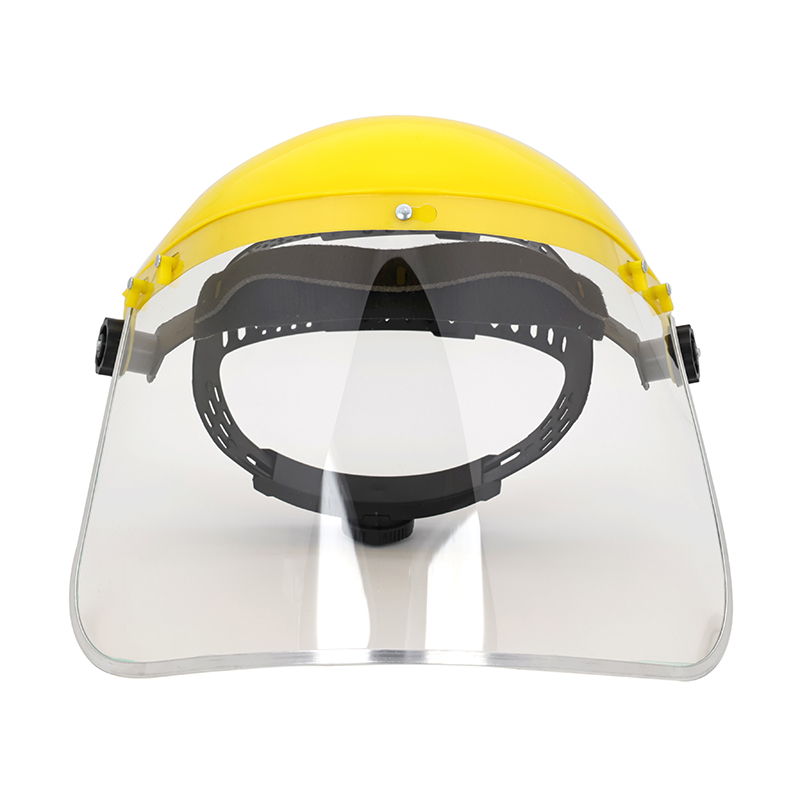
A clear face shield uses a transparent visor, typically designed to give the wearer an unobstructed view while protecting the face from debris, dust, sparks, splashes, and impact hazards. In the product information you provided, clear transparent shields appear across multiple industrial and outdoor product types, including PET and PC protective faceshields, one-piece transparent shields, and bracket-compatible transparent visors. These models are positioned for grinding, cutting, construction, machinery maintenance, DIY work, and general industrial processing.
The main advantage of a clear visor is straightforward: it preserves natural visibility. That makes it the more flexible choice for most tasks where workers need to inspect detail, align tools, or monitor moving hazards continuously.
A tinted face shield uses a darkened or shaded visor rather than a fully transparent one. The purpose is usually to reduce brightness, glare, or visual discomfort in certain work environments. While the product information you provided mainly emphasizes transparent shield options and steel mesh versions rather than specifically listing tinted industrial visors, the application logic still follows a practical rule: tint is only useful when reduced brightness helps the worker perform more safely and comfortably.
That means a tinted shield is not a default upgrade over a clear one. In many cases, reduced light transmission can make detail work harder if the environment is already dim or if the task requires highly accurate visual judgment.
In most industrial applications, a clear Face Shield is the more practical and versatile option.
A face shield for grinding typically needs strong visibility because workers must see the tool angle, material surface, spark flow, and particle direction clearly. The supplied product information includes transparent industrial faceshields designed for grinding, cutting, and machinery work, with PET and PC options depending on the risk level.
In this kind of application, a clear visor is generally the better choice because it supports precision and quick reaction.
Maintenance work often requires close inspection of parts, tools, fittings, and moving components. The uploaded product range positions clear transparent face shields for machinery assembly, repair, and maintenance, where users need both facial coverage and dependable visibility.
A tinted shield could make fine inspection harder in these scenarios, especially indoors or in uneven lighting.
Construction sites involve dust, debris, fragments, and paint splatter, but workers also need to read measurements, monitor surfaces, and move safely around active areas. The provided products include transparent face shield options and helmet-compatible bracket systems for construction and renovation environments.
Because these jobs combine protection with constant visual awareness, clear visors are usually the better fit.
For outdoor work, the answer depends on the exact task. The product information includes both clear one-piece PC shields and steel mesh face shields for mowing, trimming, wood-cutting, and landscaping. Clear shields offer broader front coverage and better direct visibility, while mesh improves airflow and works well against larger flying debris.
In many outdoor applications, clear shields remain useful where users want more complete facial coverage and visual accuracy.
A tinted shield may be useful when brightness or glare becomes a real working problem. This is more of a task-specific choice than a general industrial standard.
Practical scenarios may include:
outdoor work in very bright sunlight
work areas with strong reflective glare
environments where reduced visual strain helps sustained wear
selected hot-work conditions where brightness management matters
However, buyers should be careful here. A darker visor can reduce visibility in shaded, indoor, dusty, or low-light environments. So tint should be chosen for a clear reason, not simply because it looks more specialized.
A clear face shield visor is usually better for:
grinding and cutting
machinery maintenance
workshop use
construction and renovation
inspection tasks
general-purpose industrial work
jobs where detail and depth judgment matter most
A tinted shield may be more suitable for:
bright outdoor conditions
glare-heavy work areas
selected visually intense applications where reduced light helps comfort
Even in those cases, the buyer should confirm that the tint does not interfere with task accuracy or safety judgment.
When comparing clear and tinted shields, visor color should not distract from the bigger issue: material and job suitability.
The uploaded product information includes several important material and design categories:
PET transparent shields for lower- to medium-risk tasks
PC transparent shields for stronger impact resistance
steel mesh shields for debris-heavy outdoor work
one-piece shields for broad front coverage
bracket systems for modular and helmet-compatible setups
That means the first decision is usually not “clear or tinted,” but:
What is the hazard?
Does the worker need a transparent visor or mesh?
Is higher impact resistance required?
Is the task indoors or outdoors?
Does the shield need to work with a safety helmet?
Only after those points are clear does visor tint become a meaningful comparison factor.
A clear face shield for grinding is generally the better option because grinding requires accurate view of the workpiece and tool contact area.
In face shield welding discussions, buyers should be especially careful not to reduce the decision to lens color alone. The product information you provided emphasizes high-temperature resistance, corrosion resistance, and shield material choices for industrial hot-work environments.
Risk reminder: A darker or tinted visor should not be assumed to be the correct protection for every welding task. Welding-related protection should be selected according to the actual process, heat, sparks, and applicable safety requirements.
Clear shields are usually the more practical choice because construction work depends on constant movement, awareness, and task visibility. Helmet compatibility may also be more important than tint.
If glare is a serious issue, a tinted option may be worth considering. But in many outdoor debris-heavy jobs, buyers may also compare clear shields with steel mesh designs rather than only comparing clear versus tinted plastic visors.
The biggest tradeoff in this comparison is visibility versus light reduction.
A clear shield usually gives:
more natural sightlines
better indoor usability
easier detail recognition
broader all-purpose suitability
A tinted shield may give:
less glare
reduced brightness discomfort
more comfortable viewing in strong light
But if the tint is too dark for the environment, comfort gains may be offset by reduced precision and slower response.
Tint should solve a real visual problem. It should not be treated as a premium feature by default.
A tinted shield that works outdoors may be a poor choice indoors or in mixed-light environments.
Impact resistance, heat resistance, coverage, and fit usually matter more than visor shading.
When workers need to inspect surfaces, align tools, or read detail, a clear face shield is often the safer choice.
For some outdoor work, the real comparison may be clear visor versus steel mesh rather than clear versus tinted. The uploaded product line shows that different job conditions often require different shield structures, not just different colors.
If you are selecting face protection for industrial or B2B supply, the most practical buying criteria are:
actual hazard type
impact level
visibility demand
indoor or outdoor use
heat or corrosion exposure
helmet compatibility
long-wear comfort
whether the user needs transparent or mesh protection
Only after these points are clear should you compare whether a tinted visor adds value for the specific work environment.
In most industrial applications, a clear Face Shield is the better choice because it supports accurate vision, broader usability, and safer day-to-day operation across grinding, cutting, construction, maintenance, and general workshop work. A tinted shield can be useful in bright or glare-heavy conditions, but it is a more specialized option and should be chosen only when reduced brightness clearly supports the task.


