
Views: 0 Author: Site Editor Publish Time: 2026-08-14 Origin: Site


Noise-Induced Hearing Loss (NIHL) presents severe operational and financial risks across industrial, manufacturing, and construction environments. Prolonged exposure to high-decibel machinery damages the auditory nerve irreversibly. Companies often face compliance violations and worker compensation claims because they select hearing protection based solely on advertised lab ratings. This common procurement failure leads to inadequate real-world protection and compromised situational awareness on the floor.
Selecting the correct hearing protection requires a technical understanding of acoustic attenuation. You must evaluate the physical mechanics of the device against the environmental realities of the wearer. Relying on lab numbers alone leaves workers vulnerable. This guide breaks down the mechanics of Safety Earmuffs to inform evidence-based procurement decisions. We will explore how these devices block sound waves, when to use active versus passive models, and how to calculate actual field protection.
Acoustic Seal Integrity: The effectiveness of safety earmuffs is entirely dependent on an unbroken circumaural acoustic seal; even minor gaps reduce attenuation drastically.
Real-World Derating: Advertised Noise Reduction Ratings (NRR) reflect controlled lab environments; actual field protection requires applying standard derating formulas.
Active vs. Passive: Passive muffs rely on physical mass and absorption, while noise cancelling earmuffs utilize electronic phase inversion to manage low-frequency noise and allow safe communication.
PPE Integration: Earmuffs must be evaluated alongside other required Personal Protective Equipment (PPE) to prevent seal disruption and ensure worker compliance.
Systemic Compliance: Hearing protection devices (HPDs) are not a standalone solution but a component of a comprehensive occupational hearing conservation program.
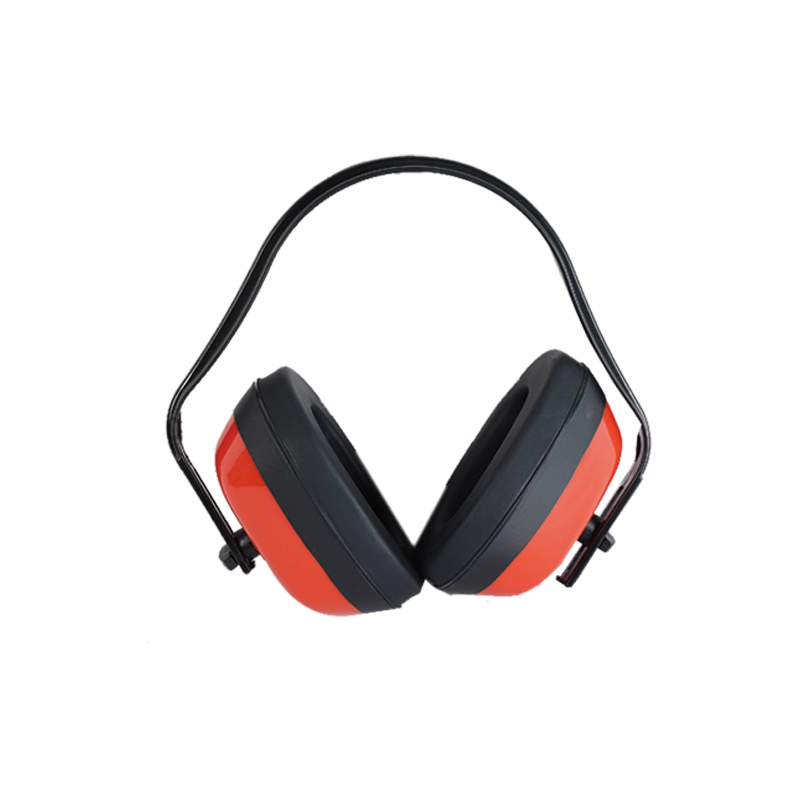
The primary defense mechanism of any earmuff is the circumaural cushion. This design creates a physical barrier around the ear. It rests against the skull, sealing the temporal bone area completely. Supra-aural designs, which sit directly on the ear cartilage, fail to provide this critical seal. Sound waves easily bypass on-ear models. A proper circumaural seal blocks sound waves from entering the ear canal.
Headband clamping force maintains this acoustic seal. The headband must apply consistent pressure across different head shapes. It keeps the ear cups firmly against the head during physical movement. If the clamping force is too weak, the seal breaks. If it is too strong, wearer discomfort leads to poor compliance. Manufacturers engineer headbands from steel or durable polymers to maintain optimal tension over time.
Cushion materials play a vital role in seal integrity. Manufacturers use PVC, polyurethane, and foam-liquid hybrids. These materials physically conform to facial contours. They fill gaps around the jawline and behind the ear. High-quality cushions also channel away sweat. This prevents the earmuff from slipping during strenuous labor in hot environments.
To understand the impact of cushion materials on field performance, consider the following breakdown of common options used in industrial settings. Each material offers distinct advantages depending on the specific environmental hazards present on the job site.
| Cushion Material | Primary Advantage | Best Use Case Environment |
|---|---|---|
| Standard PVC Foam | Cost-effective, basic conformity | Indoor manufacturing, climate-controlled areas |
| Polyurethane Memory Foam | Superior facial contouring, high comfort | Long-duration shifts, uneven facial structures |
| Liquid-Foam Hybrid | Excellent acoustic sealing, cooling effect | High-temperature environments, heavy physical labor |
The outer shell of the ear cup provides the first layer of acoustic defense. Usually constructed from high-density ABS plastic, this hard shell deflects high-frequency sound waves. The rigid material bounces acoustic energy away from the ear. However, deflection alone cannot stop all noise. Low-frequency sound waves easily penetrate hard plastics.
Inside the shell, open-cell acoustic foam absorbs the remaining sound energy. As sound waves pass through the foam, they vibrate the cellular structure. This movement converts acoustic energy into trace amounts of thermal energy through viscous friction. The foam dampens the sound, preventing it from echoing inside the cup.
Cup volume directly impacts low-frequency noise attenuation. Larger, deeper ear cups block low-frequency rumbles better than slim models. The increased air volume inside the cup acts as an acoustic shock absorber. Heavy machinery, diesel engines, and compressors generate intense low-frequency noise. Workers in these environments require high-volume ear cups for adequate protection.
The relationship between acoustic mass and frequency blocking is a fundamental principle of hearing protection design. High-frequency sounds, like the screech of a metal grinder, have short wavelengths that are easily deflected by the hard outer shell. Low-frequency sounds, like the rumble of a large diesel generator, have long wavelengths that require physical mass and depth to absorb. This is why low-profile earmuffs, while convenient, often fail to provide adequate protection in heavy industrial settings.
Passive attenuation relies entirely on physical barrier materials. Cup volume, shell density, and foam thickness determine the noise reduction. These models contain no electronics. They block all sound frequencies indiscriminately. This makes them highly reliable and durable in harsh conditions.
Passive models excel in environments with consistent, predictable, high-decibel noise. Landscaping, basic drilling, and heavy manufacturing are prime examples. In these settings, communication is secondary to pure noise blocking. Workers do not need to hear subtle ambient sounds. The simplicity of passive muffs ensures consistent protection without battery management.
When deploying passive models, safety managers must ensure workers understand the limitations. Because passive muffs block all sound, workers may struggle to hear verbal commands or approaching vehicles. This requires implementing visual warning systems, such as strobe lights or hand signals, to compensate for the reduced auditory awareness.
Active noise cancellation (ANC) introduces electronic sound management. Noise Cancelling Earmuffs use external microphones to detect incoming noise. Internal circuitry processes this sound instantly. The speakers inside the cup then emit an inverted phase sound wave. This "anti-noise" cancels out the incoming low-frequency sound waves before they reach the eardrum.
Many electronic models also feature situational awareness technologies. Often called "hear-through" or "active listening," this feature compresses harmful impact noises. Gunfire, stamping presses, and drop forges trigger instant compression. Simultaneously, the microphones amplify safe ambient sounds. Workers can hear voices, warning alarms, and approaching vehicles clearly while remaining protected from dangerous peaks.
Frequency-selective attenuation is a major advantage of electronic models. They preserve human speech frequencies, typically ranging from 250 Hz to 4000 Hz. Meanwhile, they suppress industrial low-frequency rumbles. This selective blocking maintains natural hearing abilities. Workers can communicate safely without removing their hearing protection.
Choosing between passive and active models involves evaluating specific operational trade-offs. Electronic models require a higher upfront investment. They rely on batteries and contain sensitive circuitry. They are generally heavier than passive models. Passive muffs offer rugged durability and simplicity at a lower initial cost.
However, you must evaluate the safety return on investment. In environments where missed verbal warnings present a critical hazard, electronic models are invaluable. If a worker cannot hear a forklift reversing, a fatal accident may occur. Electronic muffs prevent worker isolation. They ensure critical communication remains audible, significantly reducing secondary workplace hazards.
Maintenance protocols also differ significantly between the two types. Passive models require basic cleaning and periodic cushion replacement. Electronic models demand strict battery management protocols, firmware updates in some advanced models, and careful storage to prevent moisture damage to the internal circuitry. Safety managers must factor these operational requirements into their procurement strategy.
The Noise Reduction Rating (NRR) is a standardized metric. ANSI standard testing methods, such as ANSI S3.19, determine this number. Testers evaluate the earmuffs in highly controlled acoustic laboratories. Human subjects wear the devices under perfect conditions. The lab environment features no movement, no sweat, and no facial hair.
These controlled environments do not reflect industrial realities. In the field, workers move constantly. They wear safety glasses. They sweat. They may have thick beards. All these factors degrade the acoustic seal. Therefore, the advertised NRR almost never matches the actual protection achieved on the job site.
Relying solely on the printed NRR is a dangerous procurement practice. A device rated at 30 NRR in the lab might only deliver 15 dB of actual protection on a construction site. This discrepancy leaves workers exposed to hazardous noise levels, leading to gradual, irreversible hearing loss despite strict compliance with PPE wearing policies.
OSHA requires safety managers to derate the advertised NRR to estimate real-world protection. You cannot take the lab rating at face value. The standard OSHA derating formula is: (NRR - 7) / 2. This calculation provides a realistic estimate of the actual decibel reduction.
To accurately assess field protection, follow these specific calculation steps:
Identify the advertised NRR printed on the earmuff packaging or technical specification sheet.
Subtract 7 from the advertised NRR to account for spectral uncertainty and variations in industrial noise frequencies.
Divide the resulting number by 2 to account for real-world fit issues, seal degradation, and improper wearing habits.
Subtract this final derated number from the measured ambient noise level in your facility to determine the worker's actual exposure level.
| Advertised NRR | OSHA Derating Calculation | Estimated Real-World Protection (dB) |
|---|---|---|
| 25 | (25 - 7) / 2 | 9.0 dB |
| 28 | (28 - 7) / 2 | 10.5 dB |
| 31 | (31 - 7) / 2 | 12.0 dB |
More attenuation is not always better. Over-protection occurs when hearing devices reduce noise exposure below 70 dB. While this eliminates the risk of hearing loss, it introduces new safety hazards. Workers become acoustically isolated from their environment.
Over-protection causes workers to miss critical auditory cues. They cannot hear heavy machinery operating nearby. They miss warning signals and backup alarms. Furthermore, workers often remove over-protective earmuffs to communicate with colleagues. This causes intermittent exposure risks. Even brief exposure to high-decibel noise damages hearing over time.
Targeting the optimal protection range is critical. The goal is to bring the worker's noise exposure down to between 75 dB and 85 dB. This range prevents hearing damage while maintaining sufficient auditory awareness for safety and communication. Selecting an earmuff with an excessively high NRR for a moderately noisy environment is a common, yet dangerous, mistake.
Safety earmuffs are only one part of an administrative and engineering control system. OSHA 1910.95 and CCOHS guidelines mandate comprehensive hearing conservation programs. You cannot simply distribute earmuffs and assume compliance. Personal protective equipment is the last line of defense.
A complete program requires regular noise dosimetry surveys to map hazards accurately. You must conduct annual audiometric testing to monitor worker hearing health. Employee training on proper donning and doffing is critical. Finally, individual fit-testing ensures each worker receives adequate protection from their specific device.
Engineering controls should always precede PPE deployment. Installing acoustic enclosures around loud machinery, maintaining equipment to reduce vibration, and implementing administrative controls like rotating worker shifts limit baseline exposure. Earmuffs serve to bridge the gap when engineering controls cannot reduce noise to safe levels.
Comparing earmuffs to earplugs requires analyzing specific operational variables. Extreme temperatures heavily influence this choice. In hot environments, sweat accumulates quickly under earmuff cushions. This causes discomfort and seal degradation. Earplugs perform better in extreme heat.
Hygiene is another critical factor. Rolling disposable foam earplugs requires clean hands. If workers have grease, chemicals, or metal shavings on their hands, they will introduce contaminants into the ear canal. Earmuffs eliminate this risk. Furthermore, for intermittent noise exposure, earmuffs are vastly superior. Workers can don and doff muffs quickly without touching the acoustic components.
Worker anatomy also dictates the choice. Some individuals have narrow or unusually shaped ear canals that make inserting foam earplugs painful or impossible. For these workers, earmuffs provide the only reliable method of achieving a proper acoustic seal. Conversely, workers operating in tight, confined spaces may find bulky earmuffs restrictive and opt for low-profile earplugs.
Extreme noise environments require dual protection strategies. Regulatory bodies recommend wearing earplugs underneath safety earmuffs when ambient noise exceeds 105 dBA. Mining operations, jet engine testing, and heavy stamping plants frequently mandate this approach.
Calculating dual protection requires a specific formula. You do not simply add the two NRR ratings together. Instead, you take the higher NRR rating and add 5 dB. For example, if you wear a 30 NRR earmuff over a 33 NRR earplug, the combined lab rating is 38 NRR (33 + 5). You must then apply the OSHA derating formula to this combined number for real-world estimates.
Implementing dual protection requires careful monitoring. The combination of plugs and muffs severely restricts auditory input, increasing the risk of over-protection and acoustic isolation. Safety managers must ensure that visual warning systems are robust and that workers have established non-verbal communication protocols when operating under dual protection mandates.
Earmuffs rarely operate in isolation. Workers usually wear them alongside safety glasses, hard hats, and respirators. This integration creates significant implementation risks. The thick temples of standard safety glasses break the acoustic seal of the earmuff cushion. This small gap can drop attenuation by up to 15 dB.
Hard hat suspension harnesses also interfere with headband placement. To mitigate these risks, you must select compatible PPE. Choose safety glasses with ultra-thin, flexible temples. Utilize helmet-mounted earmuffs that attach directly to the hard hat slots. Alternatively, opt for neckband-style muffs that route behind the head, avoiding the hard hat harness entirely.
Respirator straps present another common interference point. The straps often route directly over the temporal bone, exactly where the earmuff cushion needs to seal. When procuring PPE, safety managers must conduct integration testing, requiring workers to don all necessary equipment simultaneously to identify and resolve seal disruptions before field deployment.
Earmuffs degrade physically over time. UV exposure, sweat, skin oils, and chemical contact attack the cushion materials. The foam hardens and loses its ability to conform to the face. The PVC or polyurethane covers crack and warp. Once the cushion degrades, the acoustic seal fails completely.
You must establish a strict baseline maintenance schedule. Proper lifecycle management is the only way to maintain the original NRR over time. Implement the following inspection and replacement protocol:
Conduct weekly visual inspections of the outer shell for cracks or structural damage.
Check the headband tension monthly to ensure it still provides adequate clamping force.
Inspect the cushions daily for signs of hardening, cracking, or permanent deformation.
Replace hygiene kits, including new cushions and internal foam liners, every six months under normal use.
In highly corrosive or high-heat environments, accelerate the hygiene kit replacement schedule to every three months.
Safety earmuffs reduce noise exposure through a combination of physical mass, acoustic sealing, and electronic phase inversion. However, their efficacy is strictly bound by proper fit, realistic NRR derating, and integration within a broader compliance framework. Do not rely on lab ratings alone. Map your specific noise environment, including continuous versus impact noise and frequency ranges, before choosing between passive and electronic models.
Conduct a professional noise dosimetry survey to identify exact decibel levels across your facility.
Perform individual fit-testing with existing PPE to ensure safety glasses and hard hats do not break the acoustic seal.
Establish a mandatory replacement schedule for earmuff hygiene kits every six months.
Train all employees on the OSHA derating formula so they understand their actual field protection levels.
A: Apply the OSHA derating formula to estimate real-world protection. Subtract 7 from the advertised NRR, then divide the result by 2. For example, an earmuff with a 30 NRR provides approximately 11.5 dB of actual noise reduction in the field: (30 - 7) / 2 = 11.5.
A: Yes. Electronic earmuffs feature active listening technology that instantly compresses sudden impact noises, like gunfire or stamping presses, to safe levels. Simultaneously, they amplify safe ambient sounds, allowing you to hear voices and alarms clearly.
A: Standard safety glasses with thick temples break the acoustic seal, reducing protection by up to 15 dB. You must wear safety glasses with ultra-thin, flexible temples designed specifically to maintain the earmuff's seal against your head.
A: You should replace hygiene kits, which include the cushions and internal foam liners, every six months under normal use. In harsh environments with heavy sweat, UV exposure, or chemical contact, replace them every three months to maintain the acoustic seal.
A: Passive protection relies entirely on physical materials like plastic shells and acoustic foam to block sound. Active protection uses external microphones and internal circuitry to process sound, cancel low frequencies, and amplify safe ambient noises.
A: Regulatory bodies recommend dual protection when ambient noise levels exceed 105 dBA. You achieve this by wearing foam earplugs underneath circumaural earmuffs. This strategy adds approximately 5 dB of protection to the higher-rated device.
A: Circumaural earmuffs enclose the entire ear and seal against the temporal bone, providing maximum noise attenuation. Supra-aural models sit directly on the ear cartilage, which fails to create a proper acoustic seal and allows sound waves to bypass the barrier.


