
Views: 0 Author: Site Editor Publish Time: 2026-09-09 Origin: Site


A high-end filtration system fails completely if contaminated air bypasses the filters. Wearing a Gas Mask without a verified, airtight seal offers a dangerous false sense of security. Toxic particulates and chemical vapors follow the path of least resistance. If that path is a micro-gap between the mask and your jawline, the filters cannot protect your lungs.
Organizations and individuals often confuse strap tension with a proper seal. Relying on perceived tightness instead of standardized fit testing leads to microscopic leaks, non-compliance with occupational safety regulations, and severe exposure risks. Cranking down the head harness until it hurts does not guarantee safety. It often creates the exact leaks you want to prevent.
This guide breaks down the technical evaluation of respirator fit. We compare qualitative and quantitative testing protocols, outline daily seal check procedures, and detail the implementation risks associated with elastomeric facepieces.
A daily respirator seal check is a mandatory operational step, but it does not replace the requirement for an annual, documented gas mask fit test.
Qualitative fit testing (QLFT) relies on the user's subjective detection of taste or smell, while quantitative fit testing (QNFT) utilizes specialized equipment to objectively measure exact particle leakage.
Achieving the maximum Assigned Protection Factor (APF) for a full face gas mask typically requires quantitative testing methods.
Biological changes—such as facial hair growth, significant weight fluctuation, or dental alterations—immediately invalidate a previously successful respirator fit.
A common operational error on job sites is over-tightening head harnesses. Users mistakenly believe extreme pressure equals maximum protection. This mechanical force causes silicone or butyl rubber facepieces to distort. When the skirt of the mask warps under excessive tension, it creates invisible leak paths along the cheekbones and chin. Over-tightening accelerates user fatigue, causing headaches and severe discomfort that ultimately lead to premature mask removal in dangerous zones.
A proper respirator fit utilizes the natural topography of the face combined with the engineered elasticity of the mask skirt. The facepiece should rest comfortably against the skin. When the user inhales, the resulting negative pressure pulls the flexible sealing edge tighter against the facial contours. This dynamic seal maintains integrity without requiring excessive mechanical force from the straps. The harness simply holds the mask in the correct position; the vacuum does the actual sealing work.
Field operators must understand that a mask should feel snug, not painful. If the rubber leaves deep red indentations on the skin after ten minutes of wear, the straps are too tight, and the seal is likely compromised at the flex points. The goal is uniform contact across the entire sealing surface without pinching or pulling the skin.
In occupational settings, respiratory protection falls under strict regulatory frameworks. The Occupational Safety and Health Administration (OSHA) mandates specific compliance standards under standard 1910.134. These regulations require initial fit testing before a user is permitted to wear a tight-fitting respirator in a hazardous environment. This testing must be repeated and documented on an annual basis to account for any changes in the user's facial structure or the equipment itself.
Testing cannot begin without meeting specific prerequisites. Users must first pass a medical evaluation. Breathing through dense particulate or chemical filters introduces physiological strain, increasing heart rate and respiratory load. A physician or licensed healthcare professional must clear the individual for respirator use. Following medical clearance, users must receive proper training on donning and doffing procedures. Testing a user who does not know how to correctly put on the mask yields invalid data and reinforces poor safety habits.
| Compliance Requirement | Frequency | Operational Details |
|---|---|---|
| Medical Evaluation | Prior to initial fit test | A mandatory questionnaire or physical exam to verify the user's cardiovascular and respiratory systems can handle the breathing resistance of a filtered mask. |
| Donning/Doffing Training | Annual | Hands-on instruction covering how to properly put on, adjust, and remove the facepiece without contaminating the interior or damaging the straps. |
| Formal Fit Testing | Initial and Annual | Documented validation using QLFT or QNFT protocols to prove the specific make, model, and size of the mask seals against the user's face. |
| Maintenance Inspection | Before each use | Visual and tactile inspection of valves, gaskets, and harnesses to identify degradation before entering a hazardous environment. |
Qualitative fit testing operates on a pass/fail basis. It relies entirely on the user's subjective sensory feedback to determine if a seal is compromised. The mechanism involves placing a clear test hood over the user's head and shoulders. Per OSHA standards, this chamber is typically a 55-gallon drum liner equivalent, suspended inverted over a 2-foot diameter frame. The top of the chamber must sit approximately 6 inches above the user's head to allow adequate dispersion of the testing agent.
Once the hood is in place, the administrator introduces a challenge agent. Common agents include Bitrex (which produces a harsh, bitter taste), Saccharin (a sweet taste), Banana Oil (Isoamyl acetate, which has a distinct odor), or Irritant Smoke (which causes coughing). If the user detects the taste, smell, or irritation, the seal has failed. The mask must be readjusted or resized, and the test restarted.
This method has notable limitations regarding scalability and precision. Because it depends on subjective feedback, users might fail to report a faint taste, or they might suffer from olfactory fatigue. Consequently, QLFT is generally restricted to validating half-mask respirators or full facepieces operating at a lower Assigned Protection Factor (APF) threshold.
Quantitative fit testing removes human subjectivity entirely. This method utilizes specialized diagnostic equipment to physically measure exact seal effectiveness. The primary mechanism involves ambient aerosol condensation nuclei counters, such as the TSI PortaCount, or controlled negative pressure (CNP) devices. These machines connect directly to the respirator via a probed testing adapter.
The equipment continuously samples the air. It counts the exact number of microscopic particles present in the ambient environment and compares it to the number of particles that manage to bypass the seal and enter the breathing zone. This ratio generates an objective, verifiable data point known as a fit factor.
The advantages of QNFT are significant. It provides an exact mathematical calculation of protection. This objective evaluation lens is the industry standard for maximizing the safety of a full face gas mask in high-risk environments, such as chemical processing facilities, tactical deployments, and heavy industrial zones. When life safety depends on absolute filtration integrity, quantitative data is the only acceptable metric.
| Testing Methodology | Mechanism of Action | Primary Use Case | Known Limitations |
|---|---|---|---|
| Qualitative (QLFT) | Subjective sensory detection of taste, smell, or irritation (Bitrex, Saccharin, Smoke). | Half-mask respirators, N95s, and basic emergency preparedness kits. | Relies on user honesty and sensory acuity; cannot validate high APF requirements. |
| Quantitative (QNFT) | Objective machine measurement of particle leakage or controlled negative pressure. | Full facepieces, CBRN gear, tactical masks, and heavy industrial applications. | Requires expensive diagnostic equipment and specialized testing adapters. |
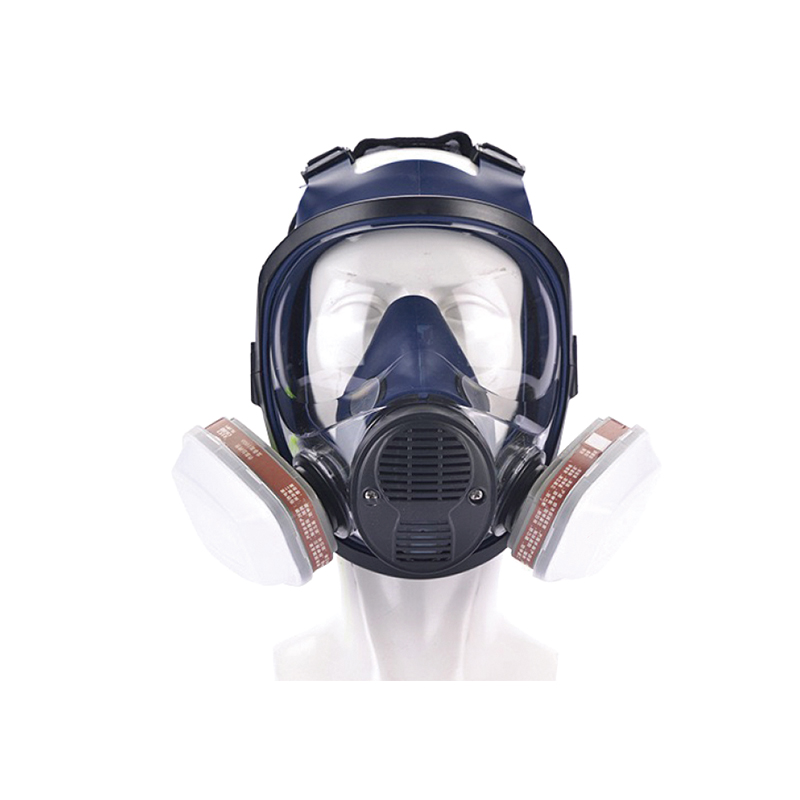
Executing a valid gas mask fit test requires meticulous preparation. The process begins with sizing and selection logic. The administrator must verify the user has the correct size and model of equipment before any testing begins. Faces come in distinct shapes and sizes; a medium mask from one manufacturer may fit entirely differently than a medium from another. Users should try multiple sizes to find the most comfortable baseline fit.
Proper donning mechanics dictate the success of the evaluation. The user must place the straps correctly, ensuring the crown strap sits squarely on the back of the head and the neck straps secure firmly below the ears. Internal nose cups must be adjusted to prevent fogging and minimize dead air space. For filtering facepieces, external nose clips must be molded firmly across the bridge of the nose using both index fingers. Pinching the clip with one hand creates a sharp peak that guarantees a leak.
Fasting protocols must be strictly enforced prior to qualitative testing. The user must avoid eating, drinking anything other than plain water, and chewing gum for at least 15 minutes before the test. Smoking or vaping is also prohibited during this window. Consuming flavored items alters the user's palate and causes sensory fatigue, making it impossible for them to accurately detect the bitter or sweet challenge agents during the procedure.
Once the mask is donned and the baseline setup is complete, the user undergoes a standardized 7-step protocol. Each step simulates real-world movements that could potentially compromise the seal. Each exercise lasts for exactly one minute, with the exception of the grimace test.
Normal breathing: The user stands still and breathes normally. This establishes the baseline seal integrity without physical exertion. The administrator observes the mask for obvious shifting.
Deep breathing: The user takes slow, deep breaths, simulating the increased respiratory demand of physical labor. This tests the seal under higher negative pressure, pulling the mask tighter against the face.
Turning head side to side: The user slowly turns their head to the extreme left and right, inhaling at each extreme position. This stretches the elastomeric skirt along the neck and jawline, checking for flex-point failures.
Moving head up and down: The user slowly tilts their head up toward the ceiling and down toward their chest, inhaling in the upward position. This tests the seal across the bridge of the nose and the chin cup, where leaks frequently occur during overhead work.
Talking: The user reads a standardized text out loud. Industry standard dictates using the "Rainbow Passage" (e.g., "When the sunlight strikes raindrops in the air, they act like a prism and form a rainbow..."). Speaking forces the jaw to move dynamically, testing the mask's ability to maintain a seal during communication.
Grimacing: The user smiles broadly or grimaces for 15 seconds. This intentionally breaks the seal. The equipment then measures how quickly and effectively the mask re-establishes the seal once the face relaxes. This step applies specifically to quantitative testing.
Bending over or jogging in place: The user bends at the waist as if touching their toes, or jogs in place if space is limited. This simulates the physical demands of picking up equipment or moving rapidly, testing the harness stability and overall facepiece retention.
A respirator seal check is fundamentally different from a formal fit test. It is a rapid, field-level verification performed by the user every single time they put the mask on. The first half of this process is the positive pressure check.
To execute this, the user blocks the exhalation valve with the palm of their hand. Once the valve is completely covered, the user exhales gently into the facepiece. The success criteria are immediate and tactile. The user must identify a slight positive pressure build-up inside the mask. The facepiece should expand slightly away from the face. During this expansion, there must be absolutely no outward air leakage felt around the perimeter of the seal, particularly near the eyes or under the chin. If air escapes, the user must reposition the mask, adjust the tension, and repeat the check.
The second half of the daily verification is the negative pressure check. This tests the system's integrity against inward leakage during inhalation.
To execute this on a reusable respirator, the user blocks the intake valves or the attached filter cartridges using their palms. For filtering facepieces like N95s, the user cups both hands over the entire surface of the respirator to block ambient airflow. The user then inhales gently. The success criteria require the facepiece to collapse slightly inward toward the face. The user must hold their breath and maintain that vacuum for 10 seconds. If the mask remains collapsed and no ambient air is drawn through the perimeter seal, the negative pressure check is successful.
Clarifying the conceptual trade-off between these two procedures prevents dangerous assumptions on the job site. They are not interchangeable. A seal check is a daily, field-level maintenance step. It confirms that the mask is seated correctly on the user's face on that specific day and that the valves are functioning properly. It takes seconds to perform and requires no specialized equipment.
Conversely, a fit test is an annual, controlled validation. It confirms the mask's overall sizing, model compatibility, and mathematical protection factor against the user's specific facial structure. Passing a fit test in January does not guarantee protection in July if the user dons the mask carelessly. You must pass the annual test to prove the mask can protect you, and you must pass the daily seal check to prove the mask is protecting you at that exact moment.
A respirator seal is highly sensitive to biological changes. The most common point of failure is facial hair. There is an absolute incompatibility between facial hair and tight-fitting elastomeric masks. Stubble, beards, and long sideburns physically separate the sealing edge of the mask from the skin. Even one single day of stubble growth acts like a microscopic bed of nails, lifting the silicone skirt and creating thousands of tiny leak paths. For a seal to function, the skin must be clean-shaven where the facepiece makes contact.
Anatomical changes also dictate immediate re-testing. Extreme weight loss or weight gain alters the fat distribution in the cheeks and neck, changing the topography the mask relies on. Facial reconstructive surgery, severe scarring in the seal area, or major dental work alters the underlying bone structure. Any of these biological variables immediately invalidates a previously successful fit, necessitating a new evaluation.
The equipment itself degrades over time, compromising protection even if the user's face remains unchanged. Prior to any testing or daily use, users must rigorously inspect the hardware. Exhalation valves must be checked for micro-tears, debris, or curling edges. Inhalation gaskets must be seated flat and free of dry rot. Head harnesses must be inspected for loss of elasticity; a stretched-out strap cannot hold the mask securely during dynamic movement.
Organizations must establish strict retirement criteria for reusable facepieces. Exposure to UV light, harsh decontamination chemicals, and extreme temperature fluctuations will eventually warp butyl rubber and silicone. When a mask consistently fails daily positive and negative pressure checks despite proper donning technique and a clean-shaven face, the material has likely degraded beyond repair. The equipment must be removed from service and destroyed to prevent accidental use.
Inspect the exhalation valve cover for cracks or missing retaining clips.
Examine the silicone or rubber face seal for stiffness, tears, or permanent distortion caused by improper storage.
Check all inhalation valves to confirm they lay flat against the seating surface without curling.
Verify the elasticity of the head harness straps and confirm all buckles lock securely without slipping.
Inspect the visor on full face models for deep scratches that could compromise structural integrity or obscure vision.
Take immediate action to secure your respiratory protection program:
Procure an OSHA-compliant testing kit or contract a certified industrial hygienist to establish baseline data for all users.
Integrate mandatory positive and negative pressure seal checks into your daily donning procedures.
Enforce strict facial hair policies for all personnel required to wear tight-fitting elastomeric facepieces.
Establish a quarterly inspection schedule to identify and replace degraded valves, gaskets, and harnesses before they fail in the field.
A: Under OSHA standard 1910.134, tight-fitting respirators must be fit tested prior to initial use. After the baseline is established, testing must be repeated annually. You must re-test immediately if you experience significant physical changes, such as major weight fluctuation, dental surgery, or facial scarring, as these alter your facial structure and compromise the seal.
A: Yes. Qualitative fit test kits utilizing Bitrex or Saccharin are commercially available and widely used by civilians and preparedness communities. While they do not provide the exact mathematical data of a quantitative machine, they offer a reliable, pass/fail baseline to verify that your personal equipment seals correctly against your face.
A: A fit test is an annual, documented procedure using challenge agents or diagnostic machines to verify that a specific mask model and size is compatible with your face. A seal check is a rapid, daily field test performed by blocking the valves and inhaling or exhaling to ensure the mask is seated correctly on your face at that exact moment.
A: No, you cannot wear standard prescription glasses. The temples of standard glasses break the seal between the mask skirt and your skin, creating direct leak paths. You must use specialized spectacle kits engineered to mount directly inside the facepiece, allowing you to see clearly without compromising the external seal.
A: If you fail, the testing process stops immediately. You cannot use that specific mask in a hazardous environment. You must adjust the straps, switch to a different size, or try an entirely different make and model of facepiece. Faces vary drastically, and finding the correct geometry is a process of elimination.
A: Yes, absolutely. Facial hair physically separates the elastomeric skirt from your skin. Even one day of stubble creates microscopic gaps that allow toxic particulates and vapors to bypass the filters. To achieve and maintain a safe, verifiable seal, you must be completely clean-shaven in the areas where the mask contacts your face.


