
Views: 0 Author: Site Editor Publish Time: 2026-08-18 Origin: Site


Industrial work environments destroy safety apparel. Extreme heat, abrasive dust, and moisture attack gear daily. Proactive maintenance is a strict safety requirement, not a cosmetic choice. Neglected leather hardens, cracks, and loses its protective qualities. This leads to premature equipment failure, higher replacement costs, and elevated risks of thermal or mechanical injury. A dried-out apron or stiffened glove restricts movement. Workers end up fighting their own equipment, which accelerates fatigue and reduces precision during high-risk tasks. Compromised leather fibers offer significantly less resistance to punctures, cuts, and radiant heat. Establishing a standardized maintenance protocol for heavy-duty leather gear ensures consistent safety compliance. It preserves dexterity and maximizes the operational lifespan of the equipment. Treating leather care as a scheduled operational task directly impacts workplace safety metrics. We need straightforward daily habits that prevent catastrophic gear failure.
Routine dictates longevity: Daily dry brushing combined with quarterly deep conditioning prevents the accumulation of abrasive particulates that sever leather fibers from the inside out.
Product selection impacts safety: Utilizing the wrong conditioners (e.g., petroleum-based oils) can compromise the natural flame resistance of industrial leather, creating severe safety hazards.
Moisture is the primary catalyst for degradation: Both external environmental moisture and internal sweat require controlled, ambient-temperature drying to prevent leather from shrinking, hardening, or developing mold.
Replacement parameters are absolute: Maintenance extends lifespan, but compromised structural integrity (e.g., burnt seams, deep gouges) mandates immediate replacement to maintain safety compliance.
The primary objective of industrial leather maintenance is preserving the hide's natural moisture balance. You need this balance to maintain flexibility and dexterity while retaining the dense fiber structure necessary for puncture and heat resistance. Leather is not a synthetic fabric. It is a matrix of organic collagen fibers. These fibers require internal lubrication to slide past one another when the material bends. If the internal lipids and moisture evaporate, the fibers grind against each other under stress. Success in leather maintenance means keeping this fiber matrix intact, hydrated, and free of abrasive contaminants without oversaturating the material.
Industrial environments attack leather through both chemical and physical breakdown processes. Radiant heat from welding arcs, direct contact with hot metal, and prolonged UV light exposure rapidly evaporate the essential natural oils trapped within the hide. As these oils vanish, the collagen fibers shrink and bind together. The leather becomes rigid and prone to cracking under minor flexion.
Physical degradation happens right alongside the heat damage. Grinding dust, metal shavings, and welding slag settle onto the leather surface. When you move, these microscopic, jagged particles act like tiny razor blades. They work their way into the pores of the leather, severing the collagen fibers from the inside out. This combination of thermal dehydration and mechanical abrasion destroys the structural integrity of the gear at a cellular level.
Here is exactly how different industrial hazards break down your gear:
UV Radiation from Welding Arcs: Bakes the surface oils out of the hide, causing the top grain to shrink and peel.
Radiant Heat: Penetrates deep into the leather, evaporating the internal moisture barrier and causing the collagen fibers to fuse together into a brittle mass.
Grinding Dust: Acts as a dry abrasive. It settles into the creases of the leather and cuts the fibers every time the joint bends.
Welding Spatter: Burns microscopic craters into the top grain. Even if the spatter deflects, it leaves behind a hardened scar that acts as a stress point for future cracking.
Understanding the tanning process helps you apply the correct care protocols. Chrome-tanned leather utilizes chromium salts to alter the protein structure of the hide. This process creates a highly heat-resistant, pliable material ideal for welding apparel. Chrome-tanned leather requires conditioners that can penetrate its relatively tight grain structure without leaving a sticky surface residue.
Vegetable-tanned leather uses natural tannins from tree bark. It is generally thicker, stiffer, and highly resistant to abrasion, making it suitable for heavy-duty aprons. Vegetable-tanned leather reacts poorly to high heat and water. It will shrink severely if soaked. Care protocols must align with these specific leather types to avoid accelerating degradation.
Leather Tanning Types and Industrial Applications
| Tanning Method | Primary Characteristics | Best Industrial Use | Maintenance Vulnerability |
|---|---|---|---|
| Chrome-Tanned | High heat resistance, very pliable, water-resistant | Welding gloves, light aprons, jacket sleeves | Can become spongy if over-conditioned with heavy oils |
| Vegetable-Tanned | Extreme abrasion resistance, rigid, thick | Heavy grinding aprons, tool belts, boot guards | Prone to severe shrinkage and cracking if exposed to heavy water or extreme direct heat |
| Oil-Tanned | High moisture resistance, soft, heavy | Outdoor rigging gloves, wet environment aprons | Attracts dust and metal shavings easily due to oily surface |
Establish the habit of a quick dry-cloth wipe down before use. This ensures no residual moisture or sharp particulates have settled on the gear overnight. Use a clean, dry microfiber or cotton cloth to sweep the surface of the apron. This brief inspection also serves as a mandatory safety check. It allows you to identify any new tears, loose Kevlar stitching, or hardened spots that developed since the last shift. Catching these issues before entering a hazardous environment prevents minor gear defects from causing major injuries.
Immediately after use, remove metal dust, slag, and dirt to prevent particulate embedding. Use a stiff-bristled, non-metallic brush for this task. Nylon or natural tampico fiber brushes work best. Metallic wire brushes will aggressively score the leather surface, destroying the protective top grain. Brush the apron in downward strokes to dislodge heavy debris. Pay special attention to creases, pockets, and seams where grinding dust naturally accumulates. Removing these abrasives daily stops them from migrating deep into the fiber matrix.
Follow this specific post-shift routine:
Hang the apron on a sturdy hook in a well-lit area.
Take a stiff nylon brush and sweep from the chest down to the waist in long, firm strokes.
Brush out the inside of any pockets or tool loops where metal shavings hide.
Inspect the waist and neck straps for fraying or stretched holes.
Leave the apron hanging in an area with good airflow to dry out any accumulated sweat.
Removing surface grease and grime requires a lightly dampened cloth. Use clean water, preferably distilled, to avoid introducing hard water minerals into the leather. Wring the cloth out completely until it is barely damp. Wipe down the heavily soiled areas using gentle circular motions. Strict avoidance of soaking the leather is mandatory. If water pools on the surface or darkens the leather deeply, the cloth is too wet. Once the surface grease is lifted, wipe the area immediately with a dry towel to absorb any residual surface moisture.
The unlined back of the apron, known as the flesh side, is frequently neglected. This suede-like interior traps worker sweat, body oils, and ambient dust. Sweat contains salts and enzymes that actively break down collagen fibers, causing the leather to rot from the inside. To manage this, brush the interior vigorously with a stiff nylon brush once a week to dislodge dried salt deposits. Aerate the apron by hanging it inside out in a well-ventilated area. This prevents the bacterial breakdown of the fibers and eliminates the sour odor associated with degraded leather.
Different industrial exposures require specific handling protocols. Machine oil splatters should be blotted immediately with a dry, absorbent cloth. Never rub the oil. Rubbing drives it deeper into the pores. Apply a light dusting of cornstarch or talcum powder to the oil spot, let it sit overnight to draw out the grease, and brush it away the next day. Chemical splashes require immediate attention. Neutralize the area according to the chemical's specific safety data sheet, then clean the leather with a specialized pH-balanced leather cleaner. Standard alkaline soaps will strip the leather of its remaining oils and cause rapid cracking.
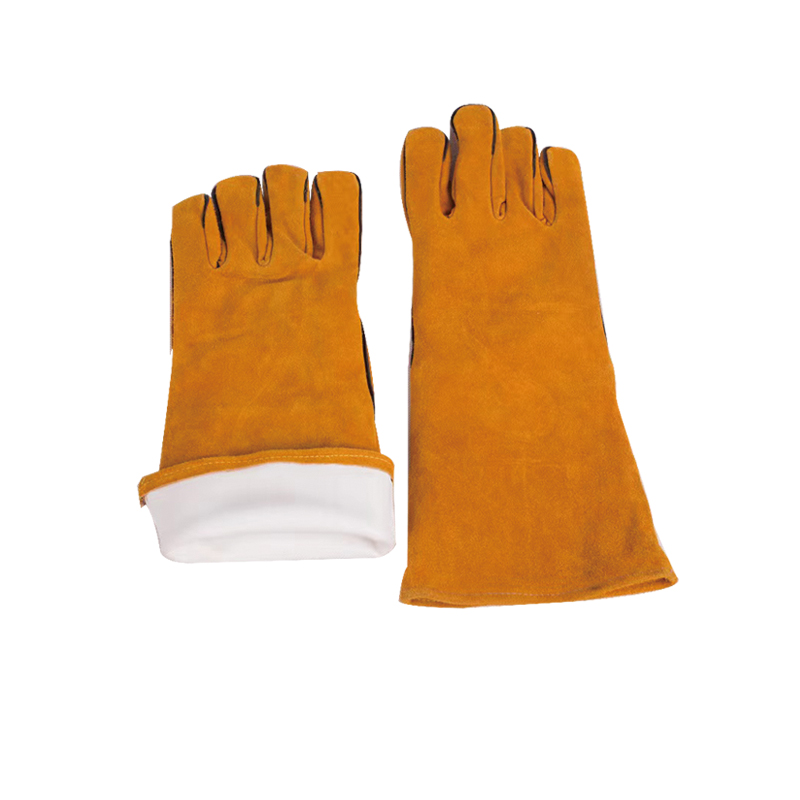
Gloves frequently harden after intense heat exposure. When the moisture flashes off, the leather shrinks and stiffens. Mechanical softening techniques are the safest initial approach. Manipulate the leather by hand. Roll the stiffened fingers between your palms and gently knead the palm area. You can also roll the fingers back and forth over the rounded edge of a workbench. This physical manipulation breaks up the rigid protein bonds without adding chemicals. Chemical softening should be used sparingly. Applying heavy oils to soften gloves will compromise their structural thickness and reduce their ability to insulate against heat.
Managing internal sweat accumulation is difficult without damaging the leather lining. Workers sweat heavily inside heavy-duty gloves, creating a humid microclimate ideal for bacterial growth. Do not invert lined gloves. Pulling the lining inside out tears the internal stitching and ruins the fit. Instead, use a PVC pipe frame or a specialized glove dryer to hold the cuffs open, allowing ambient air to circulate to the fingertips.
Interior Cleaning Methods for Gloves
| Method | Application | Risk Level |
|---|---|---|
| PVC Pipe Aeration | Slide gloves over vertical PVC pipes to hold cuffs open overnight. | Low. Highly recommended for daily use. |
| Baking Soda Dusting | Sprinkle a small amount inside the glove to absorb moisture and odor, shake out next day. | Low. Effective for heavy sweat accumulation. |
| Enzyme Sprays | Lightly mist the interior to kill bacteria. Must be alcohol-free. | Medium. Can over-saturate the lining if sprayed too heavily. |
| Machine Washing | Total submersion in water and detergent. | Extreme. Will permanently destroy the leather structure. Never do this. |
Over-conditioning Leather Welding Gloves creates severe workplace hazards. When leather absorbs too much oil or conditioner, it develops a spongy, bloated texture. This oversaturation reduces tactile feedback, making it difficult for workers to handle small tools or operate machinery safely. Spongy leather becomes highly susceptible to catching and holding hot sparks or grinding slag. Instead of deflecting off a hard, smooth surface, the hot material embeds into the softened leather, rapidly burning through to the worker's skin. Apply conditioners to gloves in microscopic amounts, focusing only on the exterior high-flex areas like the knuckles.
Conditioning frequency depends entirely on usage intensity and environmental exposure. To determine if gear requires treatment, perform the water drop test. Place a few drops of clean water on a high-wear area of the leather. If the water absorbs immediately and the leather darkens, the Cowhide Leather Protection barrier is compromised. The hide is dehydrated and requires conditioning. If the water beads up and rolls off the surface, the current protection is sufficient. Over-conditioning healthy leather clogs the pores and degrades the fiber structure.
Selecting the correct product category determines the outcome of the maintenance routine. Conditioners and waxes serve entirely different mechanical purposes.
Oils (e.g., Neatsfoot Oil): Animal-based oils are best for deep penetration. They restore severely dried, stiff leather by lubricating the internal collagen fibers. Oils will permanently darken the hide. If misused or over-applied, they will over-soften the leather, reducing its puncture resistance and structural rigidity.
Waxes (e.g., Beeswax, SnoSeal): Waxes are ideal for creating a durable surface barrier against moisture, liquid spills, and ambient humidity. They sit on top of the grain rather than penetrating deeply. While excellent for waterproofing, heavy wax applications significantly reduce the leather's breathability, trapping internal sweat.
Balms and Creams: These are hybrid products containing both light oils and soft waxes. They offer a middle ground, providing moderate internal hydration while leaving a light protective film on the surface. They are generally the safest choice for routine maintenance on welding gear.
Safety gear used for welding, cutting, or grinding must maintain strict fire resistance. Explicitly avoid using petroleum-based conditioners, motor oils, or highly flammable synthetic treatments on industrial leather. Products containing mineral oil, petroleum jelly, or silicone distillates lower the natural flashpoint of the leather. If a stray welding spark lands on leather treated with petroleum products, the residue can ignite, causing severe burns. Always verify that the chosen leather balm or oil is rated for high-heat industrial applications and consists of natural, non-flammable lipids.
Applying conditioner requires a strict, step-by-step methodology to prevent surface contamination. First, ensure the leather is completely clean and dry. Test the conditioner on a small, hidden area of the apron strap or glove cuff to ensure it does not cause adverse reactions.
Take a clean, lint-free rag or use your bare fingers.
Scoop a dime-sized amount of conditioner.
Rub it into the leather in tight, circular motions, starting with the driest areas.
Watch how fast the leather absorbs the product. If it drinks it in immediately, apply one more light coat.
Wipe off any excess product sitting on the surface with a dry towel.
Respect the mandatory soak and cure time. Conditioned leather must sit in a warm, dry environment for at least 24 hours before returning to active duty. This cure time allows the lipids to migrate fully into the fiber matrix and the surface to dry completely. Wearing freshly oiled gear into a fabrication shop guarantees that abrasive slag, metal dust, and dirt will stick to the wet surface, accelerating the degradation process.
Safety aprons must be hung on wide, sturdy hangers. Never drape heavy leather aprons over a single nail or a thin wire hanger. The weight of the heavy-duty hide will cause localized stretching, severe creasing, and structural stress on the neck and waist straps. Over time, this localized stress tears the leather at the hanging point. Use broad wooden or thick plastic suit hangers to distribute the weight evenly across the shoulders of the apron. Ensure straps are untangled and hanging freely to prevent permanent deformation of the brass or steel hardware.
Store leather gear in well-ventilated, climate-controlled environments to avoid excess moisture accumulation. The ideal storage environment maintains a relative humidity between 40% and 50% and a temperature around 65°F to 70°F. High humidity environments promote rapid mold and mildew growth, which digests the organic leather fibers. Low humidity environments accelerate the evaporation of internal lipids, leading to dry rot. Ensure the storage locker or room has adequate airflow. Storing damp leather gear in a sealed plastic bag or a closed metal locker guarantees bacterial destruction.
Storage Environment Guidelines
| Storage Location | Airflow | Humidity Risk | Suitability |
|---|---|---|---|
| Open Wire Rack | Excellent | Low | Ideal for daily drying and long-term storage. |
| Vented Metal Locker | Moderate | Medium | Acceptable if gear is completely dry before storing. |
| Sealed Plastic Bin | None | Extreme | Never use. Will cause rapid mold growth and rot. |
| Car Trunk / Truck Bed | Poor | High (Temperature Swings) | Never use. Extreme heat bakes the leather; cold causes stiffness. |
When leather gear becomes soaked from sweat or environmental exposure, it must dry slowly at ambient temperatures. Strongly avoid using artificial heat sources to speed up the drying process. Placing wet leather on radiators, pointing heat guns at it, or leaving it in direct sunlight causes irreversible damage. Rapid heating boils the residual moisture inside the hide. This causes protein coagulation, where the collagen fibers fuse together permanently. The result is severe shrinking, warping, and a hard, brittle texture that cannot be restored with any amount of conditioner.
Establish a clear framework for inspecting gear to differentiate between cosmetic wear and functional failure. Cosmetic wear includes surface scuffs, minor discoloration from heat, and natural darkening from oil absorption. These do not impact the safety profile of the gear. Functional failure occurs when the material can no longer deflect heat, resist punctures, or maintain structural cohesion under stress. Inspect gear weekly, focusing on high-stress zones like the abdomen area of aprons and the palm and thumb crotch of gloves.
Safety Gear Inspection Criteria
| Inspection Zone | Cosmetic Wear (Acceptable) | Functional Failure (Replace/Repair) |
|---|---|---|
| Surface Leather | Discoloration, minor scuffs, smooth spots | Deep gouges, cracking, visible thinning |
| Stitching & Seams | Frayed thread ends, dirt accumulation | Burnt Kevlar, open seams, missing rivets |
| Hardware & Straps | Tarnished brass, stretched strap holes | Broken buckles, torn strap attachment points |
| Interior Lining | Sweat stains, minor pilling | Torn lining exposing skin, heavy mold |
Specific red flags require immediate replacement of the safety gear. Compromised Kevlar stitching is a primary failure point. If the heat-resistant thread holding the glove fingers or apron panels together is burnt away or unravelling, the gear will separate during use. Localized thinning in high-wear areas, such as the knees of an apron or the palms of gloves, drastically reduces puncture and heat resistance. If you can pinch the leather and it feels significantly thinner than surrounding areas, it is compromised. Deep cracking that exposes the lighter-colored underlying layers of the hide indicates that the leather has lost all structural integrity and will split open under tension.
Evaluate the economic trade-offs of continuous repair versus investing in new safety apparel. Minor repairs, such as replacing a broken brass buckle on an apron strap or restitching a small exterior pocket, are cost-effective ways to extend the life of otherwise healthy leather. Attempting to patch deep gouges or re-stitch structural seams on heat-degraded leather is a false economy. The labor and materials spent on repairing compromised gear often exceed the cost of replacement. Patched gear rarely meets the original safety certifications, exposing the worker to unacceptable risks. When the core protective barrier fails, immediate replacement is the only viable option.
Conduct an immediate audit of all current leather safety aprons and gloves using the structural failure criteria.
Discard and replace any items exhibiting burnt seams, deep cracking, or severe localized thinning.
Procure appropriate non-metallic brushes and natural, heat-rated leather conditioners for your facility.
Establish a scheduled, weekly maintenance routine requiring all workers to brush and inspect their gear post-shift.
A: Condition a leather safety apron every one to three months for daily industrial use. Adjust this frequency based on your specific environment. If you expose the apron to extreme radiant heat daily, it requires monthly conditioning. Always use the water drop test. If water absorbs instantly and the leather feels dry or stiff to the touch, apply conditioner immediately.
A: No. Never put leather welding gloves in a washing machine. Total submersion in water combined with harsh laundry detergents strips all natural oils from the hide. This destroys the collagen fiber structure. The gloves will shrink, warp, and harden permanently into an unusable, brittle state.
A: The best products are natural, non-flammable options like pure neatsfoot oil, beeswax, or specialized industrial leather balms. These penetrate the fibers without leaving a sticky residue. Avoid petroleum-based products, motor oils, or synthetic greases. These lower the flashpoint of the leather and create severe fire hazards.
A: Soften stiff gloves mechanically first. Manually roll and knead the leather between your hands to break up rigid fibers. You can also roll the fingers over the edge of a workbench. If they remain stiff, apply a very light coat of natural leather conditioner specifically to the exterior joints and knuckles. Avoid heavy oiling.
A: It can, depending on the product you use. Heavy wax coatings used for waterproofing melt under extreme direct heat, creating a burn hazard. Tailor your waterproofing to the specific application. If your primary hazard is radiant heat rather than liquid exposure, prioritize light conditioning oils over heavy surface waxes.
A: Clean the inside flesh side by vigorously brushing it with a stiff nylon brush. This removes trapped dust and dried sweat salts. If the apron is lined, wipe the lining with a damp cloth and mild soap. Always follow up with thorough air drying in a well-ventilated space. Use natural deodorizers like baking soda to manage odors.


