
Views: 0 Author: Site Editor Publish Time: 2026-08-16 Origin: Site


Occupational hearing loss is permanent but entirely preventable. Selecting inadequate hearing protection introduces secondary risks, from compromised situational awareness to poor worker compliance. We must explicitly distinguish industrial-grade PPE from consumer-grade thermal earmuffs worn for cold weather or recreational headphones. True protective gear is designed for acoustic attenuation and physical hazard protection. Procurement and safety managers face a saturated market of Personal Protective Equipment. Relying solely on the highest Noise Reduction Rating often leads to overprotection, communication breakdowns, and ergonomic failures during extended shifts. To make an informed procurement decision, buyers must evaluate Safety Earmuffs across specific technical dimensions. You need to look at acoustic attenuation profiles, structural ergonomics, compatibility with concurrent PPE, and advanced electronic capabilities.
Match Attenuation to the Environment: Do not default to the highest NRR; target an in-ear exposure level of 70–85 dBA to prevent acoustic isolation and ensure warning signals remain audible.
Ergonomics Drive Compliance: The most effective hearing protection is the one that stays worn. Clamping force, weight distribution, and cushion material dictate whether you are providing genuinely comfortable safety earmuffs for shifts exceeding four hours.
PPE Integration is Critical: Safety eyewear and hard hats can break the acoustic seal of earmuffs, reducing effective protection by up to 5-10 dB if not properly integrated.
Active Listening Mitigates Risk: For dynamic environments, electronic hear-through technology allows speech and alarms to pass through while instantly compressing hazardous impact noises.
Technology Drives Morale: Modern electronic features like Bluetooth do not just protect hearing; they actively improve worker efficiency, situational awareness, and job satisfaction.
The Noise Reduction Rating is a laboratory-derived metric. It rarely reflects field performance. Workers rarely wear equipment perfectly in active environments. Safety glasses, hair, and improper adjustment all create gaps. The OSHA-recommended derating formula helps estimate real-world protection. You subtract 7 from the NRR and divide the result by 2. This gives a much more realistic view of actual noise reduction on the job site. For example, an NRR of 31 only provides about 12 decibels of effective protection in the field. Relying on the raw number printed on the box is a common failure point in safety programs.
Your success criteria should focus on selecting an NRR that brings ambient noise down to safe levels. You want to achieve this without causing overprotection. If you block too much sound, workers cannot hear warning signals. They might remove their gear entirely to communicate. A target in-ear exposure of 75 dBA is generally ideal. It keeps the worker safe while maintaining their connection to the surrounding environment. You must measure the actual noise levels at the worker's ear before selecting the equipment.
Standard passive earmuffs excel at blocking mid-to-high frequency sounds. These include general impact, grinding, and sudden shock noises. The acoustic realities dictate that dense foam and plastic cups absorb these short sound waves efficiently. High-frequency noise is directional and easier to block with physical barriers. Most standard PPE handles a chop saw or a pneumatic nailer without issue.
However, passive earmuffs are generally less effective against low-frequency rumble. Heavy machinery, diesel engines, and large generators produce these deep sounds. Low-frequency waves are long and can penetrate solid objects, vibrating the bones around the ear. You must review manufacturer octave-band attenuation data. This allows you to match the earmuff to your facility's specific noise profile. Do not just look at the single NRR number. Look at how the device performs across different sound frequencies. If your site runs massive diesel generators, you need cups specifically engineered for low-frequency absorption.
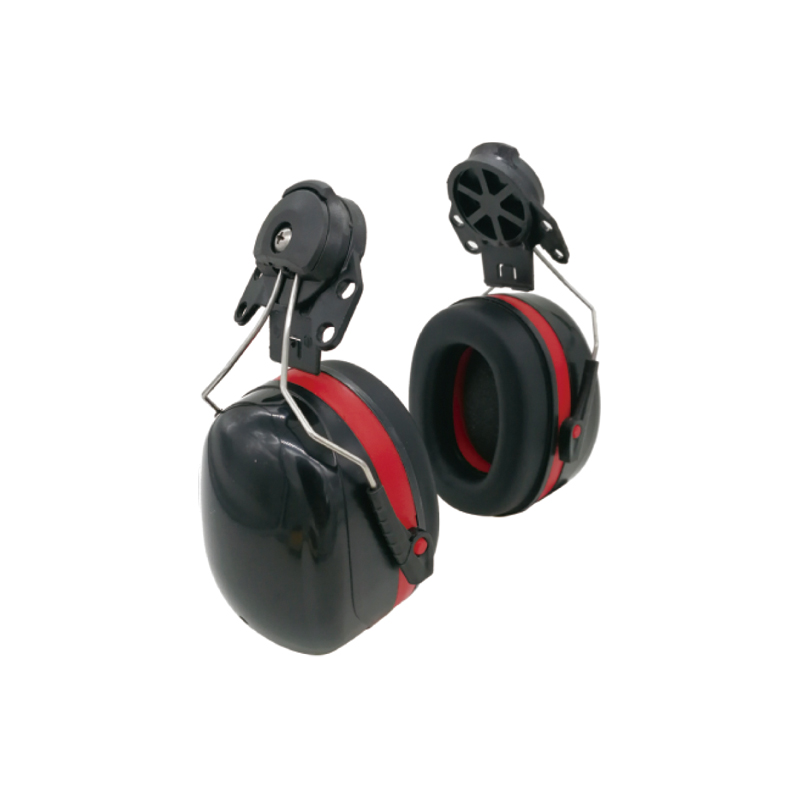
The physics of passive attenuation rely heavily on physical mass. Larger, deeper cups with denser acoustic foam typically yield higher low-frequency attenuation. The sound waves have more material to travel through and dissipate. Manufacturers use specific foam densities to target different frequency bands. A thicker cup creates a larger air chamber, which traps and neutralizes deep rumbles effectively.
There is a conceptual trade-off here. High-profile cups offer better protection but increase weight. They also create snag hazards in confined spaces. A worker crawling through ductwork or working under a vehicle cannot wear massive, high-profile cups. They will constantly knock the earmuffs out of position, breaking the acoustic seal. You must match the cup profile to the physical constraints of the workspace.
Clamping force plays a massive role in maintaining a consistent acoustic seal around the outer ear. Unlike earplugs, which require precise and hygienic roll-down insertion techniques, adjustable headband models are easily donned. They adjust to fit a wide range of head shapes instantly. The band acts as a spring, pressing the cushions against the skull. This pressure must remain consistent regardless of how far the cups are pulled apart.
Excessive clamping force causes headaches and reduces wear time. Insufficient force compromises the seal and lets noise leak in. Look for dielectric adjustable headbands that maintain memory over time. Non-conductive materials are safer for electrical environments. Steel bands offer excellent memory but pose a shock hazard if exposed to live wires. Plastic or composite bands must be tested for durability in cold weather, where they can become brittle and snap.
Cushion material directly affects skin contact, sweat resistance, and acoustic sealing properties. You must evaluate the availability and cost of snap-in hygiene kits. Cushions harden and crack over time due to body oils and UV exposure. This degrades protection significantly. Replaceable parts reduce long-term replacement expenses. A cracked cushion can reduce the NRR by up to 10 decibels.
| Cushion Material | Durability | Comfort Level | Best Application |
|---|---|---|---|
| PVC (Polyvinyl Chloride) | High | Moderate | General industrial use, easy to wipe clean. |
| Polyurethane Foam | Medium | High | Extended wear, better contouring to the head. |
| Silicone/Gel | High | Very High | Use with safety glasses, high-heat environments. |
You must address the exposure time threshold. Evaluate whether the exposure time is shorter than four hours or spans full eight-to-twelve hour shifts. Shorter durations allow for heavier models. Long shifts mandate lightweight, Comfortable Safety Earmuffs. Heavy units cause neck strain and fatigue. Workers will inevitably take them off if they cause physical pain.
Look for padded, bifurcated headbands. Split designs distribute weight evenly across the crown to prevent pressure points. A single, narrow band concentrates all the weight on one strip of the scalp. A split band allows air to circulate and balances the load. This simple design change drastically improves compliance during a twelve-hour shift on a factory floor.
Thick safety glass temples or respirator straps create gaps in the earmuff cushion. This drastically reduces attenuation. A broken seal can let in dangerous levels of noise. Even a gap of a few millimeters destroys the low-frequency blocking capability. Workers often prioritize eye protection over hearing protection, leading to compromised acoustic seals.
Evaluate neckband models or helmet-attached earmuffs. Earmuffs specifically designed with soft, compliant gel cushions seal much better around eyewear frames. Cap-mount models attach directly to the hard hat slots. This eliminates the headband entirely, solving the interference problem. However, you must ensure the hard hat suspension is tight enough to maintain the clamping force of the attached cups.
Earmuffs trap heat naturally. This is especially true in outdoor or high-temperature industrial environments. The skin around the ears sweats, causing the cushions to become slippery and uncomfortable. Workers will lift the cups to vent the heat, exposing themselves to sudden noise spikes. This behavior defeats the purpose of the PPE.
Look for models compatible with sweat-absorbing adhesive pads. Cooling gel cushions also prevent workers from removing PPE due to discomfort. Keeping the ears cool improves compliance dramatically. Some manufacturers offer fabric covers that absorb moisture. These must be washed regularly to prevent bacterial growth, but they offer significant relief in hot climates.
External microphones pick up ambient sound and amplify safe frequencies like human speech. They instantly shut off or compress noise exceeding 82 dB. This feature is essential for workers who need to hear colleagues or forklift backup alarms. They can hear warning signals without removing their PPE. The microphones process the sound in milliseconds.
This technology uses digital signal processing to map the acoustic environment. When a loud impact occurs, the speakers inside the cup mute instantly. Once the noise passes, the ambient sound returns. This allows a foreman to give instructions next to a running compressor. The worker hears the voice clearly while the compressor noise is muffled by the passive cups.
Evaluate connectivity options based on your site. Bluetooth works well for mobile device pairing. Integrated two-way radios are better for team communication in sprawling facilities. Built-in Bluetooth improves worker morale and communication speed. It prevents workers from lifting an earmuff cup to take a call, which exposes them to sudden, hazardous noise.
Two-way radio integration operates on standard UHF/VHF frequencies. This allows crane operators to speak directly to riggers on the ground. The microphones are usually noise-canceling boom mics. They filter out the background machinery noise, transmitting only the worker's voice. This clear communication prevents accidents and speeds up operational workflows.
Assess battery runtime carefully. Look for devices offering more than 24 hours for multi-shift use. Compare rechargeable lithium-ion versus standard AA batteries based on your charging infrastructure. Lithium-ion packs are lighter and hold a charge longer. AA batteries are easy to swap in the field if a charging station is unavailable.
Ensure the earmuff defaults to high-level passive protection even if the battery dies. The electronic components should not compromise the physical acoustic seal. If the power fails, the worker simply loses the hear-through or Bluetooth capability. They must remain fully protected from hazardous noise levels at all times.
Establish criteria for specific environments. Use non-conductive models for electrical utility work. Select slim-profile cups for welding or face-shield integration. High-visibility options are necessary for roadside or construction crews. Job-specific matching prevents workers from modifying or discarding their PPE due to physical interference.
A welder cannot wear standard high-profile cups under a welding hood. They need a neckband model with low-profile cups. A lineman working near high voltage cannot have any metal components in their headband. You must audit the specific tasks performed by each crew and issue gear that fits the job requirements perfectly.
Overprotection means reducing the worker's exposure below 70 dBA. This causes them to feel isolated. They become unable to hear equipment malfunctions and are prone to removing the PPE. A worker who feels deaf to their environment is a danger to themselves and others. They cannot hear a bearing failing on a machine or a vehicle approaching from behind.
Conduct a precise noise dosimetry survey before selecting the NRR to avoid this hazard. Measure the time-weighted average of the noise exposure. Select an earmuff that brings that average down to between 75 and 80 dBA. This provides a safe buffer without cutting the worker off from critical auditory cues.
Sometimes you must use earmuffs in tandem with earplugs. This is typically for environments exceeding 105 dBA. Examples include jet engine testing or heavy stamping presses. The extreme sound pressure levels require multiple layers of defense to prevent permanent damage.
Adding earmuffs to earplugs only adds about 5 dB of protection to the higher-rated device. It does not double the NRR. If you wear a 30 NRR earplug and a 25 NRR earmuff, your total protection is roughly 35 NRR. Keep this math in mind when calculating total exposure. You cannot simply add the two numbers together.
The optimal safety earmuff balances adequate attenuation for the specific frequency hazard with the ergonomic necessities of the wearer. Prioritize accurate NRR matching and PPE compatibility first. If exposure exceeds four hours, prioritize comfortable models with low clamping force and gel cushions. If communication is required, mandate active listening and Bluetooth features.
Conduct an updated facility noise survey to map exact decibel levels.
Map the required attenuation levels against manufacturer octave-band data.
Procure a small batch of shortlisted earmuffs for a worker field trial.
Gather feedback on comfort and compatibility with existing hard hats and glasses.
Roll out the final selection with proper training on fit and maintenance.
A: Typically every 6 months under normal use. You should replace them more frequently in extreme climates or heavy-sweat environments to maintain the acoustic seal.
A: Safety earmuffs use dense acoustic foam and tight seals to block hazardous decibel levels. Cold-weather earmuffs are purely thermal garments made of fleece or wool and offer zero acoustic protection.
A: Yes, but thick frames can break the seal and reduce protection. Use glasses with thin, flat temples or upgrade to earmuffs with gel cushions that mold around the frames.
A: NRR stands for Noise Reduction Rating. It is a laboratory measurement indicating how much sound a hearing protection device blocks, though real-world performance is usually lower.
A: Yes. Quality electronic earmuffs function as standard passive hearing protection when powered off or when the battery dies, ensuring you remain protected from loud noises.
A: Wipe the outer cups and cushions with a damp cloth and mild soap. Never submerge them in water, especially electronic models, and avoid harsh chemicals that can degrade the plastic and foam.


