
Views: 0 Author: Site Editor Publish Time: 2026-08-14 Origin: Site


Occupational noise presents a dual hazard on the job site. Workers face the immediate risk of noise-induced hearing loss (NIHL) and the secondary risk of workplace accidents caused by compromised situational awareness. Selecting the right protective equipment requires understanding the core differences between available technologies. Industry nomenclature often uses the terms "active vs. passive" and "electronic vs. manual" interchangeably when describing hearing protection.
The core operational friction lies in selecting equipment that meets stringent OSHA and NIOSH attenuation requirements without isolating workers. When workers cannot hear instructions or warning signals, they often remove their protection to communicate, instantly exposing themselves to hazardous noise levels. This evaluation framework compares traditional passive models against active electronic alternatives. We focus on acoustic environments and workflow demands to help you make an informed decision.
Passive safety earmuffs rely entirely on physical acoustic barriers, offering highly reliable, continuous noise attenuation but severely limiting environmental awareness and blocking safe, intelligible sounds.
Electronic hearing protection earmuffs utilize active listening technology to compress hazardous impulse noises while safely amplifying safe ambient sounds, alarms, and low-decibel human speech.
Selection must be dictated by the specific noise profile (continuous vs. variable/impulse) and the operational necessity for verbal communication.
While electronic models require a higher initial investment and battery management, they often yield a higher ROI in team-based environments by reducing the frequency of PPE removal (the "wear-and-forget" compliance advantage).
Evaluating hearing protection starts with understanding regulatory compliance and the Noise Reduction Rating (NRR). You must evaluate the baseline NRR requirements for specific decibel (dB) exposures at your facility. Keep in mind the realities of derating in field conditions. Real-world attenuation often falls short of laboratory testing due to improper fit or interference from safety glasses. You must account for this gap when selecting your baseline protection levels. OSHA recommends derating the NRR by subtracting 7 and dividing by 2 to estimate actual field protection. If a muff has an NRR of 25, the effective field protection is roughly 9 dB.
Providing too much attenuation introduces the risk of over-protection, also known as acoustic isolation. Blocking critical warning signals, vehicle backup alarms, and essential speech creates severe safety hazards. Workers need to maintain environmental awareness to navigate active job sites safely. Total acoustic isolation forces workers to rely solely on visual cues, which is highly dangerous in dynamic environments like active flight lines or heavy civil construction zones.
The Speech Intelligibility Index (SII) measures how well a listener can hear and understand spoken words. Blocking safe, low-decibel human speech negatively affects team dynamics, instructional clarity, and emergency reaction times. When workers cannot understand each other, productivity drops and error rates increase. You must establish a framework for assessing how often workers need to communicate face-to-face or via radio while remaining in the hazardous noise zone.
Field conditions dictate that hearing protection must integrate with other personal protective equipment. Hard hats, face shields, and thick-framed safety glasses routinely compromise the acoustic seal of ear cups. A broken seal allows low-frequency noise to bypass the foam barrier entirely. Selecting the right equipment requires testing compatibility across your entire PPE matrix.
Consider the specific frequencies of the noise hazards. Low-frequency rumbles from diesel generators require different attenuation strategies than high-frequency screeches from metal cutting saws. Understanding the frequency spectrum of your job site helps determine the necessary density and volume of the ear cups.
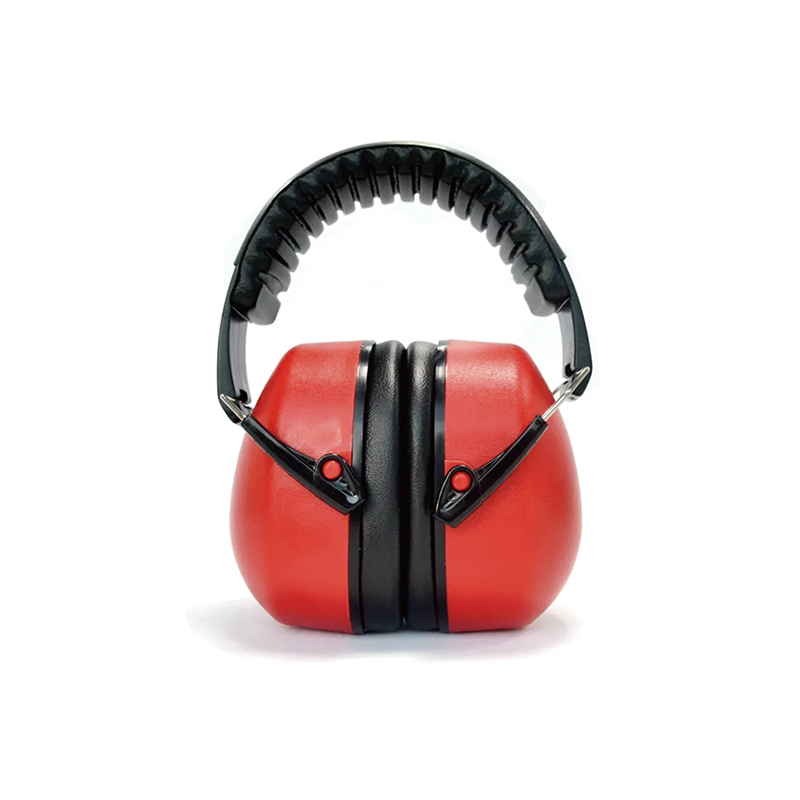
Passive attenuation relies entirely on physical materials to block, absorb, and reflect incoming sound waves. These devices utilize thick acoustic foam, dense polymer cup materials, and specific headband clamping forces to create a tight seal around the ear. The density of the materials determines how effectively the unit reduces high-frequency and low-frequency noise. Proper Safety Earmuffs must maintain consistent clamping pressure to prevent acoustic leaks during head movement.
Compared to manual insertion alternatives like roll-down foam earplugs or silicone putty, over-ear passive models offer distinct advantages. They drastically reduce user-error risks associated with improper earplug insertion. The seal consistency is generally much higher, and they eliminate the hygiene risks of rolling foam plugs with dirty hands covered in grease or concrete dust.
The primary advantages of passive models center on simplicity and reliability. They require zero power to operate. They offer high durability in extreme temperatures and deliver consistent performance shift after shift. The lack of internal electronics means there are fewer components that can fail when dropped or exposed to heavy vibrations.
However, inherent limitations exist. Total acoustic isolation creates a "muffled" effect on speech. This leads to the behavioral risk of workers lifting the muff off their ear to hear instructions, instantly compromising their protection. Ideal use cases for passive models include environments with continuous high noise. Generator rooms, solitary heavy machinery operation, and areas where team communication is unnecessary are optimal environments for passive protection.
The physical construction of passive models involves several critical components. The outer shell is typically molded from ABS plastic to deflect sound waves. Inside, open-cell acoustic foam absorbs sound energy and converts it into trace amounts of heat. The ear cushions, usually made of PVC or polyurethane covering a foam ring, conform to the side of the head to seal out noise.
Maintenance for passive models is straightforward but critical. The ear cushions and internal foam inserts degrade over time due to sweat, skin oils, and environmental exposure. Hardened or cracked cushions fail to provide an adequate seal. You must implement a regular inspection schedule to replace these hygiene kits.
| Feature | Passive Earmuffs | Foam Earplugs |
|---|---|---|
| Insertion Method | Over-the-head clamping | Roll-down and insert into canal |
| Hygiene Risk | Low (No canal contact) | High (Requires clean hands) |
| Seal Consistency | High (Dependent on glasses/hair) | Variable (Dependent on user skill) |
| Durability | Months to Years | Single-use or short-term |
Active listening and compression technology fundamentally change how workers experience noisy environments. Internal technology includes directional microphones, microprocessors, and dynamic drivers. These components work together to manage sound. Absolute sound clipping simply cuts the audio feed when noise exceeds a safe threshold. Seamless sound compression, however, reduces the volume of hazardous noise while maintaining a continuous audio stream, providing a much smoother listening experience.
Low-decibel sound amplification is a critical feature. Electronic Hearing Protection Earmuffs capture and amplify safe ambient sounds and human speech up to a safe threshold, typically capped at 82 dB. Simultaneously, the internal circuitry suppresses dangerous impulse noises. This allows workers to hear commands clearly without exposing their eardrums to damaging decibel peaks.
The primary advantages include the ability to maintain spatial and situational awareness. Many models integrate seamlessly with two-way radios or Bluetooth devices. This ensures continuous, comfortable wear without the need for periodic removal to take a call or hear a supervisor. The "wear-and-forget" benefit reduces physical fatigue and improves long-term compliance. When workers can communicate without removing their ear cups, overall safety culture improves.
Inherent limitations include a strict reliance on battery lifecycles. Electronic components also face potential failure from moisture and dust ingress if not properly rated. Ideal use cases include impulse noise environments like firing ranges or stamping plants. Team-based construction sites and variable-noise manufacturing floors also benefit massively from electronic models.
The attack time of the electronic circuitry is a vital specification. Attack time refers to how quickly the microprocessor reacts to a loud impulse noise and compresses it. High-quality electronic models feature attack times in the low milliseconds, ensuring that sudden noises like a nail gun firing or a metal sheet dropping are suppressed before they can damage the inner ear.
Directional microphones placed on the outside of the ear cups allow workers to determine where a sound is coming from. This spatial awareness is crucial for detecting approaching forklifts or overhead cranes. Passive models severely degrade this directional hearing capability.
Radio integration transforms electronic earmuffs into communication hubs. Workers can receive instructions directly into their ear cups while remaining fully protected from ambient noise. This eliminates the need for hand signals or shutting down machinery to hold a conversation.
Comparing attenuation profiles reveals distinct differences in handling continuous versus impulse noise. Passive models excel at blocking a steady drone, such as industrial turbines or large ventilation fans. Electronic models shine when dealing with sudden, high-dB peaks like nail guns, drop forges, or ballistics, compressing the loud noise while keeping ambient sound audible.
Communication intelligibility under load varies significantly. Human speech filtered through passive physical barriers sounds muffled and distorted. Active digital compression circuits clarify speech during variable machine cycles, allowing workers to understand complex instructions without shouting.
Environmental durability and Ingress Protection (IP) ratings matter deeply on rugged job sites. Passive materials easily withstand harsh conditions, including chemical exposure, mud, and extreme cold. Electronic circuitry requires specific IP ratings to survive these same conditions. You must verify the IP rating of any electronic model before deploying it in wet or dusty environments.
Ergonomics and extended wear comfort directly impact compliance. Internal electronics and battery compartments add weight to electronic models. This affects cup depth and clamping pressure compared to standard passive models. You must analyze how this added weight impacts worker neck fatigue over a 12-hour shift.
The physical profile of the ear cups also matters. Deep cups provide better low-frequency attenuation but can interfere with welding helmets or tight workspaces. Low-profile cups are less obtrusive but may sacrifice some NRR. Electronic models often require slightly deeper cups to house the circuit boards and batteries.
Clamping force must strike a balance between maintaining an acoustic seal and preventing headaches. Too much pressure causes severe discomfort after a few hours. Too little pressure allows noise to leak in. Headbands made of spring steel tend to maintain consistent clamping force longer than plastic headbands.
| Feature | Passive Safety Earmuffs | Electronic Safety Earmuffs |
|---|---|---|
| Primary Mechanism | Physical acoustic barriers (foam, dense plastics) | Microphones, microprocessors, and speakers |
| Situational Awareness | Low (Blocks all sound equally) | High (Amplifies safe sounds, compresses loud sounds) |
| Power Requirement | None | Batteries (AA, AAA, or Rechargeable) |
| Ideal Noise Environment | Continuous, steady-state noise | Variable, impulse noise, team environments |
| Communication Capability | Poor (Requires removal or shouting) | Excellent (Speech amplification, radio integration) |
Ensuring a proper fit and seal is a universal requirement for all hearing protection. Acoustic leaks caused by thick safety glasses frames, hard hats, or facial hair drastically reduce the NRR. Mitigate this risk through mandatory fit-testing and by sourcing earmuffs with ultra-soft, adaptable ear cushions designed to seal around eyewear.
Managing battery logistics is critical when deploying electronic models. Outline strict protocols for charging station deployment. Track rechargeable battery lifespans and establish proactive replacement schedules. Mandate daily pre-shift equipment checks to ensure no worker enters a high-noise area with dead batteries.
Workforce training and adoption realities dictate the success of your hearing conservation program. Detail the specific training required to ensure workers understand how to operate electronic volume controls. They must know how to use the technology without compromising their baseline passive protection. Train them on how to clean and maintain electronic components without damaging the internal circuitry.
Implement a strict inspection protocol for all hearing protection devices. Supervisors should check for cracked ear cushions, stretched headbands, and missing foam inserts during daily safety briefings.
Inspect the outer shell for cracks or deep gouges that could compromise structural integrity.
Press the ear cushions to ensure they remain soft and pliable. Hardened cushions must be replaced immediately.
Check the headband tension by pulling the cups apart and ensuring they spring back with sufficient force.
For electronic models, verify that the microphones are clear of dust and debris.
Test the volume controls and compression circuitry before entering the noise hazard zone.
Address the issue of dual protection. In extreme noise environments exceeding 105 dB, workers may need to wear foam earplugs underneath their earmuffs. When using dual protection, you only add 5 dB to the higher NRR rating of the two devices. If workers wear earplugs under electronic earmuffs, they will need to turn the volume up significantly to hear ambient sounds, which drains batteries faster.
Consider the impact of temperature extremes. Cold weather hardens ear cushions, reducing their ability to seal properly. Hot weather causes excessive sweating, which degrades the foam and creates discomfort. Provide sweat-absorbing covers for the ear cushions in hot environments, but ensure these covers do not negatively impact the NRR.
Conduct a facility-wide noise dosimetry survey to map continuous and impulse noise zones.
Run a pilot program with both earmuff types to gather direct worker feedback on comfort and usability.
Assess physical compatibility with existing head and face PPE, ensuring hard hats and safety glasses do not break the acoustic seal.
Establish a strict maintenance schedule for replacing hygiene kits and managing battery lifecycles.
A: Passive hearing protection uses physical materials like foam and dense plastics to block all incoming noise equally. Active hearing protection uses electronic microphones and speakers to amplify safe ambient sounds while instantly compressing hazardous loud noises.
A: Not necessarily. The NRR is based on the physical seal and materials of the ear cup. Many passive earmuffs offer higher NRR ratings because they are designed purely for maximum attenuation, whereas electronic models balance attenuation with internal electronics.
A: No. Passive earmuffs block all frequencies, making human speech sound muffled and difficult to understand. Workers often have to shout or use hand signals to communicate effectively when wearing passive protection.
A: They use digital compression technology. When the external microphones detect a noise exceeding a safe threshold (usually 82 dB), the internal microprocessor instantly compresses the sound volume before it reaches the speakers inside the ear cups.
A: Yes, in team environments. Because workers do not need to constantly remove electronic earmuffs to hear instructions or alarms, they experience less fatigue and are much more likely to keep their protection on throughout the entire shift.
A: If the batteries die, the electronic amplification and compression features stop working. However, the earmuffs will still function as standard passive hearing protection, providing the baseline NRR based on their physical construction.
A: Only if they have an appropriate Ingress Protection (IP) rating. If you work in wet or dusty conditions, you must select electronic earmuffs specifically rated to resist water and dust to prevent the internal circuitry from shorting out.


