
Views: 0 Author: Site Editor Publish Time: 2026-08-19 Origin: Site


In heavy industrial environments, specifying the wrong personal protective equipment material thickness leads directly to safety failures or severe worker fatigue. Procurement and safety managers frequently struggle to balance maximum hazard shielding against heat, slag, and abrasion with necessary worker dexterity. Relying on generic heavy-duty labels rather than precise thickness metrics causes inconsistent protection and wasted budgets. Workers exposed to extreme conditions require gear engineered to exact specifications. You cannot guess when outfitting a crew handling molten metal or sharp steel. This guide breaks down how to objectively evaluate leather thickness. We translate ounces and millimeters into practical safety outcomes. You will learn how to engineer the exact level of protection required for specific industrial applications. By understanding material density and hide selection, safety professionals eliminate guesswork and keep workers safe without sacrificing operational mobility.
Standardized Measurement is Critical: Industrial leather thickness is measured in ounces (1 oz equals approximately 0.4 mm or 1/64 inch); understanding this conversion and the interchangeable use of "weight" and "thickness" is non-negotiable for accurate PPE procurement.
Hazard-Specific Specification: High-heat and heavy abrasion tasks demand 8–12 oz leather, precision industrial tasks require 3–5 oz leather to prevent severe ergonomic penalties, and 8–10 oz is the gold standard for load-bearing structural gear.
Targeted Protection Outperforms Bulk: Utilizing localized shielding, such as properly gauged leather protective sleeves, often provides better overall safety and mobility than uniformly thick, heavy garments.
Quality of Cut Dictates Performance: Thickness alone does not guarantee protection; the specific cut of the hide (shoulder/bend vs. belly) determines the density, structural integrity, and lifespan of the protective gear.
Leather weight and thickness mean the exact same thing in industrial manufacturing. Suppliers use ounce measurements to dictate the physical thickness of the material. Safety specifiers must rely on these exact ounce measurements rather than subjective terms. Words like thick, heavyweight, or premium cause dangerous miscommunications between procurement teams and vendors. When a specification sheet calls for a specific barrier against molten slag, only a precise numerical value guarantees the required physical density.
A reliable conversion metric exists for evaluating technical specification sheets. One ounce of leather equals roughly 0.4 millimeters, or 1/64 of an inch. This standard gives you a mathematical baseline for PPE procurement. If a vendor supplies a 10 oz leather apron, you know the material should measure approximately 4.0 millimeters thick. Understanding this conversion allows safety managers to cross-reference international standards, which often use millimeters, with domestic suppliers who predominantly use ounces.
Leather is a natural product, meaning thickness is never perfectly uniform across a single hide. Manufacturers state thickness in ranges, such as 8–9 oz, because natural variations occur from the animal's spine down to its belly. You must account for this tolerance during inbound inspection. A specification of 8 oz means the thinnest acceptable portion of the garment must meet that standard, while other areas might slightly exceed it.
Specialized leather gauges or digital calipers are essential tools for quality control. Measuring incoming gear ensures vendor compliance with your stated thickness specifications. Safety managers should randomly sample incoming PPE shipments, measuring the thickness at multiple points on the garment. Checking the seams, the center of the chest, and the extremities verifies that the manufacturer did not thin out the material in less visible areas to save costs.
Standard Industrial Leather Thickness Conversion Chart
| Ounce Weight (oz) | Millimeter Equivalent (mm) | Inch Equivalent (in) | Primary Industrial Application |
|---|---|---|---|
| 3 - 5 oz | 1.2 - 2.0 mm | 3/64" - 5/64" | Precision assembly, TIG welding gloves |
| 6 - 8 oz | 2.4 - 3.2 mm | 3/32" - 1/8" | Material handling, general abrasion protection |
| 8 - 10 oz | 3.2 - 4.0 mm | 1/8" - 5/32" | Structural gear, tool belts, heavy holsters |
| 10 - 12 oz | 4.0 - 4.8 mm | 5/32" - 3/16" | Heavy foundry work, high-heat shielding |
To maintain strict quality control on incoming shipments, safety teams should implement a standardized inspection protocol. Relying on visual checks is insufficient when dealing with natural materials that fluctuate in density.
Calibrate digital calipers to zero before measuring any incoming leather garments.
Select a random 5% sample from the delivered pallet of protective equipment.
Measure the primary strike face of the garment, such as the chest of an apron or the palm of a glove.
Measure the secondary areas, including the straps, cuffs, and gussets, to ensure the manufacturer did not substitute thinner belly leather in low-visibility zones.
Document the findings and reject any batch where more than 10% of the samples fall below the minimum specified ounce weight.
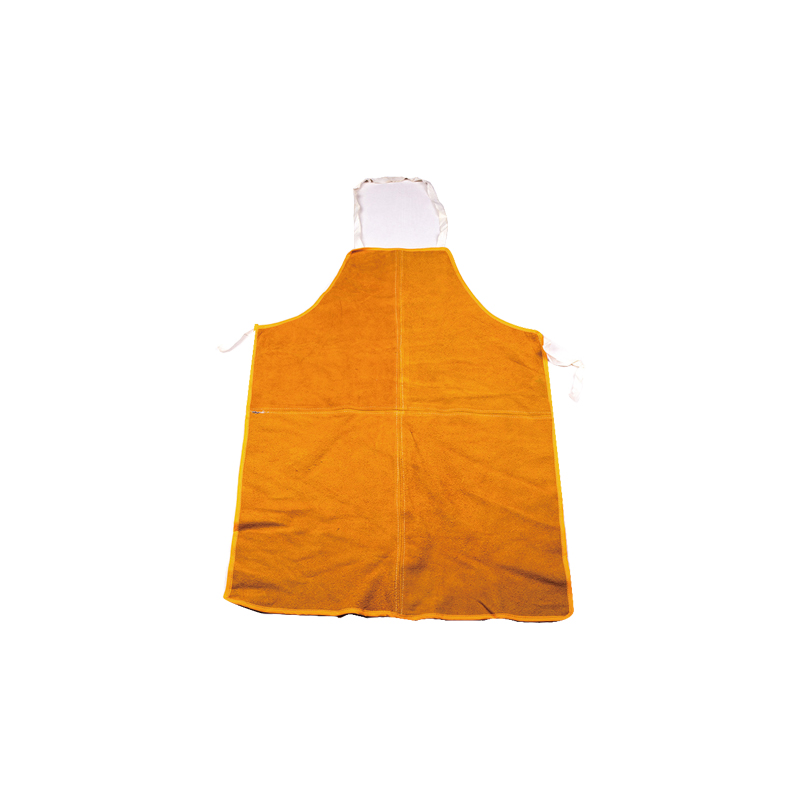
Different industrial tasks require highly specific material specifications. You must match the hazard severity to the physical barrier properties of the leather. Failing to align the thickness with the hazard either leaves the worker vulnerable to injury or encumbers them with unnecessary weight. A one-size-fits-all approach to PPE procurement guarantees failure on the shop floor.
Heavy thermal applications demand complete prevention of thermal transfer. Workers need shielding from radiant heat, molten metal splash, and heavy welding spatter. Premium side-split cowhide in the 8–12 oz range serves as the gold standard here. This thickness provides the structural density required to resist burn-through. The material absorbs extreme heat without immediate degradation, giving workers reaction time to step away from the heat source.
Proper Cowhide Leather Protection in this weight class prevents severe thermal injuries during processes like carbon arc gouging or heavy flux-core welding. The dense fiber structure of 10+ oz split leather traps air within the material, acting as an insulator against radiant heat. When molten slag hits a 10 oz leather apron, the thickness prevents the heat from instantly transferring to the worker's clothing underneath. Thinner leathers curl, shrink, and eventually allow the slag to burn through to the skin. In foundry settings where workers face ambient temperatures exceeding 150 degrees Fahrenheit alongside direct splash hazards, the 12 oz specification provides the necessary physical barrier to prevent catastrophic burns.
Load-bearing equipment requires exceptional rigidity and resistance to tool puncture. Industrial belts and holsters must maintain their structural shape under heavy daily use. Leather in the 8–10 oz range provides the ideal thickness for weight-bearing accessories. This gauge ensures sharp tools, such as screwdrivers, bull pins, or awls, do not easily pierce through the material and injure the worker's leg or hip.
This thickness supports heavy loads without stretching or tearing over time. When ironworkers carry heavy spud wrenches and slewing beaters, the belt must distribute that weight evenly across the waist. Leather thinner than 8 oz will warp, stretch, and eventually fail at the rivet points under the constant gravitational pull of heavy steel tools. The 8–10 oz range offers the perfect balance of rigidity and long-term durability. It resists the mechanical stress of constant tool insertion and removal, ensuring the holster does not collapse on itself.
Handling raw steel, rough lumber, or masonry creates intense friction wear. Workers need resistance to tearing, puncture, and severe abrasion. The 6–8 oz range balances a thick physical barrier with the necessary pliability. Workers must maintain a secure grip on heavy, rough materials. If the gloves or palm protectors are too thick, the worker cannot wrap their fingers securely around the object, increasing the risk of dropped loads.
This thickness prevents friction burns while allowing enough hand articulation to work safely. The 6–8 oz weight acts as a sacrificial layer, slowly wearing down over months of dragging across concrete or steel edges. It provides enough material to withstand daily abuse without forcing the worker's hands into an unnaturally rigid posture. When rigging heavy steel beams with wire rope, the burrs on the cable will instantly shred thin leather. The 8 oz specification ensures the wire rope slides across the palm without penetrating the hide.
Highly technical tasks require high tactile sensitivity and fine motor control. Workers still need baseline protection against sparks or minor abrasions, but dexterity is the primary concern. Top-grain cowhide in thinner 3–5 oz gauges prevents hand fatigue. Thinner materials allow for precise finger movements during delicate assembly or TIG welding, where the heat output is lower but the need for torch control is absolute.
Using overly thick gear here directly reduces productivity and increases error rates. If a pipe welder cannot feel the filler rod feeding through their fingers due to 8 oz leather gloves, the weld quality suffers. The 3–5 oz range offers a second-skin feel, protecting against ultraviolet light and minor heat while preserving the biomechanical feedback necessary for precision craftsmanship. This weight allows the worker to pick up small fasteners, adjust machine dials, and operate touchscreens without removing their hand protection.
Full heavy-gauge leather jackets often cause severe heat stress in industrial environments. They restrict the worker's range of motion and lead to reduced safety compliance. When core body temperatures rise, workers inevitably remove uncomfortable gear, exposing themselves to severe hazards. Forcing a worker into a full 9 oz leather jacket during a summer shift in an unairconditioned fabrication shop guarantees heat exhaustion and plummets productivity.
Implementing modular protection solves this safety gap. You can combine heavy-gauge Leather Protective Sleeves with lighter-weight torso garments. Fire-resistant cotton on the chest pairs perfectly with 7–9 oz leather on the arms. This protects the most exposed extremities—which take the brunt of sparks and abrasion—while allowing core body heat to escape through the breathable chest material. Modular systems keep workers protected and compliant. They allow the safety manager to specify 10 oz leather for the arms where the slag hits, without suffocating the worker's torso in the same heavy material.
Assess the fastening mechanisms, gussets, and joint articulation of these localized garments. The thickness must not impede elbow flexion or cause chafing during repetitive movements. High-quality sleeves incorporate adjustable straps at the bicep and wrist to prevent slipping. Properly engineered modular gear maintains high safety standards without sacrificing mobility. By targeting the thickest leather only where the hazard is highest, you optimize both safety and ergonomics.
Defaulting to the thickest available leather creates massive ergonomic problems. Thicker leather requires significantly more force to bend and manipulate. This constant resistance leads to rapid hand and arm fatigue. When a worker fights against the stiffness of their own PPE just to close their fist, they expend wasted energy. Over an eight-hour shift, this leads to reduced grip strength and an increased risk of repetitive strain injuries.
Over-specifying thickness actively harms the worker over a long shift. A worker with fatigued hands is more likely to drop heavy tools, slip during a maneuver, or fail to operate machinery correctly. The goal of PPE is to protect the worker, not to introduce new biomechanical hazards. Procurement teams must calculate the minimum thickness required to stop the hazard, rather than blindly purchasing the heaviest option available. If a task only requires 6 oz leather to stop the abrasion, forcing the worker into 10 oz leather is an ergonomic failure.
Thicker materials also trap body heat efficiently. You must evaluate ambient workplace temperatures and task duration when selecting leather weight. Heavy gear in hot environments accelerates heat exhaustion, leading to cognitive decline, slower reaction times, and potential fainting. Safety managers must balance the external thermal hazard with the internal thermal hazard of body heat retention.
Additionally, heavier leathers require significant break-in time. The material remains stiff until body heat, sweat, and mechanical movement break down the internal fibers to reach optimal pliability. This break-in period temporarily reduces worker efficiency and requires management oversight. Workers often complain during the first two weeks of wearing 10 oz gear. Providing leather conditioners or mechanically softening the gear prior to distribution mitigates this temporary drop in productivity.
Ergonomic Impact by Leather Weight
| Leather Weight | Estimated Break-In Period | Dexterity Loss Factor | Heat Retention Level |
|---|---|---|---|
| 3 - 5 oz | Immediate to 1 Shift | Minimal | Low |
| 6 - 8 oz | 3 to 5 Shifts | Moderate | Medium |
| 8 - 10 oz | 1 to 2 Weeks | High | High |
| 10 - 12 oz | 2 to 4 Weeks | Severe | Extreme |
Thickness alone does not guarantee performance. The anatomy of the hide plays a massive role in durability and hazard resistance. A 6 oz top-grain cut performs very differently than a 6 oz split-leather cut. Top-grain leather retains the dense, tightly woven outer fibers of the hide, offering superior abrasion and water resistance. Split leather, created by slicing the lower layers of the hide, offers better heat resistance and a rougher texture for grip, but lacks the tensile strength of top-grain.
The location of the cut on the animal also dictates quality. Belly cuts contain loose, stretchy fibers and offer poor structural integrity. Even if a belly cut measures 8 oz thick, it will warp, stretch, and degrade rapidly under industrial use. Shoulder or bend cuts provide high-density durability. These sections of the hide feature tightly packed fibers that resist puncture and tearing, making them mandatory for high-risk industrial PPE, regardless of identical thickness measurements. A 7 oz shoulder cut will outlast a 10 oz belly cut in an abrasive environment every single time.
Extreme thickness impacts the manufacturing process of PPE. Gear exceeding 10 oz requires heavy-duty Kevlar stitching and copper riveting. Overly thick leather compromises seam flexibility and creates weak points if poorly constructed. Standard industrial sewing machines cannot penetrate 12 oz leather without damaging the thread. If the manufacturer uses subpar thread to accommodate the thickness, the seams will blow out long before the leather fails. Inspect the stitching density and rivet placement on all heavy-gauge gear. Look for double-stitched seams reinforced with metal hardware at high-stress points like pockets and belt loops.
Industrial exposures degrade effective thickness over time. Machine oils, moisture, UV light, and extreme dry heat break down leather fibers. A 10 oz apron soaked in cutting fluid and baked under welding arcs will eventually dry rot, losing its protective density. You must implement proper leather conditioning and storage protocols to mitigate this degradation. Storing gear in dry, ventilated lockers prevents mold, while periodic cleaning removes abrasive particulates that grind away the leather fibers from the inside out.
Brush off heavy particulate matter, metal shavings, and slag from the leather surface at the end of every shift.
Hang heavy leather garments on wide-shouldered racks in a well-ventilated area to allow absorbed sweat to evaporate naturally.
Never use forced hot air or place leather gear directly on radiators to dry, as this bakes the fibers and causes severe shrinking and cracking.
Apply an industrial-grade leather conditioner to top-grain gear every three months to restore natural oils lost to heat exposure.
Inspect all Kevlar seams and copper rivets weekly, removing any garment from service if the structural stitching shows signs of fraying or burn-through.
Leather thickness correlates directly with standardized testing frameworks. Standards like ANSI/ISEA 105 for cut and abrasion rely heavily on material density to achieve higher ratings. However, thickness remains a contributing factor, not a replacement for certified testing data. A poorly tanned 10 oz leather might fail an abrasion test that a high-quality 8 oz leather passes. Always demand independent lab results alongside thickness specifications to ensure full OSHA and safety standard compliance.
Audit specific job roles across the facility floor to determine the exact thermal, abrasive, and puncture risks associated with each task.
Establish strict ounce and millimeter ranges for each hazard category rather than purchasing universal, one-size-fits-all PPE.
Request detailed specification sheets from vendors that explicitly state both the ounce weight and the specific hide cut (shoulder, bend, or split).
Initiate a pilot program utilizing targeted modular gear to test worker mobility, comfort, and heat stress levels before committing to a bulk purchase.
A: In the leather industry, thickness is traditionally measured by the weight of one square foot of the material. One square foot of 1 oz leather weighs exactly one ounce. This historical measurement standard remains the primary way manufacturers communicate physical thickness for industrial safety gear.
A: The standard conversion dictates that 1 ounce of leather equals approximately 0.4 millimeters, or 1/64 of an inch. For example, an 8 oz leather garment will measure roughly 3.2 millimeters thick. Using digital calipers during inbound inspection helps verify these measurements accurately.
A: Heavy-duty welding applications typically require side-split leather ranging from 8 to 12 ounces (3.2 to 4.8 mm). This thickness provides the necessary thermal barrier to prevent burn-through from molten slag, radiant heat, and heavy welding spatter during extended industrial operations.
A: No. While thicker leather offers better heat and puncture resistance, it severely restricts mobility and increases hand fatigue. Over-specifying thickness leads to reduced grip strength, repetitive strain injuries, and severe heat stress. Protection must be balanced with the worker's ergonomic needs.
A: Modular protective sleeves typically utilize 7 to 9 oz leather. This range offers robust shielding against sparks and abrasion on the exposed arms while remaining pliable enough to allow full elbow flexion. It provides targeted protection without the heat stress of a full heavy jacket.
A: Thicker leather provides a denser physical barrier, which naturally increases the force required for a blade or sharp object to penetrate the material. However, the cut of the hide (shoulder vs. belly) and the leather type (top-grain vs. split) also significantly influence overall puncture resistance.


