
Views: 0 Author: Site Editor Publish Time: 2026-08-15 Origin: Site


Noise-Induced Hearing Loss (NIHL) remains one of the most prevalent—yet entirely preventable—occupational illnesses in heavy industry, carrying irreversible consequences for workers and severe liability for employers. Industrial environments, including oil and gas drilling, heavy manufacturing, and construction, routinely exceed safe decibel limits. Safety managers and procurement teams struggle to balance strict OSHA compliance with worker comfort, often resulting in poor personal protective equipment adoption, communication breakdowns, and increased accident risks.
Moving beyond basic compliance requires a strategic approach to acoustic safety. This guide breaks down the technical evaluation criteria for Safety Earmuffs, comparing solution categories, assessing integration with existing protective gear, and outlining implementation realities to ensure optimal defense and consistent worker adoption.
Targeted Attenuation is Critical: Selecting safety earmuffs requires matching the Noise Reduction Rating (NRR) to the specific environment; overprotection can be as dangerous as underprotection by isolating workers from critical environmental cues.
Low-Frequency and Infrasound Risks: Standard passive protection often fails to mitigate low-frequency hazards generated by heavy machinery; specialized active or high-volume earmuffs are required for comprehensive defense.
PPE Compatibility Drives Adoption: Earmuffs must be evaluated based on their ability to integrate seamlessly with hard hats, safety glasses, and respirators without compromising the acoustic seal.
Advanced Features Solve Operational Bottlenecks: Electronic and communication earmuffs mitigate the safety risks of intermittent noise and isolated teams, particularly in complex operations like oil and gas drilling.
Lifecycle Management Impacts ROI: True cost evaluation must factor in the durability of materials, resistance to chemical/environmental degradation, availability of hygiene kits, and the maintenance burden of the chosen hearing protection program.
The Occupational Safety and Health Administration (OSHA) strictly regulates occupational noise exposure through the 29 CFR 1910.95 standard. This regulation establishes an 85 dBA Action Level and a 90 dBA Permissible Exposure Limit (PEL) calculated over an 8-hour Time-Weighted Average (TWA). When facility noise levels reach or exceed the Action Level, employers must implement a comprehensive hearing conservation program. This includes mandatory baseline audiometric testing, annual follow-ups, and rigorous training on the proper use of protective equipment.
Engineering and administrative controls serve as the primary defense against acoustic hazards. Facilities might install sound-dampening enclosures around heavy machinery, mount compressors on vibration-isolating pads, or limit the duration a worker spends in a high-noise zone. However, when these controls prove insufficient or unfeasible to reduce exposure below the PEL, employers are legally mandated to provide adequate Workplace Hearing Protection to all affected personnel. Relying solely on administrative controls often fails during unexpected equipment malfunctions or extended shift requirements, making reliable personal protective equipment the ultimate fail-safe.
| Equipment / Environment | Typical Noise Level (dBA) | Exposure Risk Level |
|---|---|---|
| Pneumatic Chipping Hammer | 105 - 115 dBA | Extreme (Requires immediate protection) |
| Heavy Diesel Generator | 95 - 105 dBA | High (Exceeds PEL rapidly) |
| Stamping Press | 90 - 100 dBA | High (Impact noise hazard) |
| Forklift / Industrial Truck | 85 - 90 dBA | Moderate (Action Level threshold) |
Industrial noise profiles extend far beyond the high-frequency screech of metal on metal. Low-frequency industrial noise (sub-125 Hz) and infrasound present unique, pervasive hazards. Massive ventilation systems, wind turbines, mud pumps, and heavy diesel compressors generate deep acoustic waves that easily penetrate standard structural barriers and basic protective equipment. Unlike high-frequency sound, which is highly directional and easily blocked by dense materials, low-frequency waves travel through solid structures and even conduct through the human skeletal system.
Prolonged exposure to unattenuated low-frequency noise causes systemic physiological strain. Workers often experience severe fatigue, vestibular issues, nausea, and headaches, even when the exposure falls below traditional high-frequency dBA measurement thresholds. Standard passive protection struggles to block these long sound waves. The physical mass required to stop a 50 Hz wave makes traditional earcups impractically heavy. Mitigating this specific hazard requires specialized acoustic engineering, high-volume earcups, or active noise cancellation technologies to reduce the physical toll on the workforce.
Inadequate protection carries substantial financial and operational risks. Regulatory bodies routinely issue severe citations for failing to enforce hearing conservation standards. Beyond direct fines, organizations face rising workers' compensation premiums and significant lost productivity due to noise-induced fatigue and permanent hearing damage. A single documented case of occupational hearing loss can trigger extensive facility audits and legal liabilities.
Poor equipment selection introduces hidden operational costs. Low worker compliance frequently stems from physical discomfort, heat stress, or excessive clamping force. If the gear hurts, workers will modify it or remove it entirely. Furthermore, secondary safety incidents occur when workers experience impaired situational awareness. If protective gear isolates a worker from hearing forklift backing alarms, verbal warnings, or the sound of a failing bearing, the risk of acute physical injury rises dramatically. Selecting the wrong equipment trades a long-term health risk for an immediate physical safety hazard.
Effective industrial earmuffs must meet strict baseline requirements to function reliably in harsh environments. A consistent acoustic seal around the ear is paramount. This requires pliable cushions that conform to various facial structures, jawlines, and the presence of facial hair. Durable headband tension ensures the cups remain firmly seated against the head during rigorous physical activity, bending, and lifting. Finally, the chosen model must provide an appropriate Noise Reduction Rating tailored to the specific facility's noise mapping.
Over-the-ear protection offers a distinct advantage regarding consistent, user-independent fit. Foam earplugs suffer from highly variable insertion depth. Improper rolling, failing to straighten the ear canal during insertion, and premature expansion drastically reduce their actual attenuation. Earmuffs eliminate this variability. They deliver reliable protection simply by placing the cups over the ears, removing the human error associated with disposable plugs.
Heavy industry environments dictate specific material requirements. In facilities with high levels of dirt, grease, or chemical debris, rolling foam earplugs with soiled hands introduces severe ear canal infection risks. Pushing metal shavings or hydraulic fluid into the ear canal causes painful abrasions and infections. Earmuffs bypass this hygiene issue entirely, making them superior for dirty operations like mining, drilling, and heavy equipment maintenance.
Material degradation remains a constant threat. Earcup shells and cushions must resist drilling muds, hydraulic fluids, and industrial solvents common in oil and gas extraction and heavy manufacturing. Polyurethane and standard PVC cushions harden and crack when exposed to harsh petrochemicals, permanently destroying the acoustic seal. Certain high-risk environments, such as welding bays or areas prone to flash fires, necessitate flame-resistant (FR) models. Standard plastics will melt and drip onto the skin during an arc flash or slag splatter. FR models utilize specialized composites to prevent the protective gear from igniting.
Thermal considerations also influence selection. Earmuffs provide welcome warmth during cold-weather outdoor operations, acting as secondary thermal protection. Conversely, in high-temperature environments, heat stress becomes a primary concern. Sweat buildup inside the earcups leads to discomfort and skin maceration. Managing this requires specialized moisture-wicking hygiene covers and strictly enforced cooling breaks.
Facilities characterized by intermittent extreme noise, such as stamping presses, pressure venting stations, or rail yards, require protection that workers can deploy instantly. Earmuffs excel in these operational scenarios. The ease of donning and doffing headband, neckband, or cap-attached models far outpaces the time-consuming process of properly rolling and inserting foam earplugs multiple times throughout a shift.
Inspect the earcups and cushions for cracks, tears, or hardening before use.
Extend the headband to its maximum length.
Place the cups over the ears, ensuring the entire ear is enclosed within the cushion.
Adjust the headband tension by sliding the cups up or down until they rest securely on the crown of the head.
Run a finger around the edge of the cushion to verify a complete seal against the skin, checking for interference from hair or safety glasses.
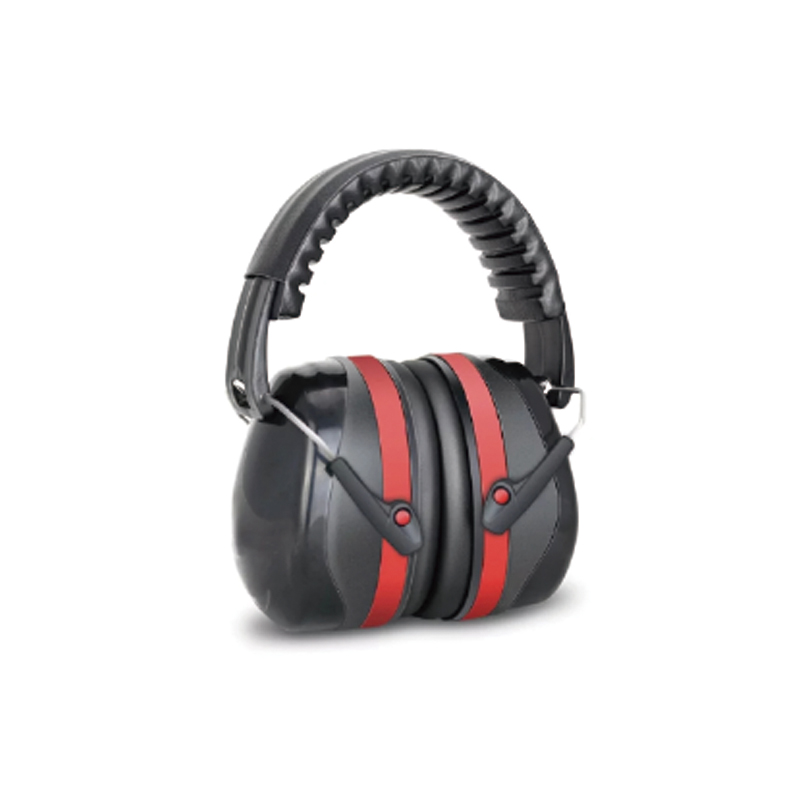
The Noise Reduction Rating (NRR) printed on packaging reflects laboratory-derived data, which rarely translates directly to real-world industrial environments. Laboratory tests involve perfect fitting by trained professionals on stationary subjects. To estimate actual protection levels in the field, safety managers must apply OSHA’s 50% derating formula. This adjustment accounts for imperfect fit, safety glass interference, facial hair, and general wear and tear.
Calculating target attenuation requires a straightforward framework. First, divide the stated NRR in half. Then, subtract that derated number from the measured workplace dBA to determine the effective exposure level. For example, if a worker is in a 95 dBA environment wearing a 30 NRR earmuff, the derated NRR is 15. Subtracting 15 from 95 yields an effective exposure of 80 dBA, safely below the Action Level. Low-frequency attenuation presents a specific challenge during this calculation. Passive earmuffs generally show lower real-world effectiveness against deep rumble and low-frequency hums compared to high-frequency mechanical whine. Safety managers must review the manufacturer's octave band attenuation data to ensure adequate protection at lower frequencies.
Structural integrity dictates the lifespan of protective equipment in heavy industry. Steel-wire headbands provide consistent, long-lasting tension, ensuring the acoustic seal remains intact over months of heavy use. They resist warping and maintain clamping force better than basic plastics. However, reinforced plastics offer weight reduction for extended shifts, though they must be evaluated for brittleness in extreme cold environments where cheap plastics can snap under tension.
Electrical hazards demand specialized construction. Dielectric (non-conductive) earmuffs are critical in environments with electrical arc hazards, high-voltage equipment, or utility operations. These models utilize robust plastic or composite headbands and mounting hardware, entirely eliminating exposed metal components. If a worker accidentally contacts a live wire or experiences an arc flash, dielectric equipment prevents the headgear from conducting electricity and causing severe burns or electrocution.
Head protection rarely exists in isolation. Workers routinely wear safety glasses, hard hats, and respirators simultaneously. The acoustic seal degrades significantly when thick safety glass temples break the contact between the cushion and the skin. This small gap allows high-frequency noise to channel directly into the ear canal. Selecting earmuffs with ultra-soft memory foam or gel cushions designed specifically to accommodate eyewear minimizes this attenuation loss by molding around the temples.
Cross-compatibility with existing head and face protection mandates is non-negotiable. Facilities must evaluate headband, neckband, and hard-hat-attached configurations based on their specific operational requirements. Integrating acoustic protection with welding shields, full-face respirators, or specialized hard hats requires careful testing. Cap-attached models must match the specific slot design of the facility's hard hats. Neckband models allow workers to wear full-brim hard hats or welding helmets without interference.
| Configuration Type | Primary Advantage | Best Use Case | PPE Integration Notes |
|---|---|---|---|
| Standard Headband | Maximum tension and acoustic seal | General manufacturing, standalone use | Interferes with standard hard hats |
| Neckband | Allows clearance over the head | Welding, use with wide-brim hats | Works well with face shields and bump caps |
| Cap-Attached | Seamless hard hat integration | Construction, oil & gas drilling | Requires matching hard hat slot compatibility |
| Dielectric | Zero electrical conductivity | Utility work, high-voltage areas | Available in multiple headband styles |
Electronic models equipped with environmental microphones revolutionize situational awareness. These systems amplify safe ambient sounds, such as human voices, warning alarms, and machinery diagnostics, while instantly compressing dangerous impact noises above 82 dBA. This technology allows workers to communicate clearly and hear their environment without ever removing their protection. When a loud noise occurs, the internal circuitry reacts in milliseconds, shutting down the amplification and relying on the passive attenuation of the earcups.
Maintaining directional hearing is vital in environments with heavy mobile equipment. Workers must accurately locate the source of approaching forklifts, industrial trucks, and overhead cranes. Advanced electronic models feature stereo microphones that preserve spatial awareness, allowing the brain to determine the direction and distance of a sound source. Furthermore, Active Noise Cancellation (ANC) technologies target and neutralize low-frequency drone and infrasound. By generating an inverse sound wave, ANC cancels out the low-frequency rumble of engines and turbines without blocking high-frequency communications, significantly reducing systemic fatigue.
High-risk, spread-out operations, such as oil rig floors, large-scale manufacturing plants, and forestry sites, require seamless team communication. Hand signals fail over long distances or in poor visibility. Communication earmuffs integrate directly with facility networks to solve this bottleneck. Safety managers must evaluate the trade-offs between built-in two-way radios, which operate independently on specific UHF/VHF frequencies, and Bluetooth connectivity, which relies on pairing with external mobile devices or radios.
In explosive environments classified as Class I, Div 1 or Zone 0, standard electronic devices pose a severe ignition risk. A tiny spark from a battery contact or a short circuit can ignite volatile gases, vapors, or combustible dust. Procurement teams must source models with strict intrinsically safe (IS) certifications. IS-rated equipment is engineered to operate on low power and contains robust internal shielding, ensuring the electronics cannot generate enough thermal or electrical energy to cause an ignition under any fault condition.
Selecting the highest available NRR is a common, yet dangerous, procurement mistake. Overprotection occurs when equipment reduces a worker's effective exposure below 70 dBA. This extreme isolation prevents workers from hearing critical warning signals, backing alarms of industrial trucks, or the subtle acoustic changes indicating machinery malfunctions. A worker who cannot hear a failing bearing or a shouted warning is in immediate physical danger.
Mitigating the overprotection trap requires accurate noise dosimetry. Safety managers must map the facility's noise profile using calibrated dosimeters worn by workers throughout their shift. Once the actual TWA is established, select equipment with an NRR that brings the worker's effective exposure into the optimal 70 to 80 dBA range. This sweet spot balances long-term hearing conservation with essential situational awareness.
Even the most advanced acoustic engineering fails if workers refuse to wear the equipment. Clamping force fatigue and heat buildup inside the earcups during extended shifts lead to poor compliance. Workers may push the cups off their ears, rest them on their hard hats, or physically bend the headband to reduce pressure, instantly negating all protection.
To mitigate comfort issues, facilities should implement trial periods with multiple models, allowing workers to provide feedback on fit and weight. Sourcing equipment with advanced memory foam or cooling gel cushions significantly improves long-term comfort by distributing pressure evenly around the ear. Additionally, establishing protocols for scheduled breaks in designated quiet zones allows workers to safely remove their gear, dissipate heat, and relieve clamping pressure without risking exposure.
While over-the-ear models require a higher initial investment than disposable earplugs, their lifecycle costs are highly competitive when properly managed. However, ongoing maintenance is required to ensure consistent protection. Cushions harden, crack, and lose their acoustic seal over time due to sweat, skin oils, and chemical exposure. The internal acoustic foam also degrades, absorbing moisture and losing its sound-dampening properties.
Facilities must establish a strict protocol for inspecting cushion integrity. Replacing hygiene kits, which include the outer cushions and inner foam inserts, every six months is standard industry practice. In highly corrosive or dirty environments, this replacement cycle may need to be shortened to every three months. This routine maintenance sustains the NRR, extends the lifespan of the headband shell, and prevents skin irritation.
Wipe down the exterior shells daily with a mild soap and water solution.
Inspect the cushions weekly for any signs of cracking, stiffness, or deformation.
Check the headband tension monthly to ensure it still provides adequate clamping force.
Replace the hygiene kits (cushions and foam inserts) strictly every six months.
Store the equipment in a clean, dry locker away from direct sunlight and extreme heat.
Over-the-ear acoustic protection serves as an indispensable component of industrial risk management. It provides consistent, user-independent defense, superior hygiene in heavily soiled environments, and advanced communication capabilities that disposable alternatives simply cannot match. Making the right procurement decision requires looking past upfront unit costs and focusing on long-term operational integration, worker comfort, and environmental compatibility.
Conduct a comprehensive noise audit using accurate dosimetry to map both high-frequency peaks and low-frequency drones across your facility.
Request sample units of standard, dielectric, and electronic models to conduct a documented worker wear-trial, prioritizing comfort and PPE cross-compatibility.
Standardize a mandatory replacement schedule for hygiene kits every six months to maintain acoustic seals and protect your investment.
Train all personnel on the dangers of overprotection and the proper methods for integrating acoustic gear with safety glasses and hard hats.
A: A good NRR depends entirely on your facility's noise levels. The goal is to reduce effective exposure to between 70 and 80 dBA. An NRR that is too high causes overprotection, isolating workers from alarms, while an NRR that is too low fails to prevent hearing damage.
A: Thick safety glass temples break the acoustic seal between the cushion and the skin, potentially reducing the effective NRR by 2 to 5 decibels. Using glasses with thin, flat temples or selecting earmuffs with ultra-soft gel cushions minimizes this dangerous attenuation loss.
A: OSHA generally recommends dual protection (earmuffs worn over earplugs) when TWA noise exposures exceed 105 dBA. Wearing both adds approximately 5 decibels of attenuation to the higher-rated device, providing critical defense in extreme noise environments.
A: The hard plastic shells and headbands can last years if not physically damaged. However, the hygiene kits, which include the cushions and inner foam inserts, must be replaced every 6 months, or sooner if they become stiff, cracked, or deformed.
A: Yes, provided they limit amplified ambient sound to a safe level (typically 82 dBA) and offer a sufficient passive NRR to block hazardous impact noise. They are highly recommended for improving situational awareness while maintaining strict regulatory compliance.
A: Dielectric means the equipment is completely non-conductive. These models contain no metal parts, utilizing robust plastic or composite headbands to protect workers from electrical arc hazards in utility work or high-voltage manufacturing zones.


