
Views: 0 Author: Site Editor Publish Time: 2026-07-14 Origin: Site


High stakes define modern workplace safety across all hazardous industries. A single flying particle can cause irreversible eye damage in a fraction of a second. Standard goggles provide crucial defense against direct frontal impacts. However, they leave the rest of your face entirely vulnerable to severe peripheral threats. High-risk environments expose workers daily to unpredictable chemical splashes. Foundries present extreme thermal risks and dangerous radiant heat. Machining centers generate high-velocity debris constantly during heavy operations. Minimal safety compliance often falls drastically short of actual hazard mitigation. Checking a basic regulatory box does not stop severe facial lacerations or chemical burns. Bridging this critical safety gap requires comprehensive facial protection. This article gives safety officers and clinical directors a definitive evaluation framework. Procurement managers will also benefit from these highly structured guidelines. We will explore material performance, physical durability, and optical clarity deeply. You will learn how to verify essential safety certifications accurately. We aim to help you select the precise protective equipment for your specific operational hazards.
A clear face shield serves as secondary protection; it must be paired with primary eye protection (goggles/safety glasses) to meet OSHA/ANSI compliance for severe hazards.
Material selection dictates performance: polycarbonate offers superior impact resistance, while acetate is preferred for chemical splash environments.
Optical clarity directly impacts worker compliance; low-quality shields cause eye strain, fatigue, and an increased risk of accidents.
Clarifying primary versus secondary protection reveals major safety gaps in many facilities. Standard safety glasses only cover the immediate ocular area. They protect the eyes from direct frontal strikes effectively. They do not guard the cheeks, nose, jawline, or mouth. Liquids easily bypass narrow eyewear frames and strike the skin directly. High-velocity fragments often ricochet underneath typical safety lenses during heavy industrial work. A robust clear face shield acts as essential secondary protection. It shields the entire face from comprehensive external threats. It protects sensitive mucous membranes from aerosolized dangers perfectly.
We must categorize workplace hazards to implement proper defensive layers. Different environments present entirely unique physical threats to your workforce.
Impact Hazards: Heavy manufacturing generates dangerous flying debris constantly. Grinding operations produce intense showers of hot metal sparks. Machining fragments launch at unpredictable trajectories and high speeds.
Chemical & Liquid Splash: Laboratory environments handle highly reactive solvents daily. Industrial cleaning teams face caustic chemical exposure during routine maintenance. Chemical handling requires total barrier protection to prevent severe skin burns.
Biological & Thermal Risks: Healthcare facilities require strict infection control protocols. Foundries and smelters present high-heat industrial tasks. Biological agents spread rapidly without full droplet blockage blocking cross-contamination.
Risk mitigation demands highly proactive equipment strategies. Adopting a full-face protection protocol mitigates severe physical risks immediately. It dramatically reduces workplace injury liabilities for the entire organization. Employees experience significantly fewer lost-time incidents when properly protected. Safety officers must mandate secondary protection inside all high-risk zones. Minimal compliance leaves your workforce exposed to life-altering, preventable injuries.
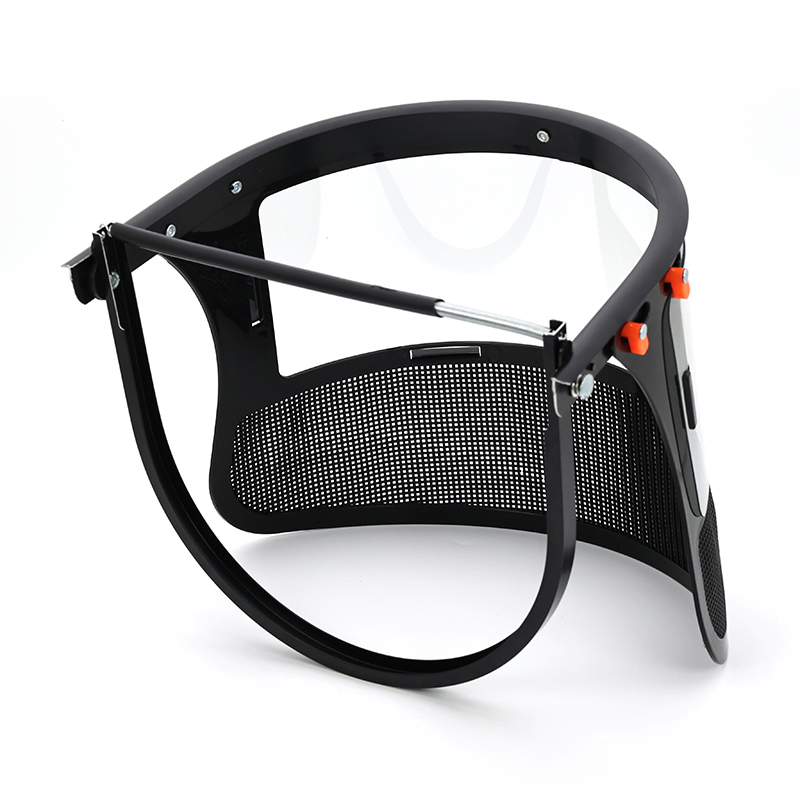
Material science dictates protective visor performance entirely. You must align physical specifications directly to operational hazards on site. Polycarbonate (PC) dominates heavy manufacturing and construction industries globally. It offers exceptional high-impact resistance against flying metal shards. Heat tolerance ranks extremely high for this specific polymer. Polycarbonate can withstand elevated ambient temperatures without melting or warping. However, PC carries notable operational trade-offs requiring attention. Untreated surfaces scratch very easily during routine daily use. Certain harsh solvents degrade polycarbonate structural integrity quickly. You must apply specialized exterior coatings to maximize usable lifespan.
Acetate and propionate provide completely different protective advantages. They deliver superior chemical resistance against harsh industrial substances. These materials inherently resist scratching better than untreated PC. Industrial cleaners and laboratory solvents do not warp acetate visors easily. They maintain their structural clarity under intense chemical duress. The primary drawback involves pure kinetic impact protection. Acetate absorbs far less kinetic energy compared to advanced polymers. You should avoid acetate for heavy grinding or machining tasks.
PETG (Polyethylene Terephthalate Glycol) serves as another popular alternative option. It offers a reliable middle ground for light-duty tasks. Many facilities use PETG for simple liquid splash protection. Unfortunately, it often lacks necessary optical longevity for complex operations. Precision tasks require long-term clarity without visual distortion. PETG degrades much faster under constant ultraviolet exposure.
| Material Type | Impact Resistance | Chemical Resistance | Heat Tolerance | Primary Use Case |
|---|---|---|---|---|
| Polycarbonate (PC) | Excellent | Moderate (requires coating) | High | Heavy machining, grinding |
| Acetate | Low to Moderate | Excellent | Low | Chemical handling, labs |
| PETG | Moderate | Good | Low | Light duty splash protection |
Optics form the absolute foundation of safety compliance and user acceptance. Class 1 optical clarity matters immensely for daily operational use. Poor clarity distorts peripheral vision and causes dangerous light refraction. It triggers severe vertigo and chronic headaches over a shift. Fatigued workers frequently remove their PPE inside hazardous zones. This dangerous behavior spikes accident rates immediately. High-quality manufacturing eliminates these microscopic optical flaws completely. A wide field of view improves spatial awareness substantially.
Coating technologies drastically enhance practical usability. Anti-fog treatments prove essential for environments experiencing rapid temperature fluctuations. Workers wearing respirators constantly deal with heavy condensation. A robust anti-fog layer keeps their vision entirely clear. Anti-scratch hard coatings extend the usable lifecycle significantly. They protect the visor from daily abrasive wear effectively.
Ergonomics drive shift-long wearer compliance reliably. Headgear suspension systems distribute weight evenly across the skull. You must carefully evaluate several ergonomic factors before deployment.
Suspension Systems: Evaluate ratchet versus pin-lock headgear designs. Ratchet dials allow quick, one-handed tension adjustments dynamically. Pin-locks offer simple, set-and-forget sizing for dedicated individual users.
Weight Distribution: Assess the balance of the protective unit carefully. Heavy visors strain neck muscles over a long eight-hour shift. A well-balanced design prevents musculoskeletal fatigue efficiently.
Sweatband Quality: Check the interior sweatband materials. Breathable, replaceable fabrics prevent severe skin irritation during hot days.
PPE Compatibility: Test how the equipment integrates alongside other vital gear. The headgear must fit smoothly under existing hard hats. Earmuffs and half-mask respirators must fit securely without breaking seals. Prescription eyewear must sit comfortably underneath the primary visor.
A high-quality Face Shield integrates seamlessly into your existing safety ecosystem.
Safety standards strictly validate protective equipment performance. The ANSI Z87.1 standard defines criteria for eye and face protection. You must decode the specific markings stamped on every visor. The "Z87+" mark indicates strict high-velocity impact certification. Products undergo rigorous drop-ball and high-mass impact tests. Evaluators shoot steel ball bearings at the lens to test integrity. Standard "Z87" only covers basic, low-velocity impact scenarios. Specific hazard markers guide highly targeted procurement selection. The "D3" marker signifies official approval for splash and droplet hazards. The "W" mark denotes specific suitability for welding applications.
OSHA actively enforces 29 CFR 1910.133 nationwide. This federal mandate requires employers to provide adequate protective gear. Your procurement shortlist must absolutely satisfy these rigid legal requirements. OSHA uses a strict hierarchy of controls to evaluate site safety. Safety glasses alone cannot pass inspections in severe hazard zones. You risk severe operational fines for non-compliance during site audits.
Thorough documentation secures your corporate liability framework. Always request independent manufacturer testing certifications. Verify these crucial documents before authorizing any bulk purchases. Genuine products always carry traceable, third-party compliance certificates. Counterfeit PPE severely exposes your workforce to unacceptable physical dangers.
Adoption risks threaten even the most well-funded safety programs. Workers frequently push back against wearing secondary protective visors. "Fog and heat" complaints remain incredibly common across industries. Enclosed facial areas naturally trap warm exhaled breath. Sweat builds up rapidly during intense physical labor. You must mandate factory-applied anti-fog coatings to combat this issue. Adjust the suspension system to create an adequate standoff distance. Proper airflow prevents interior condensation from forming.
Cleaning and disinfection protocols require strict, daily adherence. Standard window cleaners often contain harsh ammonia compounds. Ammonia aggressively degrades polycarbonate molecular structures over time. It completely strips away delicate anti-fog surface coatings. You must establish a standard operating procedure for proper maintenance.
Rinse the visor thoroughly with lukewarm water first. This removes abrasive particulate matter safely before scrubbing.
Wash the surface gently using a mild, non-abrasive soap.
Pat the exterior dry using a clean microfiber cloth.
Never use rough paper towels on optical plastics. Wood fibers in paper scratch these delicate surfaces deeply.
Replacement cycles guarantee ongoing operational protection. Define very clear criteria for retiring old safety equipment. Micro-abrasions create a hazardous cloudy effect called crazing. Deep scratches scatter ambient light and blind the wearer temporarily. Warped optics severely compromise depth perception during precision tasks. Replace any compromised visor immediately to prevent catastrophic safety failures.
Selecting proper facial protection requires calculated risk management. It goes far beyond simply checking a standard compliance box. Material science and optical clarity govern actual workplace safety outcomes. Impact hazards demand tough polycarbonate barriers. Chemical threats require specialized acetate defenses. We strongly encourage auditing your specific site hazards first. Request product samples to conduct rigorous field testing locally. Consult a dedicated safety specialist to verify ANSI compliance thoroughly. Implement these practical steps before scheduling any bulk equipment rollout. Proper protection guarantees your workforce returns home safely every day.
A: No. Industry standards dictate that a face shield is secondary protection. Primary eye protection, like goggles or safety glasses, must be worn underneath. This combination ensures full compliance and safety, especially against multi-directional splash or high-velocity impact.
A: Lifespan depends entirely on the environment and maintenance. With proper cleaning and anti-scratch coatings, a high-quality visor can last several months in light industry. However, it may require weekly replacement in heavy-abrasive environments like metal grinding.
A: Avoid paper towels and abrasive chemical cleaners entirely. Rinse the visor with lukewarm water to remove particulate matter. Use a mild non-abrasive soap. Gently pat the surface dry with a clean microfiber cloth to preserve the optical clarity.


