
Views: 0 Author: Site Editor Publish Time: 2026-10-07 Origin: Site


Every day, thousands of industrial workers suffer occupational eye injuries. Yet, the vast majority of these painful incidents are entirely preventable. Choosing the right protective gear is a crucial first step. However, many safety managers and DIY enthusiasts struggle to navigate the nuances between wraparound and standard styles. Often, workers compromise critical safety for aesthetics or comfort. In this comprehensive guide, we compare both options side-by-side. By understanding their unique structural differences, you will learn exactly how to select the optimal equipment for your specific environment, prescription needs, and daily tasks.
Coverage & Vision: Wraparound frames offer superior peripheral vision and seamless side protection. Standard frames rely on separate side shields to block lateral hazards.
Prescription Needs: Standard safety frames are generally better suited for high-prescription Rx lenses. Heavily curved wraparound frames can sometimes distort strong optical prescriptions.
Comfort & Fit: Wraparound styles sit closer to the face, providing better defense against wind and particulate dust. They often fit more comfortably under earmuffs, making them ideal for shooting or heavy machinery operation.
Compliance: Both styles must meet strict ANSI Z87.1 impact standards to be legally classified as true protective equipment in hazardous environments.
Use Cases: Your final choice should be dictated by your specific environment, ranging from construction and competition shooting to laboratories and general DIY projects.
Recent market analysis reveals a massive shift toward athletic-inspired personal protective equipment across general construction, landscaping, and outdoor trades. As workplace safety cultures evolve, companies increasingly prioritize gear that mimics sports wear. The logic here is straightforward. When protective gear looks sleek and feels virtually weightless, worker compliance skyrockets. We are seeing a surge in demand for 8-base curve designs that offer panoramic views without the bulk. Despite this overarching trend toward sporty wraparound models, standard frames maintain a steady, unshakable stronghold in laboratory settings and among high-prescription demographics. This proves that functional necessity still dictates market demand over pure aesthetics.
Standard safety frames look and function similarly to regular everyday eyeglasses. However, manufacturers engineer them from the ground up with highly durable, reinforced materials. The frames typically utilize robust plastics like TR-90 nylon, known for its incredible flexibility and stress-crack resistance. Meanwhile, the lenses themselves are forged from shatter-resistant polycarbonate.
The defining characteristic of a standard frame is its reliance on side shields. Because the front lenses sit relatively flat against the face, much like a pair of reading glasses, an inherent gap forms at the temples. To mitigate this vulnerability and protect against lateral impacts, side shields are integrated into the design. Depending on workplace compliance requirements, these shields can be either permanently attached or removable.
It is critical to understand why you cannot just wear your everyday spectacles on the factory floor. Regular prescription eyewear is not subjected to high-velocity impact testing. If struck by flying debris, standard glass or basic plastic lenses can shatter instantly, driving hazardous shards directly into the eye. This is precisely why upgrading to certified Safety Glasses is a non-negotiable requirement in industrial settings.
Standard safety frames have remained a staple in industrial environments for decades due to their distinct advantages. Naturally, they also come with a few structural limitations.
Pros:
Prescription Compatibility: The flat base curve of the lens makes them highly accommodating for complex, bifocal, or strong prescription lenses without causing optical distortion.
Classic Aesthetic: They offer a familiar, traditional look. Many workers prefer this style, especially in hybrid roles that transition frequently between the office and the active factory floor.
Breathability: Because they sit slightly further away from the face, they allow for excellent airflow. This natural ventilation significantly reduces the likelihood of lens fogging during strenuous, sweat-inducing work.
Cons:
Peripheral Obstruction: Solid or frosted side shields can create blind spots. This tunnel vision effect may prove dangerous around moving vehicles or heavy machinery.
Debris Gaps: The flat design leaves potential gaps at the top and bottom of the frame where fine dust or falling particulate matter can easily enter.
Bulkiness: Traditional frames equipped with heavy side shields can feel bulky and may cause pressure points when worn in tandem with other headgear.
The engineering behind modern Wraparound Safety Glasses represents a significant leap forward in optical protective technology. Unlike traditional flat fronts, these frames feature a continuous, deeply curved lens or dual lenses that contour precisely to the anatomical shape of the human head.
In optical manufacturing terms, this is often referred to as an 8-base or 9-base curve. This aggressive curvature allows the primary lens material to extend seamlessly past the outer edge of the eye, wrapping snugly toward the temples. By extending the primary optical material in this manner, the design completely eliminates the need for separate, bulky side shields. The frame itself acts as the lateral barrier, offering a streamlined, single-piece defense mechanism against environmental hazards.
This contoured design has surged in popularity across multiple heavy industries. Its ergonomic and functional superiority largely drives this adoption.
Primarily, these frames provide completely unobstructed peripheral vision. Without vertical seams or separate side attachments to block the wearer's view, workers maintain a seamless panoramic field of vision. This heightened spatial awareness is an absolute necessity in dynamic environments like active construction sites, where threats can emerge from any direction.
Beyond visual clarity, the aggressive curve creates an enhanced facial seal. The frame hugs the brow bone and cheekbones much closer than traditional glasses. This tight tolerance provides superior defense against wind, airborne dust, and harmful UV rays that might otherwise bounce in from the sides or above. Finally, the sleek, sporty aesthetic plays a surprisingly powerful psychological role in workplace safety. Workers are significantly more likely to comply with safety protocols when their gear is lightweight, visually appealing, and comfortable to wear for extended shifts.
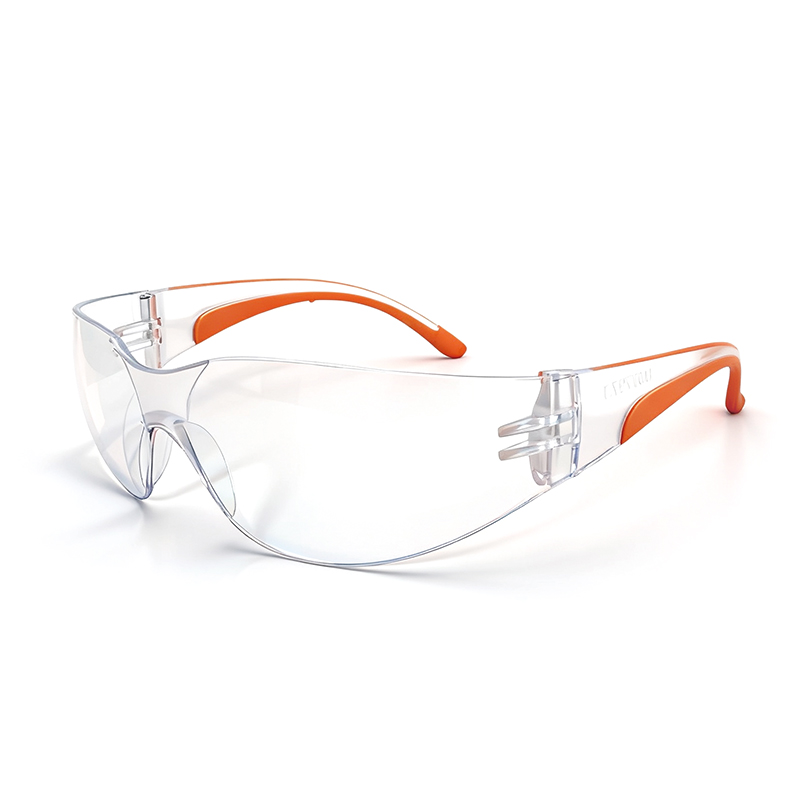
When assessing the field of view, wraparound lenses possess a distinct, measurable advantage. Standard frames, particularly those equipped with solid or frosted side shields, block a portion of the wearer's lateral vision. This forces the worker to physically turn their head to see approaching hazards, creating a dangerous delay in reaction time.
Conversely, wraparound lenses offer a continuous optical surface. The wearer can detect motion and hazards in their extreme periphery without moving their neck. Furthermore, the wrap design minimizes the intrusion of overhead glare, making them highly effective for outdoor utility work where the sun acts as a constant visual impediment.
Ergonomics often dictate whether a worker will actually keep their safety gear on. Imagine working a grueling 10-hour shift on a sweltering construction site while heavy earmuffs press thick glasses frames deep into your temples. According to feedback from competition shooters and heavy machinery operators, integration with other Personal Protective Equipment is a major pain point.
Specifically, wraparound frames typically feature thinner, highly flexible temples that sit flush against the side of the head. When a user puts on heavy noise-canceling earmuffs or a hard hat, these slim arms do not dig into the skin. Standard frames, which often have thicker arms and bulky attachment points for side shields, can create severe pressure points behind the ears, leading to tension headaches after just a few hours of wear.
The one arena where standard frames consistently outperform wraparound models is in optical prescription integration. The physics of light refraction dictate that deeply curved lenses alter the angle at which light enters the eye.
For individuals requiring high-power prescriptions, placing their Rx into an 8-base wraparound frame can cause severe fish-bowl distortion, visual displacement, and even nausea, as the optical center becomes misaligned with the pupil. Standard frames, utilizing flatter 4-base or 6-base curves, keep the lens parallel to the eye. This geometry ensures crisp, undistorted vision for heavy prescriptions. While modern digital lens surfacing technology is rapidly improving Rx wraparound options, standard frames remain the safest and most reliable go-to for complex optical needs.
| Feature | Wraparound Safety Glasses | Standard Safety Glasses |
|---|---|---|
| Side Protection | Integrated seamless curve | Separate side shields required |
| Peripheral Vision | Excellent No blind spots | Limited Shields may block view |
| Prescription Support | Limited Mild to moderate only | Excellent Handles strong Rx |
| Helmet/Earmuff Fit | Highly compatible and flush | Can cause pressure points |
| Facial Seal | Close fit, blocks wind/dust | Looser fit, allows airflow |
When evaluating workplace safety, aesthetics and comfort must always remain secondary to physical protection. Regardless of whether you gravitate toward a standard or wraparound style, high-quality protective eyewear must pass the rigorous testing protocols set forth by the American National Standards Institute, specifically the ANSI Z87.1 standard.
To achieve an ANSI Z87.1+ High Impact rating, the eyewear must survive extreme ballistic testing. This includes a high-mass impact test, where a heavy pointed projectile is dropped directly onto the lens, and a high-velocity impact test, where a quarter-inch steel ball bearing is fired at the lens at 150 feet per second. Both standard and wraparound styles achieve this impressive rating primarily through the use of polycarbonate. This advanced thermoplastic is exceptionally lightweight yet possesses incredible kinetic energy absorption, allowing it to dent or deform rather than shatter.
Regulatory compliance also dictates how side protection is handled on the job site. Under OSHA and ANSI guidelines, standard glasses must have side shields attached to meet safety compliance in environments fraught with lateral flying debris. If a worker removes the side shields from their standard frames, the glasses instantly lose their protective certification for those specific hazards.
In contrast, the natural, deep curve of wraparound glasses inherently satisfies these lateral protection requirements. Because the primary impact-resistant material extends fully around the side of the eye, there are no removable parts to lose or forget, ensuring continuous and foolproof compliance.
In the realm of occupational safety, terminology matters immensely. While many people use the terms interchangeably in casual conversation, there is a distinct biomechanical and regulatory difference between standard glasses and sealed goggles. Understanding this difference is a critical component of hazard assessment.
Both standard and wraparound glasses are designed to provide fundamental impact resistance. They rest on the bridge of the nose and the ears, which inevitably leaves microscopic and sometimes macroscopic gaps between the frame and the wearer's face. Even the most form-fitting wraparound models cannot provide a completely airtight seal. Air, ambient moisture, and extremely fine particulates can still navigate around the edges of the lenses.
When conducting a risk assessment, safety managers must identify scenarios where the primary threat is environmental saturation rather than just a flying object. This is exactly where you must upgrade to Work Goggles. Goggles are engineered with a flexible flange, usually constructed from medical-grade silicone, rubber, or specialized foam, that creates a continuous, secure seal against the facial contours.
You should immediately transition from glasses to goggles in the following high-risk scenarios:
Hazardous Chemical Splashes: Working with caustic acids, volatile solvents, or biological hazards requires liquid-splash protection. Glasses allow liquids to drip down the forehead and behind the lens; goggles prevent this entirely.
Fine Airborne Particulate Matter: Environments saturated with heavy fiberglass dust, drywall powder, or fine wood flour require a sealed barrier. Fine dust can easily bypass the side shields of standard glasses or the curved edges of wraparounds.
Extreme Fogging Environments: In situations where temperature fluctuations are extreme, unvented or indirectly vented goggles provide true anti-fog isolation that standard eyewear simply cannot match.
Selecting the correct protective equipment is heavily dependent on the specific environmental variables of your daily tasks. What works perfectly on a rugged construction site may be entirely inappropriate for a sterile laboratory environment. Below is a practical breakdown of which style aligns best with various professional fields.
In highly active industrial environments like construction sites, lumber mills, and heavy manufacturing floors, the hazards are dynamic and unpredictable. When you navigate a chaotic workspace where wood splinters, metal shavings, and concrete dust can ricochet from any angle simultaneously, you need comprehensive coverage. Workers are often moving their heads rapidly and require high situational awareness around heavy, moving machinery.
For these demanding environments, wraparound frames are overwhelmingly recommended. The continuous base curve provides a seamless panoramic view, eliminating the blind spots often created by thick side shields. This unobstructed peripheral vision is crucial for spotting a forklift reversing or a swinging crane load. Additionally, the closer fit of the wraparound design offers superior defense against wind-blown debris.
The tactical and outdoor work sectors, including competition shooting, landscaping, and arboriculture, present unique ergonomic challenges. Real-world user feedback from these fields consistently highlights interference with other PPE and harsh environmental elements as primary concerns.
Wraparound frames are the definitive choice here. In competition shooting, stray hot brass casings ejected from firearms can occasionally bounce off partitions and enter the gap behind a traditional flat lens, a highly dangerous scenario. The contoured facial seal of a wraparound frame significantly mitigates this risk. Furthermore, outdoor workers and shooters almost always wear heavy acoustic ear protection. Wraparound frames, engineered with ultra-thin, flexible temples, allow earmuffs to seal properly without causing discomfort. They also excel at blocking harsh wind and oblique sun glare.
Precision environments demand entirely different optical specifications. In analytical laboratories, medical facilities, and electronic assembly lines, the primary hazards are usually direct frontal splashes or low-velocity impacts. More importantly, professionals in these fields often require highly accurate, strong prescription lenses to perform detailed, close-up work for hours on end.
In these scenarios, standard safety glasses with permanent or removable side shields are highly recommended. The flatter lens plane is the ideal geometric foundation for complex optical prescriptions, preventing the eye strain and dizziness associated with curved lenses. Additionally, standard frames sit slightly further away from the face, promoting excellent airflow. This ventilation is vital for preventing lens fogging during long shifts where users are breathing heavily behind surgical masks.
Purchasing protective equipment should never be an afterthought or a decision based solely on aesthetics. To ensure maximum compliance and safety, buyers must approach the selection process methodically.
Before making a purchase, conduct a quick, systematic assessment of your daily requirements using this buyer's checklist:
Identify the Primary Hazard: Are you dealing with high-mass impacts like falling tools, high-velocity impacts like grinding sparks, optical radiation, or chemical droplets?
Evaluate Prescription Requirements: If you rely on strong corrective lenses, lean toward standard frames that can accommodate thick, high-index polycarbonate without optical distortion.
Consider PPE Integration: Assess what other gear you will wear simultaneously. Test the frame's temples to ensure they do not interfere with the fit or seal of your hard hat or respirator.
Modern optical engineering has transformed basic safety lenses into highly specialized tools. When evaluating options, look for value-add features that directly address your environmental challenges. Industrial-grade anti-fog coatings are essential, as fogging is the number one reason workers remove their glasses in hazardous zones. For instance, high-end models utilize dual-action hydrophilic and hydrophobic layers. Anti-scratch resistance hardcoat is also vital for extending the lifespan of polycarbonate lenses, which are naturally prone to surface abrasions. For outdoor workers, polarized lens options featuring UV400 protection are invaluable for cutting through reflective glare.
The market is unfortunately flooded with counterfeit or uncertified eyewear that mimics the look of protective gear but fails catastrophically upon impact. It is paramount to source your equipment from certified, reputable manufacturers who transparently display their testing data and regulatory compliance. Look for clear, permanent markings on the frame and lens, such as Z87+, which indicate that the product has passed rigorous high-velocity testing.
When outfitting your team, exploring a high-quality, compliant selection of Safety Spectacles is a practical first step to finding the perfect fit for your workplace requirements. Investing in legitimate, well-engineered gear not only ensures legal compliance but drastically reduces the risk of life-altering injuries.
Ultimately, the debate between wraparound and standard safety glasses does not have a single winner. Rather, it comes down to matching the right tool to the specific job. Wraparound safety glasses undoubtedly win out when it comes to panoramic peripheral vision, modern ergonomic comfort, and superior wind and debris sealing. On the other hand, standard safety glasses remain the undisputed champion for accommodating strong optical prescriptions and providing maximum breathability in enclosed spaces.
Your best choice depends entirely on your daily tasks, facial structure, and concurrent PPE requirements. Do not leave your vision to chance. Prioritize your eye health at work today by thoroughly evaluating your environment and upgrading your gear. If you are ready to equip yourself or your workforce with industry-leading, ANSI-certified eye protection, browse the extensive catalog at Yonglei Safety to find the perfect engineered solution for your operational needs.
No. Regular prescription glasses are designed solely for vision correction, not impact resistance. They do not feature shatter-resistant polycarbonate lenses, nor do they have the necessary side protection to deflect lateral debris. Consequently, they fail to meet ANSI Z87.1 impact standards. Wearing regular glasses in a hazardous environment leaves your eyes incredibly vulnerable. In fact, standard glass or plastic lenses can shatter into dangerous shards upon impact, severely exacerbating the trauma.
They shouldn't, provided they fit your head correctly and are sourced from a reputable manufacturer. Wraparound frames are designed to distribute pressure evenly along the sides of the head, avoiding pinch points. However, issues can arise if a wraparound pair is fitted with cheap or poorly cut prescription lenses. The steep curvature of the lens can cause peripheral visual distortion, often called the prism effect, which forces the brain to constantly overcompensate. This optical strain—not the physical frame itself—is what typically leads to headaches.
It depends heavily on the specific model and the safety regulations of your workplace. Some standard frames feature permanent, integrated side shields to ensure strict compliance, guaranteeing the user cannot accidentally forget to attach them. Other models offer slide-on or snap-on removable shields for dual-purpose use, allowing workers to wear the frames as regular glasses off the clock. However, OSHA regulations strictly mandate that if the environment requires side protection, those removable shields must be securely attached while you are in the hazardous zone.
From a purely structural standpoint, standard safety glasses are generally better at preventing fog. Because they sit further away from the face and rely on side shields rather than a flush facial contour, they allow for significantly better ambient airflow. This ventilation helps dissipate the heat and moisture generated by the wearer's skin. However, premium wraparound glasses have largely closed this gap by incorporating advanced, baked-on hydrophilic and hydrophobic anti-fog coatings that chemically prevent condensation from forming, making them highly effective even in enclosed designs.
Yes, but there are distinct optical limitations dictated by the physics of light refraction. Mild to moderate prescriptions typically work exceptionally well in heavily curved wraparound frames, as modern digital lens surfacing technology can calculate and correct for the curve. However, individuals with very strong prescriptions or complex astigmatism may experience severe lens distortion at the edges of a wraparound frame. In these cases, engineers and optometrists strongly recommend utilizing standard frames with side shields to ensure perfect optical clarity without compromising safety.
As a general rule of thumb, you should replace your safety glasses every one to three years, depending on the frequency of use and the harshness of your work environment. However, immediate replacement is mandatory if the lenses become deeply scratched, pitted, or if the frame shows signs of stress cracking. Scratches not only impair your vision and increase glare but also compromise the structural integrity of the polycarbonate, significantly reducing its impact resistance.
The standard ANSI Z87.1 certification indicates that the eyewear provides basic impact protection, which is suitable for environments with low-velocity hazards. The Z87.1+ designation, featuring the plus sign, signifies high-velocity impact resistance. To earn the plus rating, the glasses must withstand a much more rigorous ballistic test, including a steel ball bearing fired at high speeds. For most heavy industrial, construction, and machining applications, safety managers strictly require Z87.1+ rated eyewear.


